Tag: Learning

  • Should Children Use AI? Five Questions Parents Should Ask First

    Should Children Use AI? Five Questions Parents Should Ask First

    The hardest part of parenting around AI is that the same tool can help a child think or help them avoid thinking.

    It can explain a difficult idea, ask practice questions and help a child explore possibilities. It can also produce the answer, finish the homework and make something look complete before the child has made a meaningful decision.

    That is why “Should children use AI?” is too broad to be useful.

    A better question is:

    What is the child still doing while AI is open?
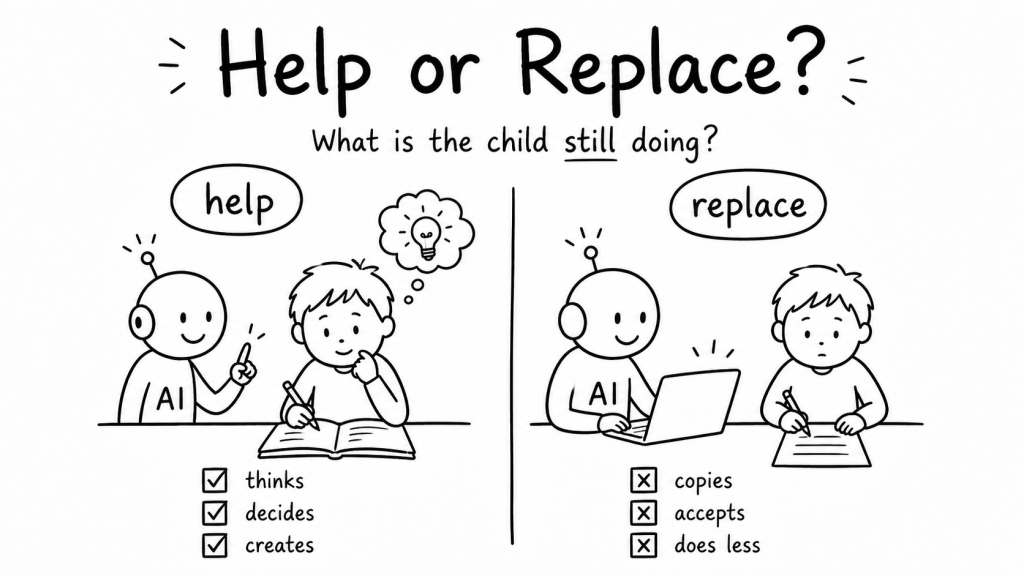
    As a parent and software engineer, I do not think the useful choice is “AI or no AI.” The more practical choice is between AI that supports thinking and AI that replaces it.

    The following five questions turn that principle into something a family can actually use.

    1. Will AI make children lazy?

    AI does not automatically make a child lazy. But it can remove the effort that a particular task was meant to develop.

    Suppose a child asks AI to explain why the sky changes colour at sunset. The tool may help them understand a difficult idea. Now suppose the child asks it to write the explanation, copies the result and submits it. The finished page may look similar, but the learning process is completely different.

    The distinction is not simply whether AI was used. It is whether the child still had to notice, choose, connect or explain.

    A useful test: After using AI, can the child explain the idea without looking at the AI response?

    If the answer is no, the tool may have completed the task without building much understanding.

    2. Should children use AI for homework?

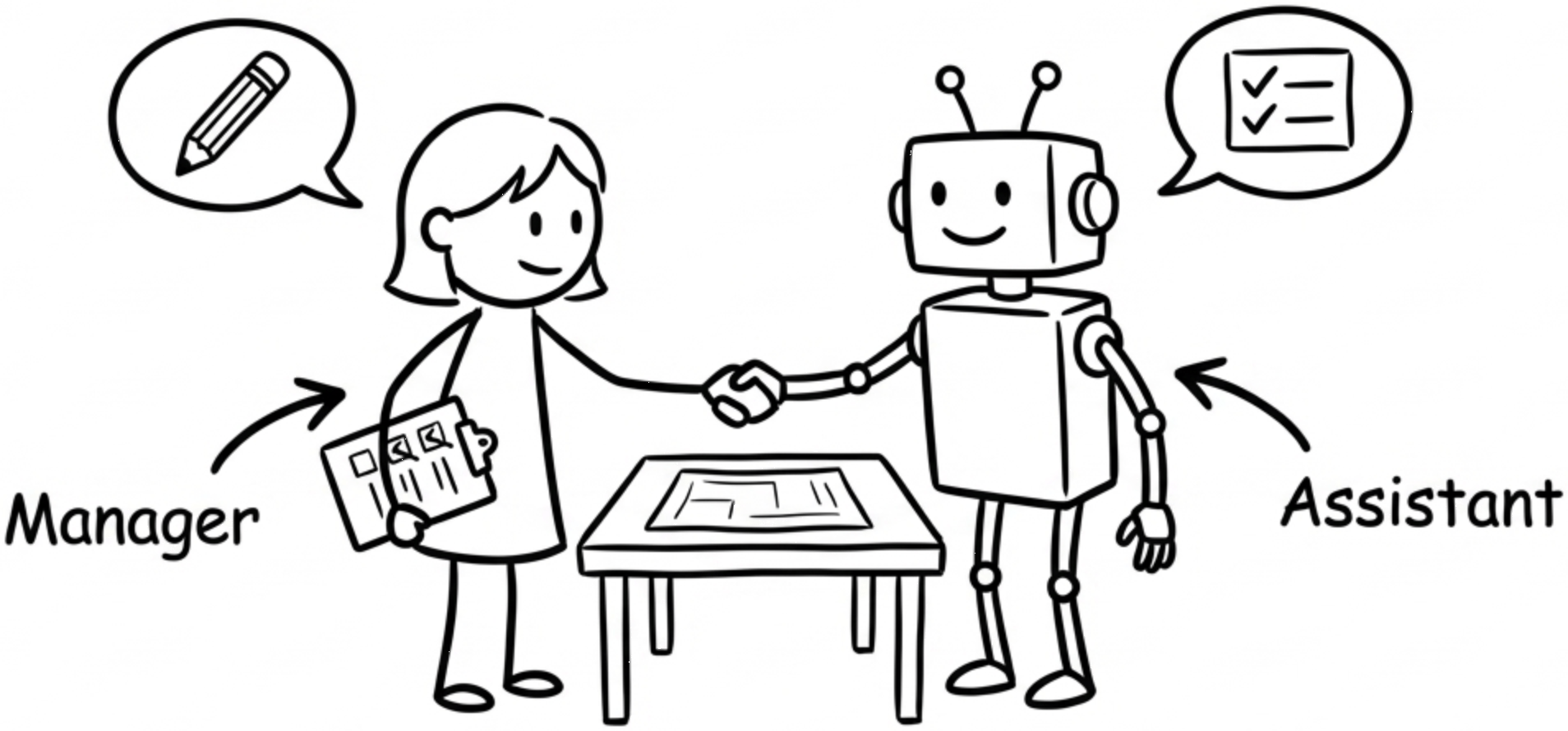
    Yes, in some situations. But AI should act more like a coach than a ghostwriter.

    A coach helps the learner perform the work. A ghostwriter performs the work for them.
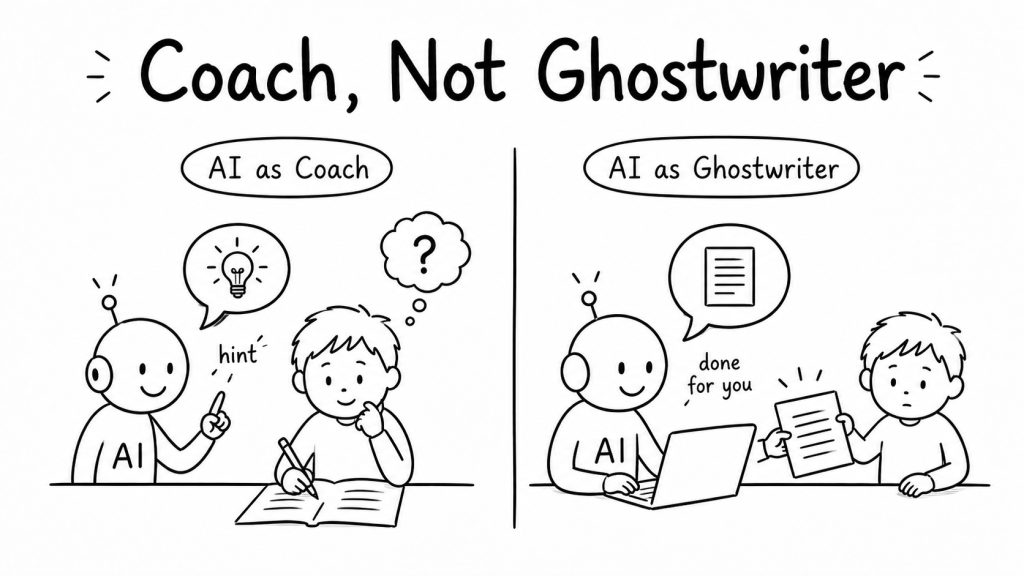
    AI as a coach

    • Explain this idea in simpler words.
    • Give me one hint, not the answer.
    • Ask me questions to check what I understand.
    • Review my answer and show me where my reasoning is weak.
    • Give me another example so I can practise.

    AI as a ghostwriter

    • Write my answer.
    • Complete the worksheet.
    • Make the project look finished.
    • Rewrite this so nobody can tell I did not understand it.

    The boundary will vary with the child, the subject and the purpose of the assignment. A spelling exercise and a research project do not require the same kind of effort. The parent’s job is not to ban assistance. It is to protect the part of the task where learning is supposed to happen.

    This connects with a related idea I explored in Use AI to learn faster: the pause before an answer often contains the effort we should be careful not to remove.

    3. Will AI weaken creativity?

    It can weaken creativity when it makes the interesting decisions before the child does.

    Creativity is not only producing a polished picture, story or presentation. It includes choosing a direction, rejecting an obvious idea, combining unrelated things and deciding what feels worth making.

    AI can support that process by offering possibilities. But the child should still shape the result.
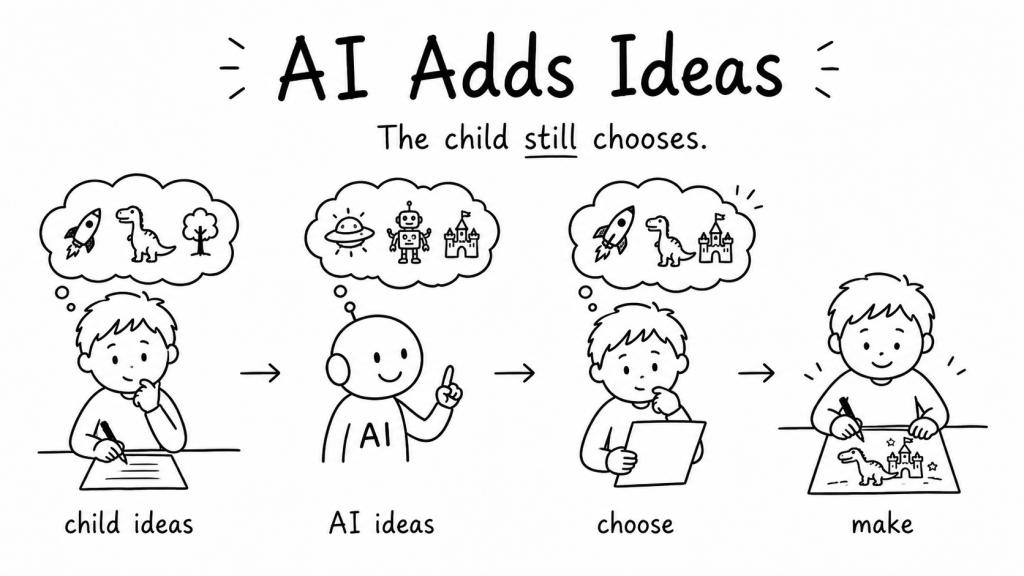
    Try this sequence:

    1. The child creates three ideas first.
    2. AI contributes three more possibilities.
    3. The child compares, combines or rejects them.
    4. The child makes the final version.

    In that sequence, AI expands the option space. It does not own the creative direction.

    4. Is AI safe for children?

    There is no universal yes-or-no answer because AI tools differ, children differ and the context matters.

    UNICEF’s current guidance on AI and children highlights safety, privacy, transparency, inclusion, well-being and preparation for an AI-shaped future. UNESCO’s guidance for generative AI in education also emphasises data privacy, age-appropriate use and human oversight.

    For a parent, those broad principles can become a short checklist:
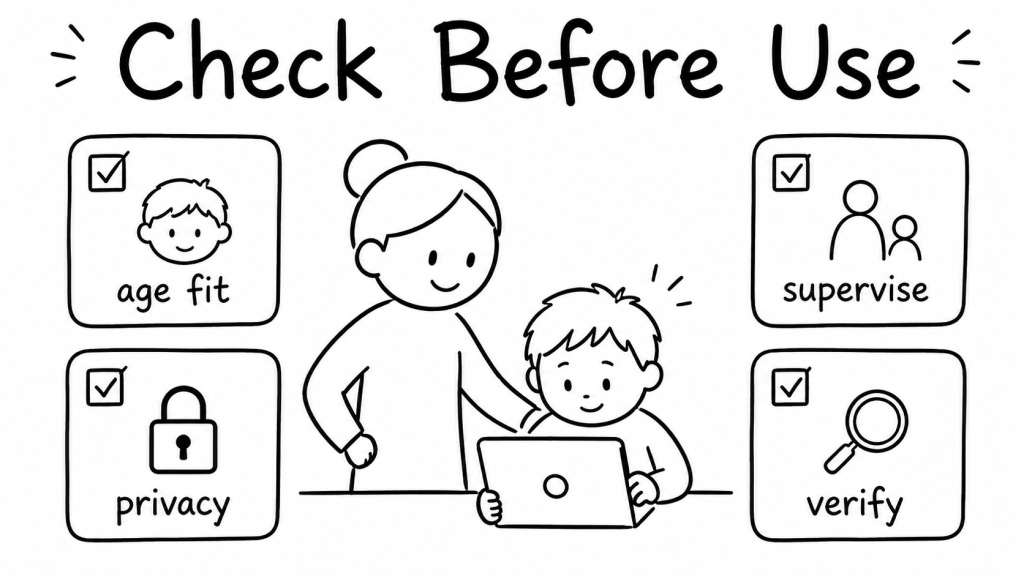
    • Age fit: Check the tool’s minimum-age rules and whether independent use is appropriate for this child.
    • Privacy: Avoid sharing a child’s full name, school, address, private photos, health details or other sensitive information.
    • Supervision: Younger children benefit from using AI with an adult nearby rather than treating the tool as a private authority.
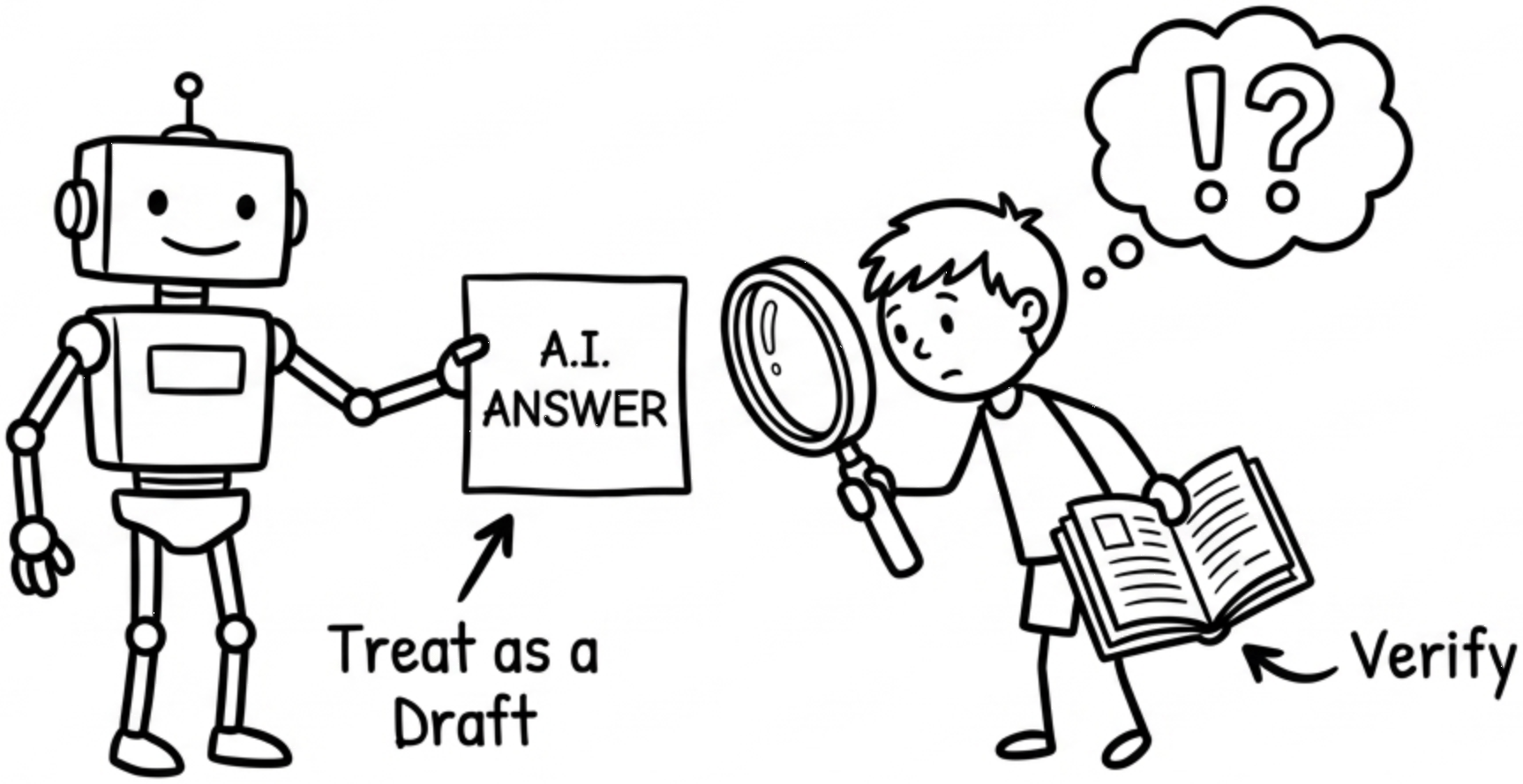
    • Accuracy: Teach children that a confident answer can still be wrong, incomplete or biased.
    • Emotional boundaries: AI should not quietly become the only place a child turns for personal guidance or reassurance.

    The goal is not to make a child frightened of the technology. It is to help them recognise that helpful language on a screen is not the same as judgment, responsibility or care.

    5. How much AI is too much?

    Minutes alone will not answer this.

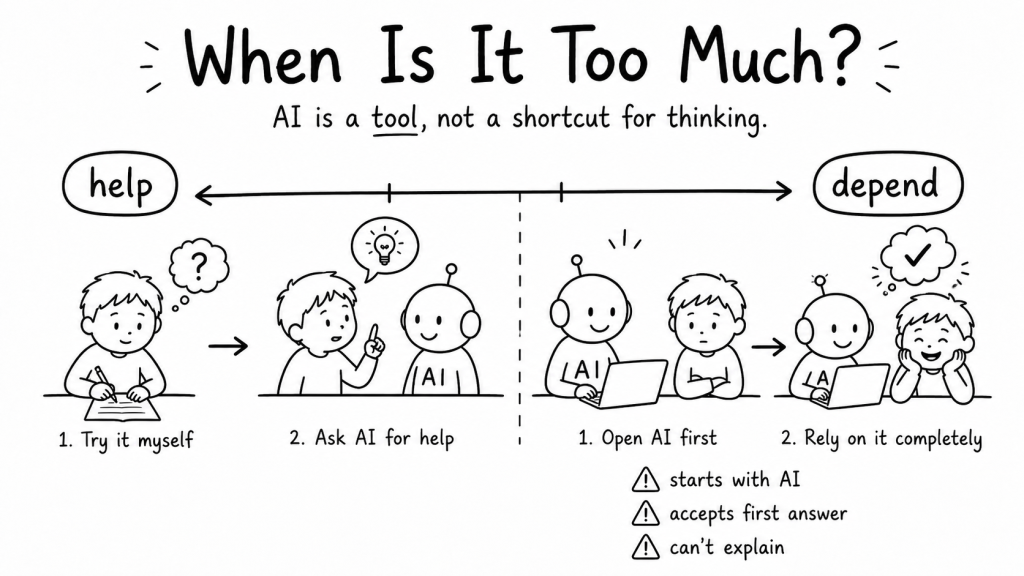
    Ten minutes of copying may remove more learning than thirty minutes of questioning, testing and revising. The better measure is not only time. It is dependency.

    AI use may be becoming excessive when a child:

    • opens the tool before trying anything independently
    • accepts the first response without checking it
    • cannot explain what they submitted
    • feels unable to begin without AI
    • uses AI to avoid every moment of confusion or difficulty

    Confusion is not always a problem to eliminate. Sometimes it is the beginning of learning.

    A better parent rule: Think, Create, Question

    Instead of creating a complicated family policy for every possible AI tool, start with three questions:

    Did my child think?

    Did my child create?

    Did my child question?
    “Think” means the child made connections, attempted an answer or explained some reasoning.

    “Create” means the child made meaningful choices rather than simply accepting a generated result.

    “Question” means the child checked, challenged or improved what the tool produced.

    This rule is not a scientific measurement. It is a practical decision aid. It changes the conversation from “Was AI used?” to “What kind of participation did AI leave for the child?”

    A small family experiment

    For one week, do not begin by limiting AI with a fixed number of minutes. Instead, choose one AI-assisted activity and use this sequence:

    1. Before AI: Ask the child to make a first attempt, prediction or idea.
    2. With AI: Use the tool for explanation, questions, feedback or alternatives.
    3. After AI: Ask the child to explain what changed in their thinking.

    You are not trying to catch the child using AI incorrectly. You are helping them notice the difference between receiving an answer and developing an idea.


    The tool is not the final test

    Children will grow up with AI woven into school, work and everyday decisions. Avoiding every use is unlikely to prepare them well. Accepting every use will not prepare them either.

    The more durable skill is learning when to accept help, when to struggle a little longer and when to question the answer in front of them.

    So the next time AI appears in homework or creative play, the first question does not need to be, “How do I stop this?”

    Ask whether the child is still thinking, creating and questioning.

    That is a clearer line than fear. It is also a skill the child can eventually learn to apply without us.

    Further reading

    Fediverse Reactions
  • How to Use AI Without Letting It Do Your Child’s Thinking

    How to Use AI Without Letting It Do Your Child’s Thinking

    AI can make a child’s work faster. The harder question is whether it still leaves enough room for the child to think.

    When I set up a ChatGPT project for my daughter, I nearly created the thing I was worried about.

    It would have been easy to tell it: help with homework. Be useful. Give clear answers.

    But then I pictured her with a hard question in front of her. A blinking cursor. The little pause before she tries something.

    That pause is where a lot of learning happens. It is also one of the first things AI can take away.

    The new question is not screen time

    Every generation had a screen that made parents nervous. Television. Video games. Phones.

    The worry was usually about time. Too much of it. Not enough outside. Not enough real life.

    AI makes the concern feel different. It can sit beside a child while they work. It can explain a maths problem, write a paragraph or make a project look finished before the child has had time to get stuck.

    That is the useful part. It is also the difficult part.

    The question is not only how long a child uses AI. It is what the child still practises while the tool is open.

    A child chooses between asking AI for the answer and working through an unfinished problem with a pencil

    Fast answers can remove useful struggle

    If AI gives the answer first, a child may finish the worksheet faster.

    But they can miss the part where they try, get something wrong and work out what the question is really asking.

    That part looks slow from the outside. It is not wasted time.

    The goal is not to make every task difficult. It is to notice when convenience has removed the exact thinking the task was meant to develop.

    Use the Try → Hint → Explain → Apply sequence

    The instructions I gave the project were not only about being helpful. I wanted it to ask a question back when it could, give a hint before an answer and ask her to explain what she thinks.

    A simple sequence helps keep more of the work with the child:

    1. Try: The child makes a first attempt before asking AI.
    2. Hint: AI gives the smallest useful clue instead of the full solution.
    3. Explain: The child describes the idea or next step in their own words.
    4. Apply: The child uses the idea in a new example, question or small creation.

    This sequence will not work perfectly every time. Some days a child will still want the quick answer. Honestly, so do I. A good tool makes that temptation easy.

    But the sequence creates a useful default. The child remains the person making the attempt and AI becomes the support around it.

    Give AI a learning-coach role

    AI can act like an answer machine. It can also act like a tutor, practice partner or questioner.

    A child or parent can use a prompt like this:

    Help me learn this without doing it for me. First ask what I have already tried. Give one hint at a time. Ask me to explain my thinking before showing a full answer. Then give me a similar example to try on my own.

    The wording is less important than the role. AI should help the child continue thinking rather than end the thinking immediately.

    A child draws a plant while AI responds with a question instead of supplying the finished answer

    Look for what the child is still doing

    There is no simple rule that says more AI is always worse or less AI is always better.

    Watch for the actions that still belong to the child:

    • making a first guess
    • noticing a mistake
    • asking a better question
    • putting an idea into their own words
    • choosing between alternatives
    • trying the idea in a new situation

    A polished answer is not enough evidence by itself. The stronger test is whether the child can explain and use the idea after the screen is closed. I explored that test in Can Your Child Explain the Answer Without AI?

    Try this with one homework question

    Choose one question or topic this week. Before AI gives an answer, ask the child to make a first attempt.

    Then use the four steps:

    1. Ask the child what they already think.
    2. Ask AI for one hint rather than the full answer.
    3. Let the child explain the next step.
    4. Change one detail and ask them to try again.

    Notice what changes. Does the child ask a better question? Spot an error? Explain the idea more clearly? Apply it without looking back at the original answer?

    I do not want my daughter to grow up scared of AI. I want her to recognise when it is helping her think and when it is quietly doing the thinking for her.

    That feels like the job now. Not keeping the tool away. Staying close enough to notice what it is changing.

    Fediverse Reactions
  • Can Your Child Explain the Answer Without AI?

    Can Your Child Explain the Answer Without AI?

    AI can help a child produce a polished answer in seconds. That does not mean the child understands it.

    This is one of the difficult parts of parenting in an AI-enabled world. A finished assignment, correct vocabulary and a confident explanation can all create the appearance of learning.

    The difference often becomes visible only when we ask the child to go one step further.

    The explain-back test

    The first answer may come from memory, a textbook or AI.

    The next question asks the child to use the idea rather than repeat it.

    Imagine a child asks AI to explain photosynthesis. The answer sounds clear and the homework looks complete. A parent could then ask:

    • Why does the plant need sunlight?
    • What might happen if it received water but no light?
    • Can you explain it without using the word photosynthesis?
    • Can you draw what is happening?

    The goal is not to catch the child out. It is to see whether the idea has moved beyond the original wording.

    A child gives an answer, then faces a follow-up question that reveals whether the idea was understood

    Four signs the idea belongs to the child

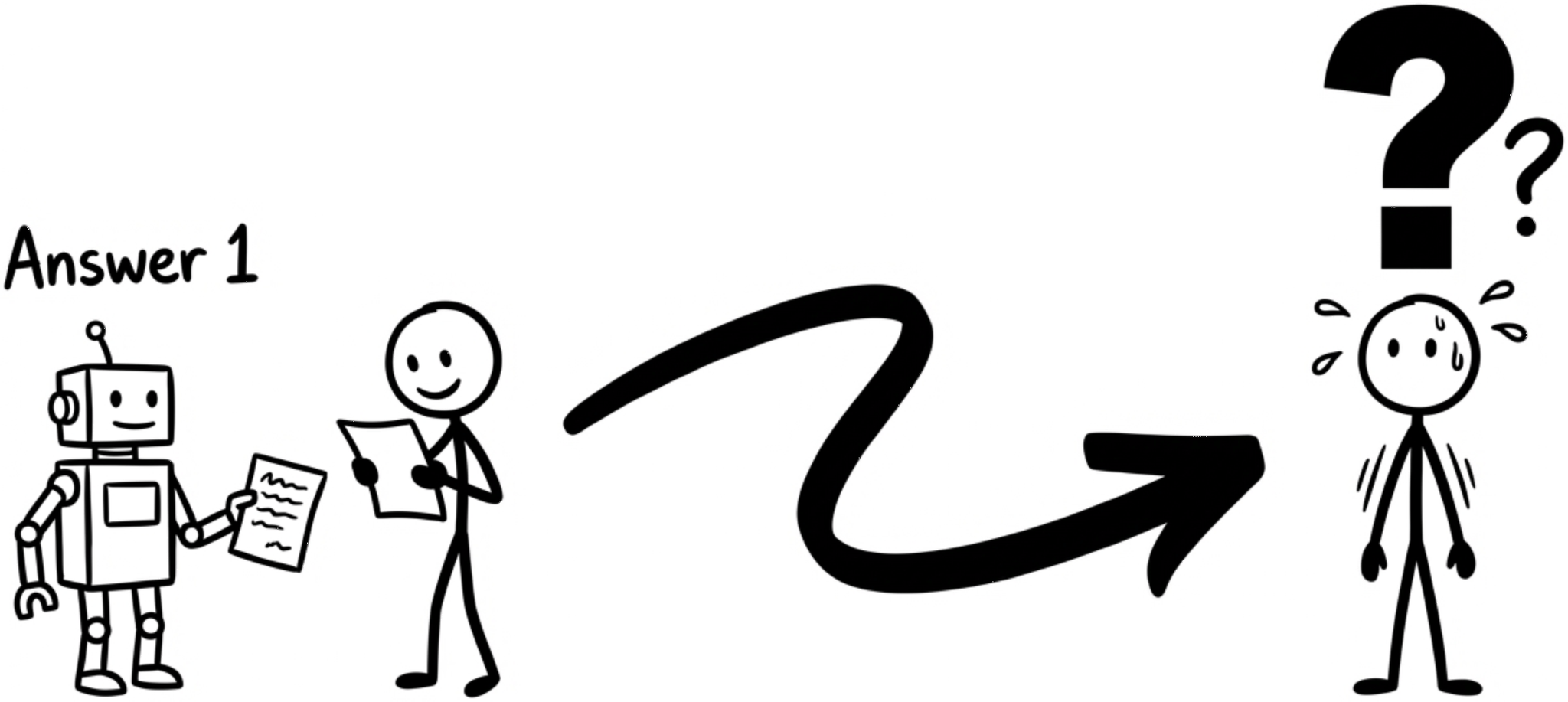
    Repeating is not the same as understanding. AI can make that gap harder to notice because the words arrive complete and polished.

    A useful explanation does not need to be perfect. Look for four simple signs:

    1. Simplify: The child can use their own words.
    2. Connect: The child can relate the idea to something familiar.
    3. Apply: The child can give a new example or answer a basic “what if” question.
    4. Notice: The child can say which part is still unclear.

    A pause is not failure. An imperfect explanation may reveal more learning than a flawless paragraph repeated from the screen.

    Parents do not need to know the topic better than the child. You can listen for the shape of their thinking.

    A comparison between copying words and building understanding on a strong foundation

    Turn AI into a questioner

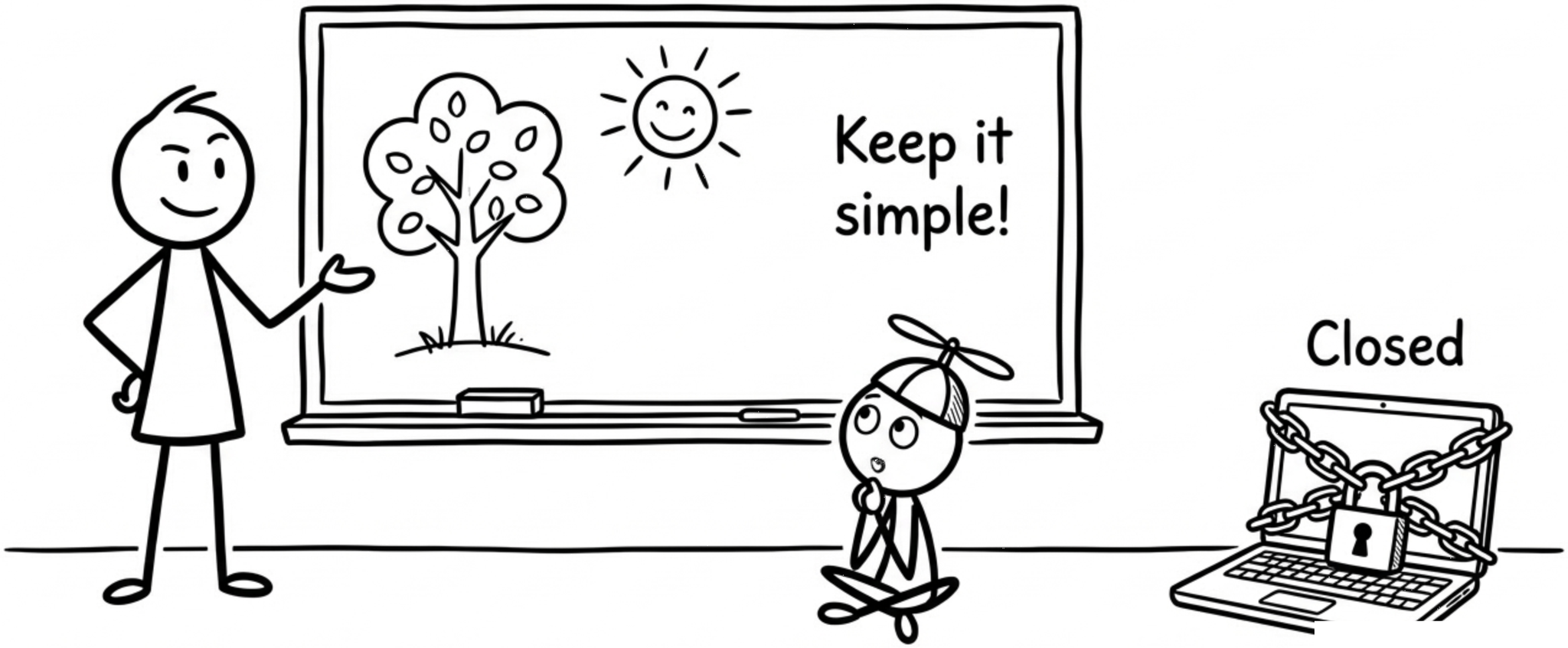
    AI becomes more useful when it stops doing all the explaining.

    Ask the child to explain the topic first. Then let AI ask follow-up questions, point out unclear parts and request a simpler explanation.

    I will explain this idea in my own words. Ask me three follow-up questions. Tell me which part is unclear, but do not give me the full answer immediately.

    This changes the role of AI. It becomes a practice partner rather than an answer sheet.

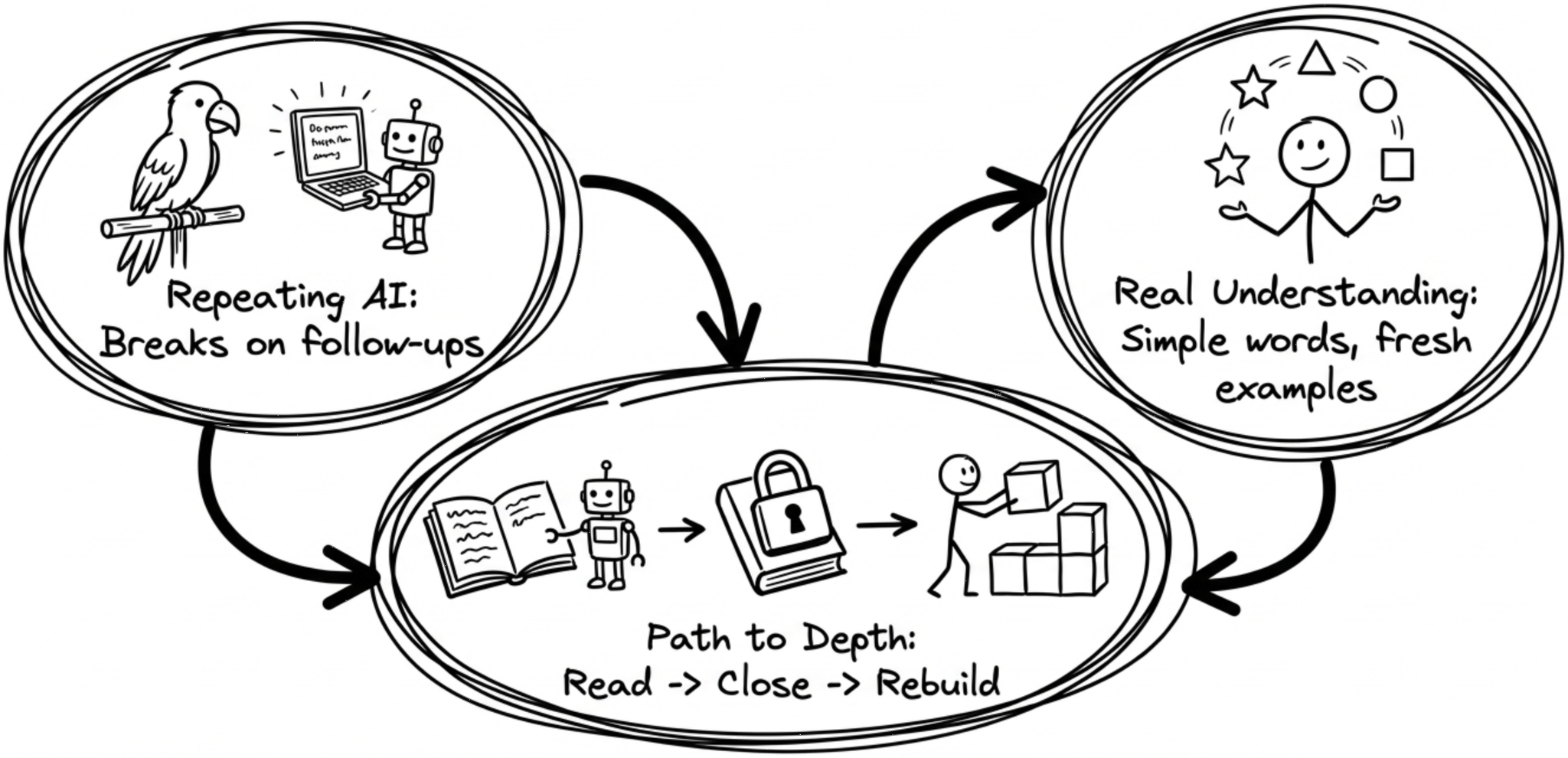
    Closing the screen after reading is useful too. It removes the polished wording and leaves the child with the idea they actually remember. This is one practical way of using AI without letting it do all the thinking.

    A child explains an idea simply while the AI screen is closed

    The five-step learning loop

    A useful AI-assisted learning routine is not a straight line from question to answer.

    Try this loop:

    1. Read: Use AI to explore an explanation.
    2. Close: Move the screen or answer out of view.
    3. Explain: Ask the child to rebuild the idea in their own words or with a sketch.
    4. Question: Ask one follow-up question that changes the example or condition.
    5. Revisit: Return to AI only for the missing or confusing part.

    Each round should leave more of the thinking with the child.

    Do not submit an AI-assisted answer until you can explain it without looking at the screen.

    A five-step learning loop between AI, the child’s explanation and a follow-up question

    Try this with one topic this week

    Let your child use AI to explore one topic. Then close the screen and ask:

    Can you explain that to me as if I have never heard of it?

    Listen for their own words, a new example, a connection and an honest point of confusion.

    The goal is not to keep children away from AI. It is to make sure the tool does not remove the part where their own thinking is built.

    The explanation does not need to be perfect. It needs to belong to the child.

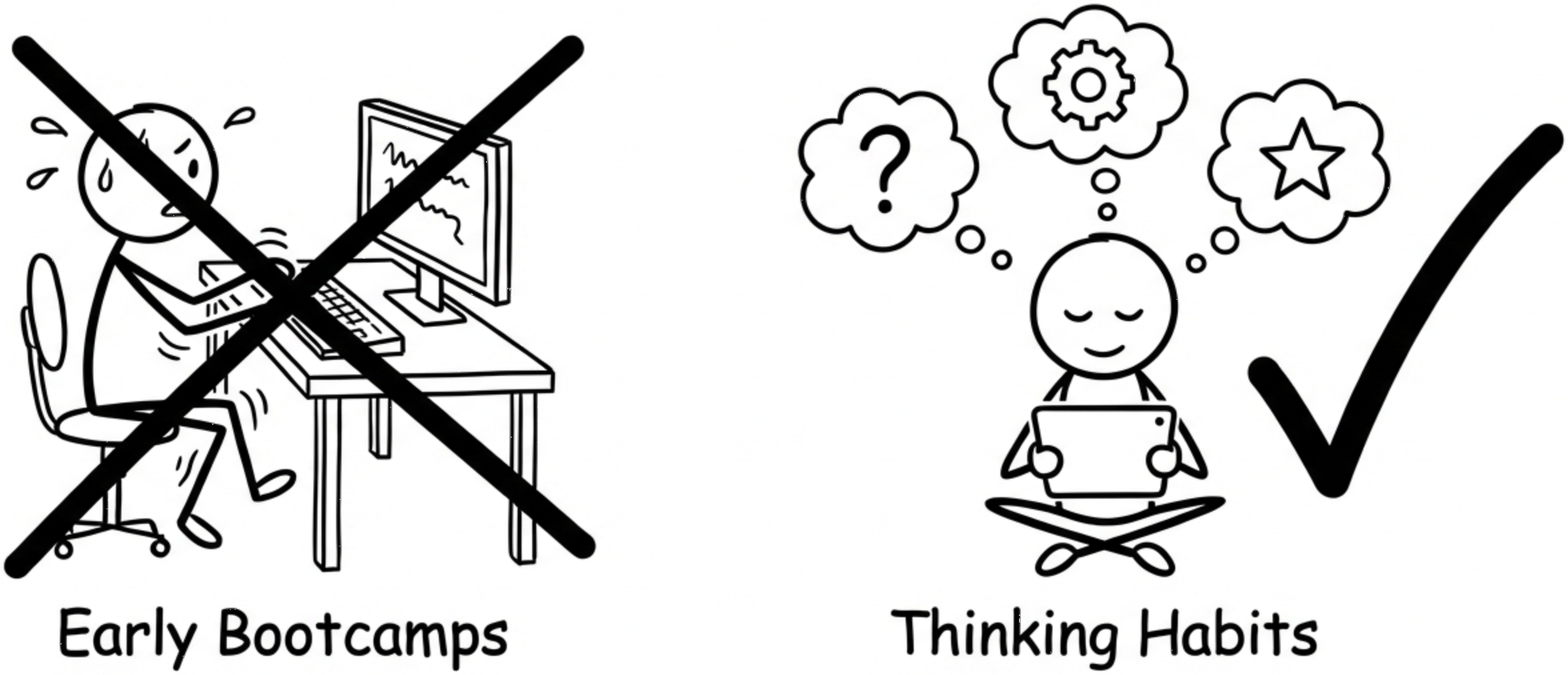
  • Five Thinking Habits Children Need Before They Learn to Code

    Five Thinking Habits Children Need Before They Learn to Code

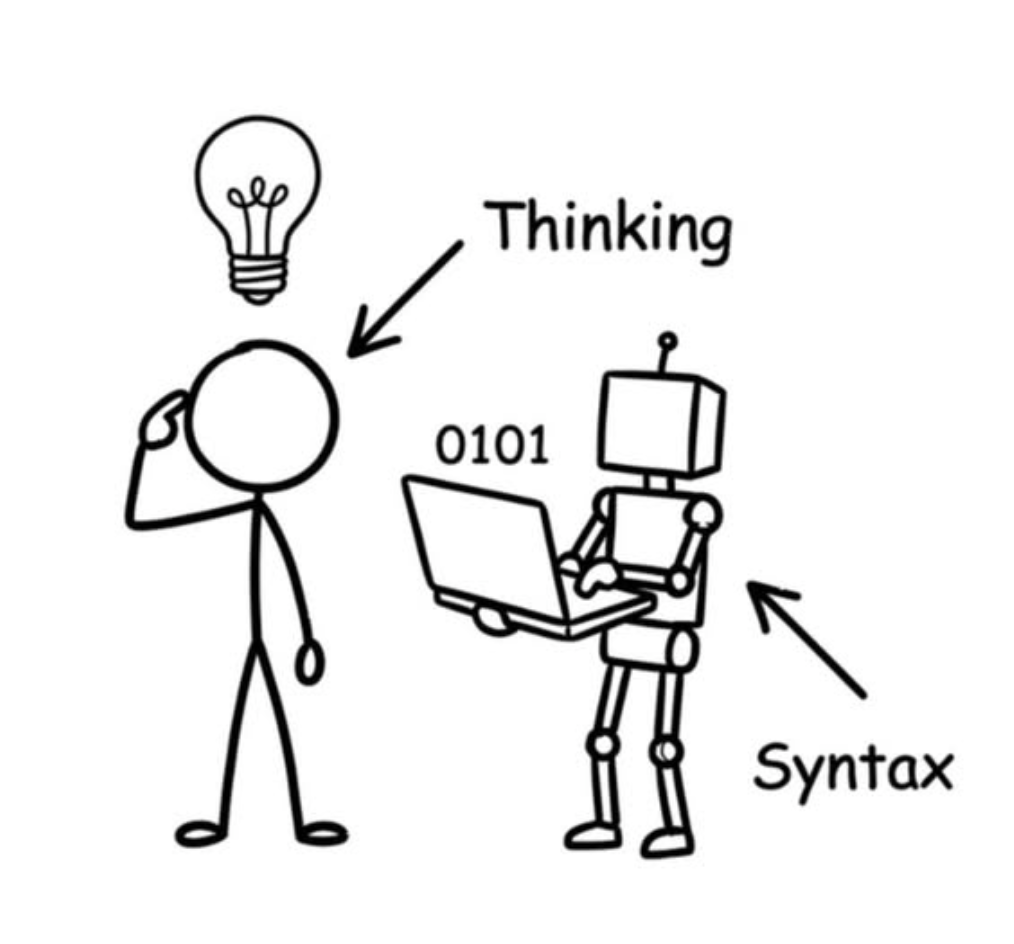
    Learning to code can be valuable. But syntax is not the first skill that makes a child a capable problem-solver.

    As a software engineer, I do not think children should avoid coding. Coding can help them build, test and understand how digital systems work.

    But learning a programming language is not the same as learning to think clearly.

    A child can memorise commands and still struggle to define a problem. They can copy working code and still be unable to explain why it works. With AI now able to generate code from a sentence, that distinction matters even more.

    The better starting question is not, “Which language should my child learn first?”

    It is, “What thinking should my child practise while learning to build things?”

    Black-and-white ThinkBySketch illustration introducing thinking habits that support coding

    Coding is one place to practise thinking

    Good coding involves much more than typing instructions into a computer.

    A programmer has to understand the problem, divide it into manageable parts, predict what might happen, inspect the result and improve the next attempt.

    Children can begin practising those habits long before they know what a variable or loop is. They can practise them while building with blocks, planning a game, drawing a map, organising a room or explaining how to make a sandwich.

    Coding then becomes another medium for thinking rather than a race to learn syntax.

    1. Define the real problem

    Children often begin with the first visible task:

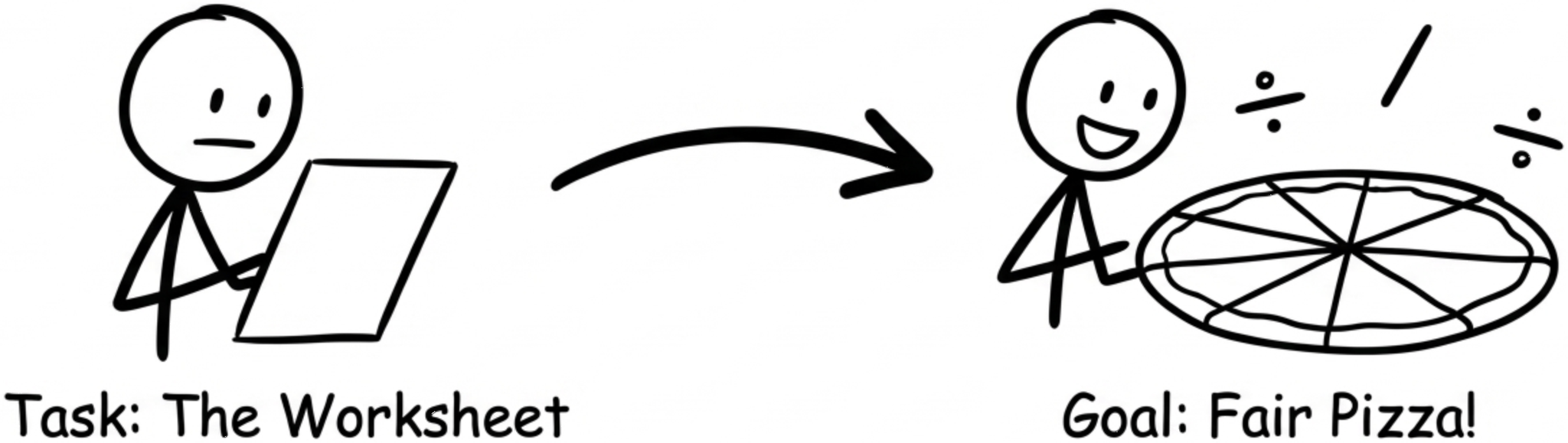
    “I need to finish this worksheet.”

    But the task and the problem are not always the same.

    The deeper problem might be understanding fractions well enough to divide something fairly. It might be finding a way to remember new words. It might be designing a game that is challenging without becoming frustrating.

    A useful question is:

    “What are you actually trying to make happen?”

    This helps a child separate the outcome from the tool. A worksheet, an app, a piece of code or an AI chatbot may help. None of them can define the goal for the child.

    Black-and-white ThinkBySketch illustration accompanying the habit of defining the real problem

    2. Break the problem into smaller parts

    Large problems often feel confusing because several smaller problems are mixed together.

    Suppose a child wants to make a simple quiz game. Before thinking about code, they can identify the parts:

    • choose a topic
    • write the questions
    • decide how answers will be checked
    • keep score
    • show the final result

    Each smaller part is easier to discuss, test and improve.

    Parents can encourage this habit with one sentence:

    “What is the smallest part we can solve first?”

    This habit helps with coding, but it also helps with homework, creative projects and everyday tasks.

    3. Make a prediction and test it

    Before pressing a button, running code or asking AI, invite the child to predict what will happen.

    The prediction does not have to be correct. Its purpose is to make the child’s current thinking visible.

    They might say:

    • “I think this tower will fall because the base is narrow.”
    • “I think the character will move twice because this instruction repeats.”
    • “I think AI will give a different answer if I change this word.”

    Then they test the prediction and compare it with the result.

    The useful conversation is not simply, “Were you right?” It is:

    “What did the result show you that you had not noticed before?”

    Black-and-white ThinkBySketch illustration accompanying the habit of predicting and testing

    4. Explain the decision

    A working answer can hide weak understanding.

    That is especially true when a child can copy code, follow a tutorial or ask AI to generate a solution.

    Ask the child to explain one choice:

    • Why did you start with this part?
    • Why did you choose this instruction?
    • Why do you trust this answer?
    • Why did you reject the other option?

    The explanation does not need technical vocabulary. Simple language is often a better sign that the idea belongs to the child.

    This connects directly with the explain-back test in Can Your Child Explain the Answer Without AI?

    Black-and-white ThinkBySketch illustration accompanying the habit of explaining a decision

    5. Improve an imperfect attempt

    Children can begin to see mistakes as information rather than proof that they are bad at something.

    A first attempt might be unclear, incomplete or completely wrong. The next question is not always, “What is the correct answer?”

    It can be:

    “What is one change that could make this attempt better?”

    This encourages iteration. Change one instruction. Move one block. Rewrite one sentence. Test one assumption. Then look again.

    AI can support this process when it gives a hint, asks a question or helps compare alternatives. It should not always erase the imperfect attempt by replacing it with a finished answer.

    The Try → Hint → Explain → Apply sequence in How to Use AI Without Letting It Do Your Child’s Thinking offers one practical way to keep that process with the child.

    Black-and-white ThinkBySketch illustration accompanying the habit of improving an imperfect attempt

    Try the Human Robot activity

    This screen-free activity practises all five habits.

    Choose a small task such as drawing a simple house, arranging three objects or walking from one side of a room to the other.

    One person is the programmer. The other is the robot.

    The robot follows instructions literally. It does not fill in missing details.

    1. Define: Agree on what the robot must accomplish.
    2. Break down: Divide the task into small instructions.
    3. Predict: Say what each instruction should make the robot do.
    4. Explain: Describe why the instructions are in that order.
    5. Improve: Change the instructions after something unexpected happens.

    Then swap roles.

    The activity introduces sequencing and debugging without turning the evening into a lesson about programming terminology.

    Do not wait to code

    These habits are not a gate children must pass before they are allowed to code.

    Children can learn coding and thinking together. A visual programming tool, a robotics kit or a small website project can give them something real to question and improve.

    The principle is simple: do not measure progress only by how much code a child can produce.

    Notice whether they can define, divide, predict, explain and revise.

    Languages and tools will change. Those five habits will continue to help a child make sense of unfamiliar problems.

  • Start Learning What AI Can’t Replace

    Start Learning What AI Can’t Replace

    Why chasing the next skill is a trap and the five meta-skills that will still matter when today’s models are obsolete.

    AI just broke the old study plan. Facts expire. Tools vanish. Tutorials age in weeks. Yet some people feel calmer, sharper, even liberated in this chaos. They’re not learning more tools, they’re learning something harder to copy. The question isn’t “what should I learn next?” anymore. It’s something far more unsettling…

    What To Learn Now, In The World of AI

    AI will keep changing what facts and tools matter. If you only chase the next skill, you’ll always feel behind.


    Learn What AI Can’t Replace

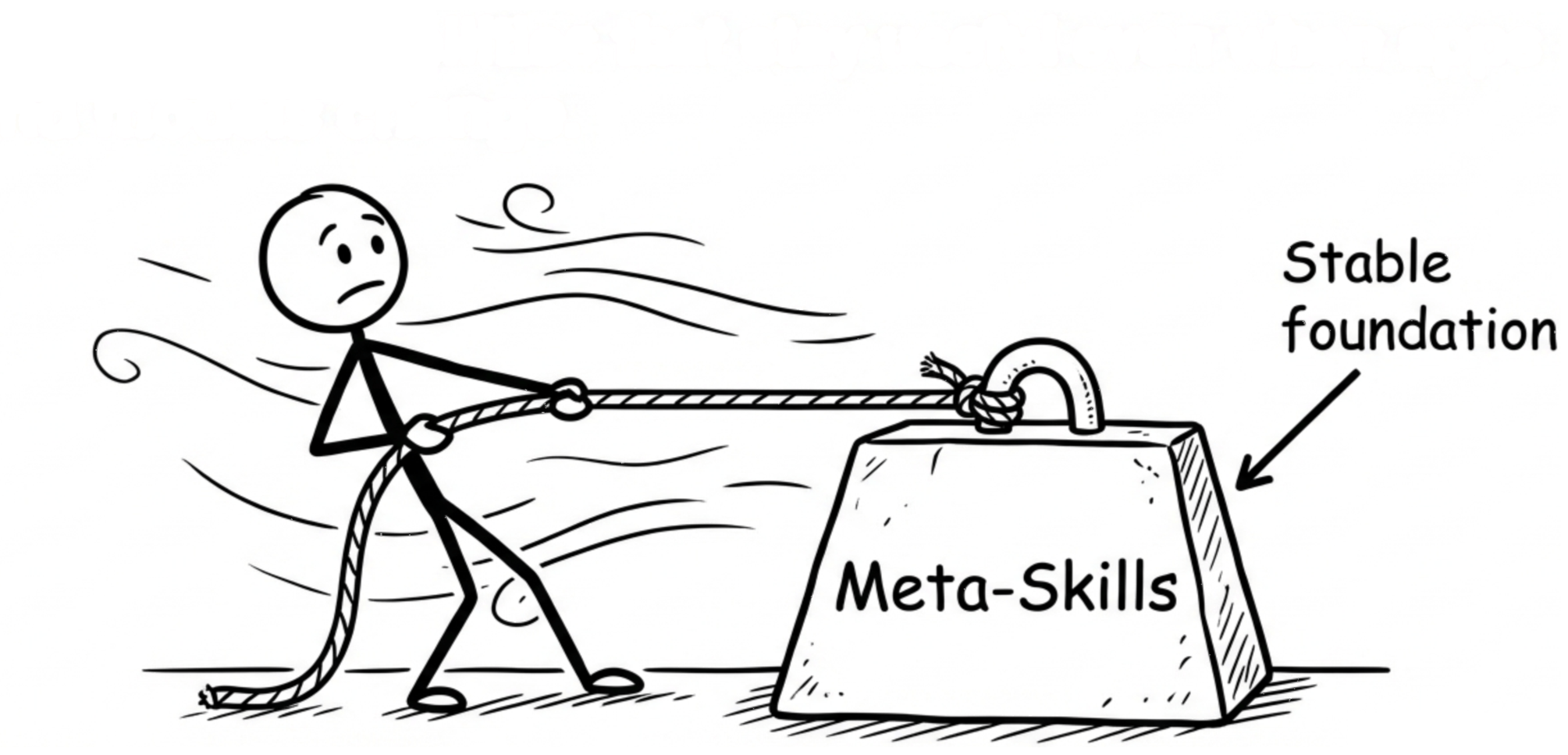
    Stop asking “which tool should I learn”. Start learning meta-skills: abilities that stay useful even when tools, apps, and models change.

    Here are five meta-skills to focus your learning in the age of AI:

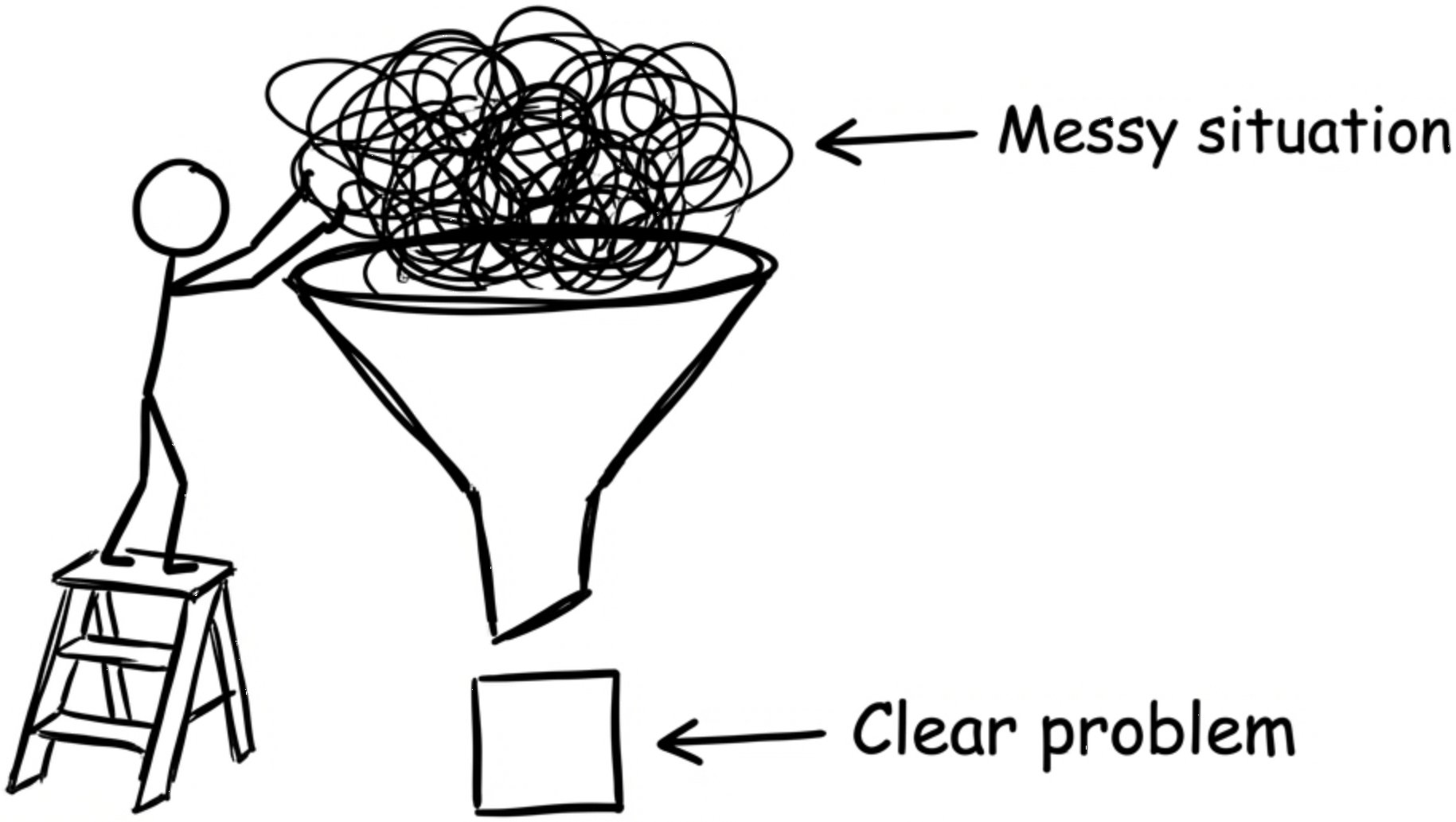
    Problem Framing

    Most people jump to prompts. Start earlier. Practice turning messy situations into clear problems.

    Ask:

    • What’s the real goal here

    • What’s fixed vs flexible

    • What would “done” look like

    AI is powerful, but only on well-framed problems.

    Prompt Design

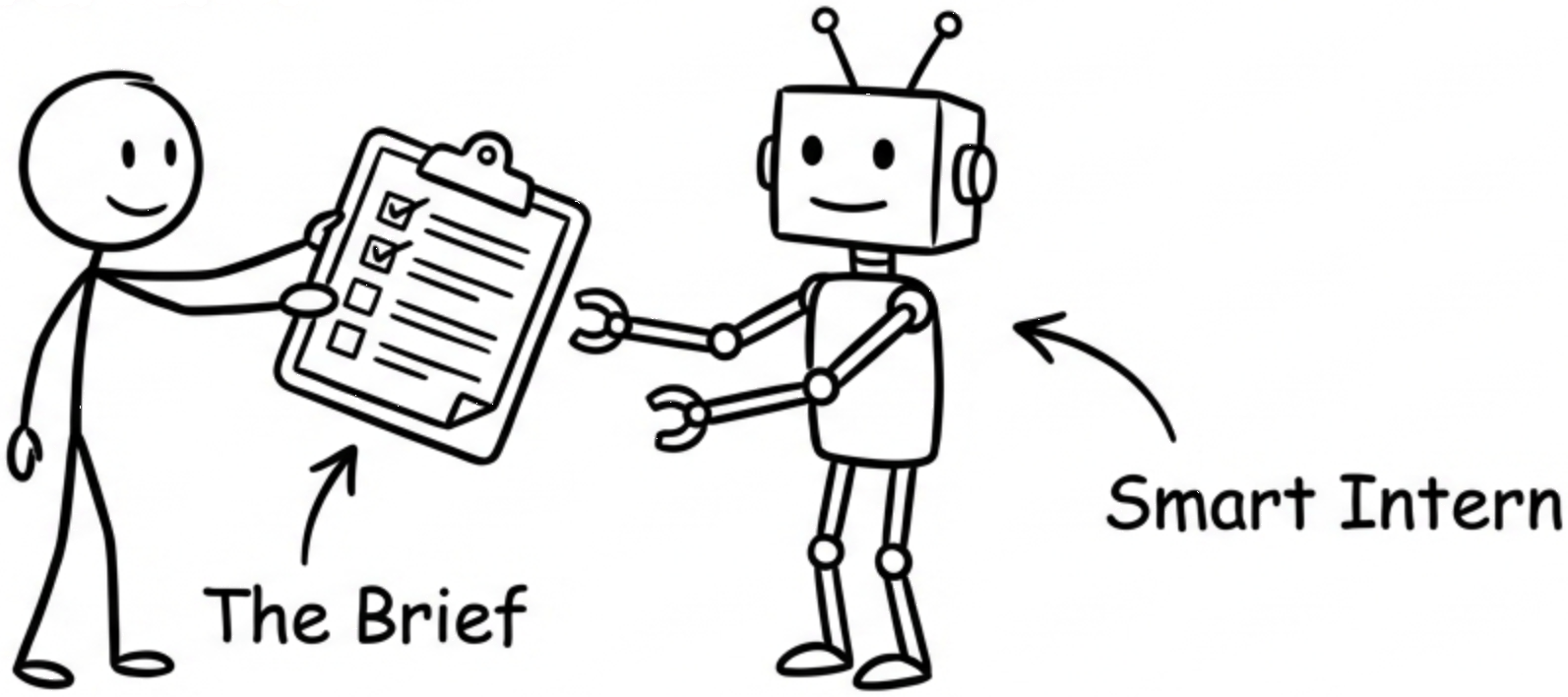
    Treat prompting like writing a brief for a smart intern.

    Include:

    • Role you want it to play

    • Context it needs

    • Format you want back

    • Constraints like length or tone

    Then iterate: refine the prompt after each answer instead of starting from scratch.

    Sensemaking

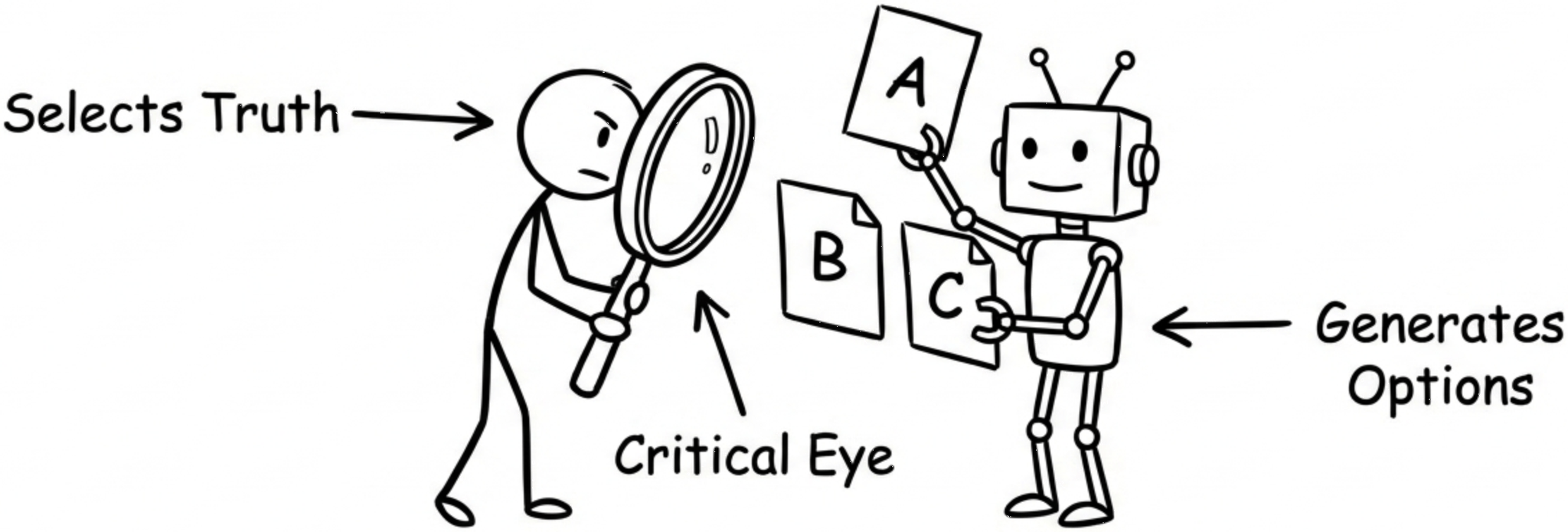
    AI gives you many answers. You need to decide what makes sense.

    Train yourself to:

    • Compare 2–3 answers

    • Ask “what’s missing or wrong”

    • Cross-check with a trusted source

    example Ask AI for a plan, then highlight which steps you’d change and why.

    Systems Thinking

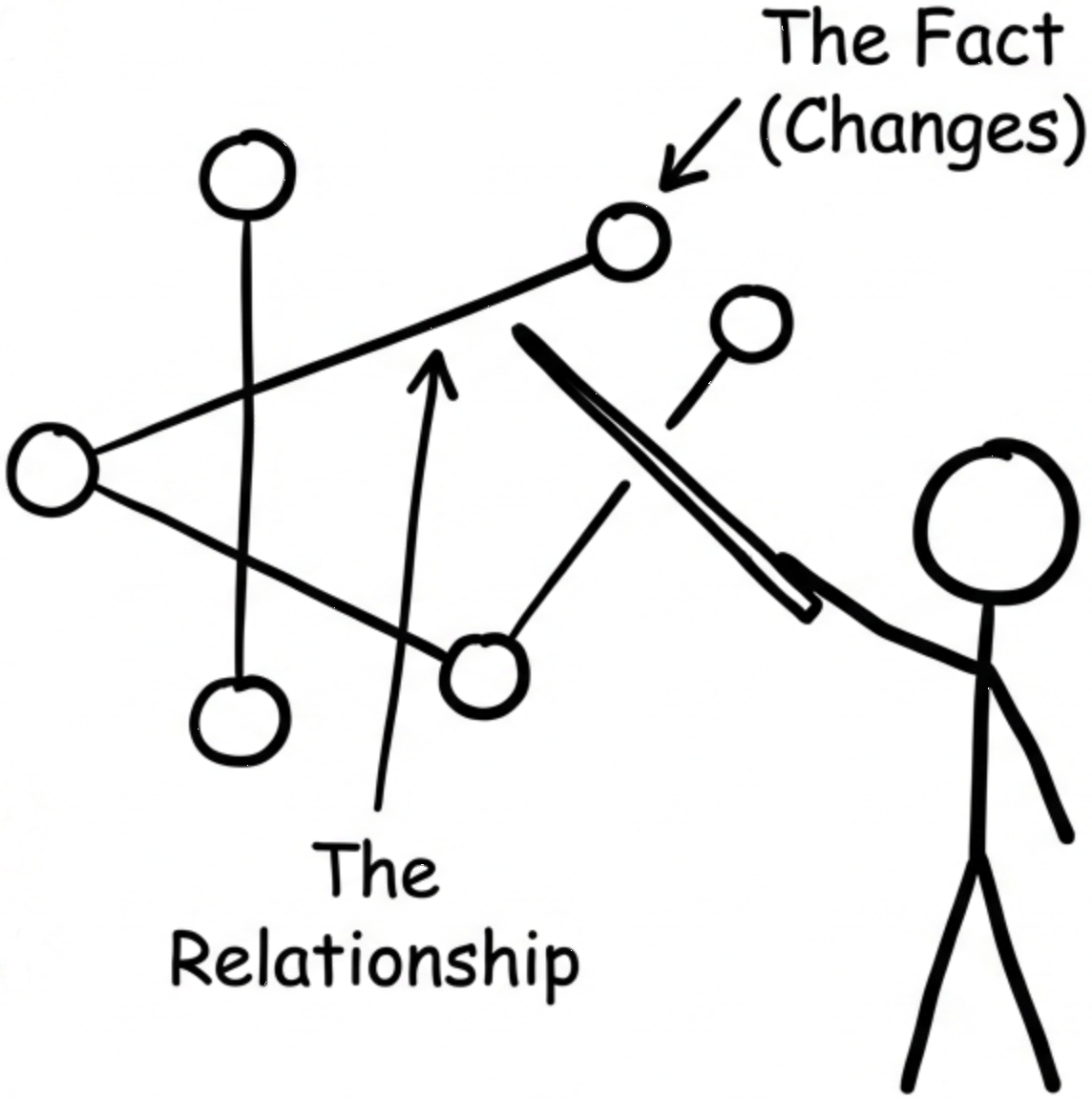
    Facts change. Connections matter.

    When you learn something new, always ask:

    • What does this connect to

    • What breaks if this changes

    • What is the upstream cause

    You’re learning how things fit together, not just isolated tricks.

    Experiment Loops

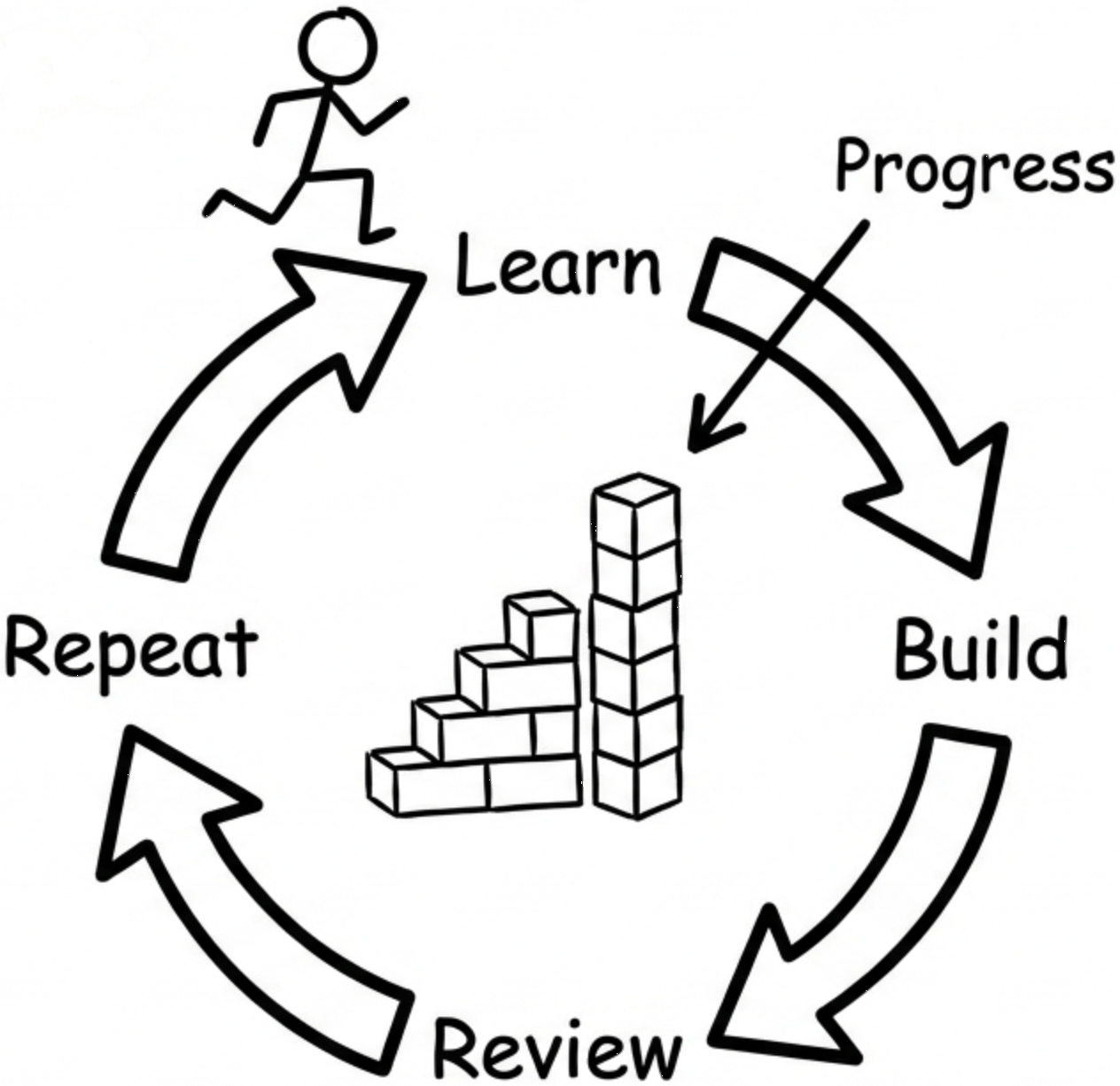
    Treat learning like running small tests, not passing exams.

    Simple loop:

    • Learn one idea

    • Build a tiny thing with AI

    • Review what worked or failed

    • Adjust and repeat

    🎯 Why It Matters

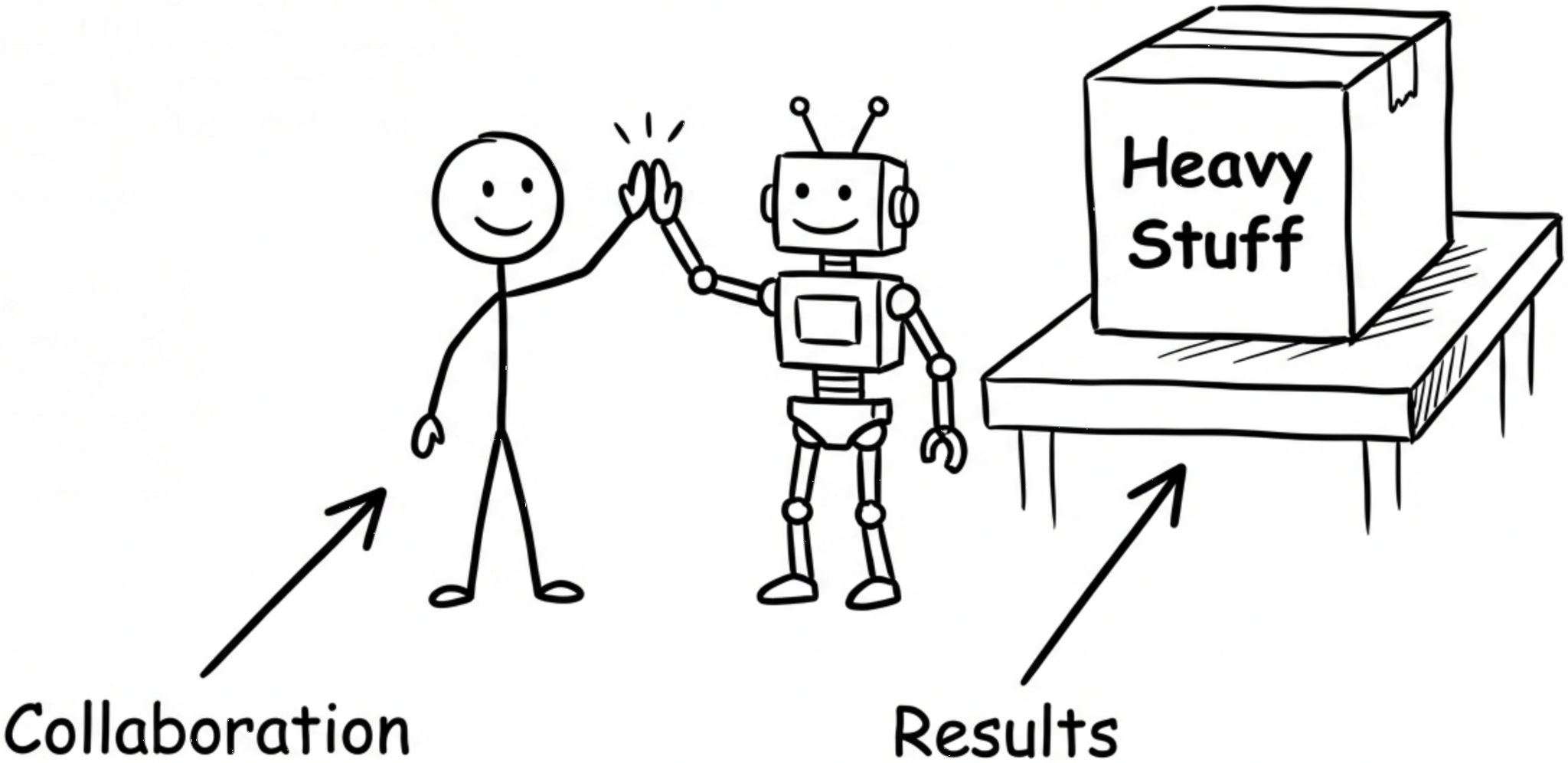
    If you learn meta-skills, AI becomes a partner, not a threat. You’ll adapt faster than the tools change.

    Stop chasing tools. Build the skills that make any tool useful.

  • HOW TO EXPLAIN CONCEPTS BY STARTING FROM THE MISTAKE

    HOW TO EXPLAIN CONCEPTS BY STARTING FROM THE MISTAKE

    Use wrong beliefs to design explanations that actually stick

    Learners start with messy mistakes. In this post, you will learn a simple process to design explanations backwards, using the common confidence myth as a concrete example.


    Designing Explanations Backwards: Start from the Mistake, Not the Concept

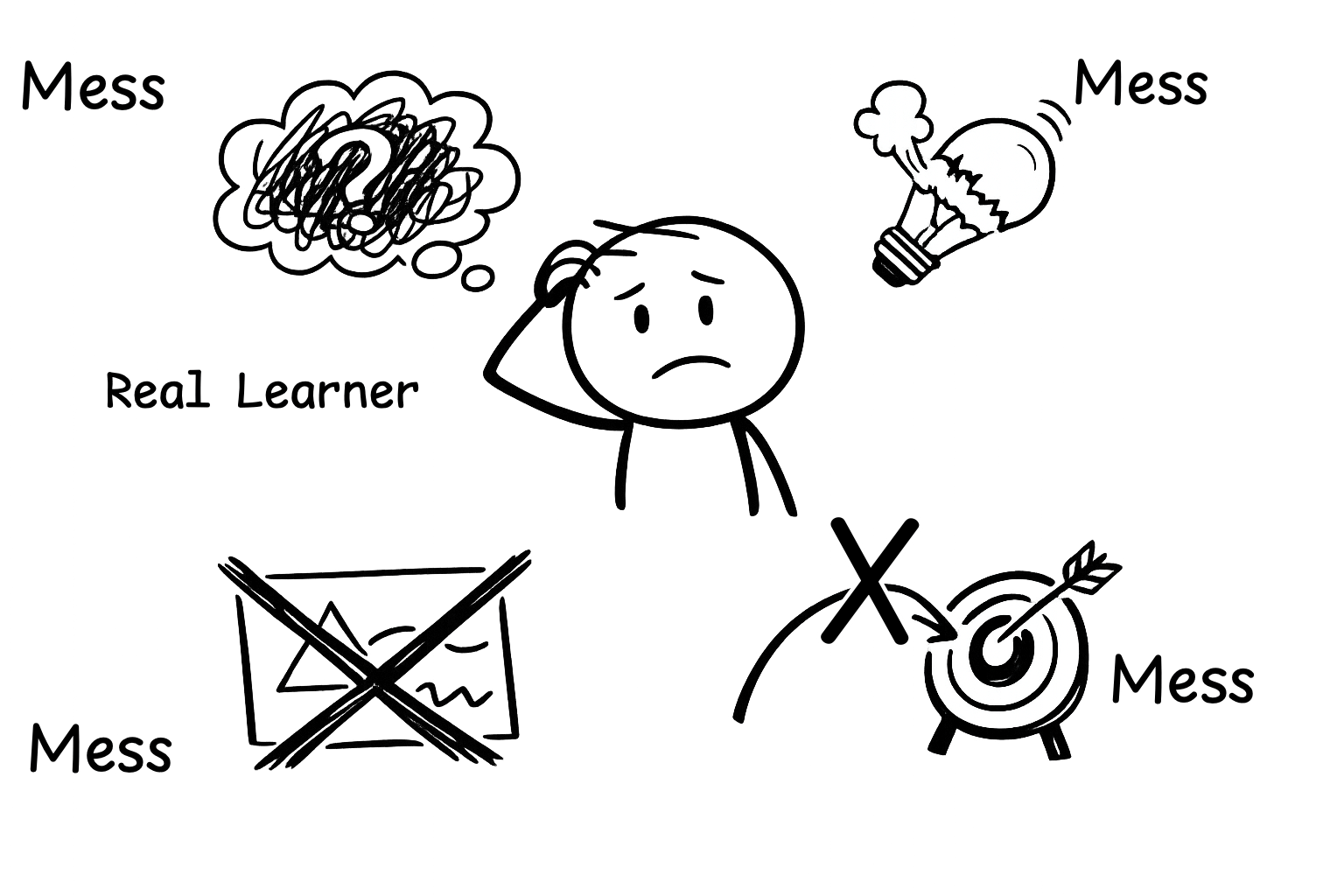
    Most explanations start with a clean definition. But real learners usually start with a messy, half-wrong idea.


    The key is to build around the wrong idea, not the right one.

    📋 In practice…

    • You first name the common mistake

    • Then slowly replace it with a better mental model using targeted examples.

    Here is a simple process you can follow to design explanations backwards.

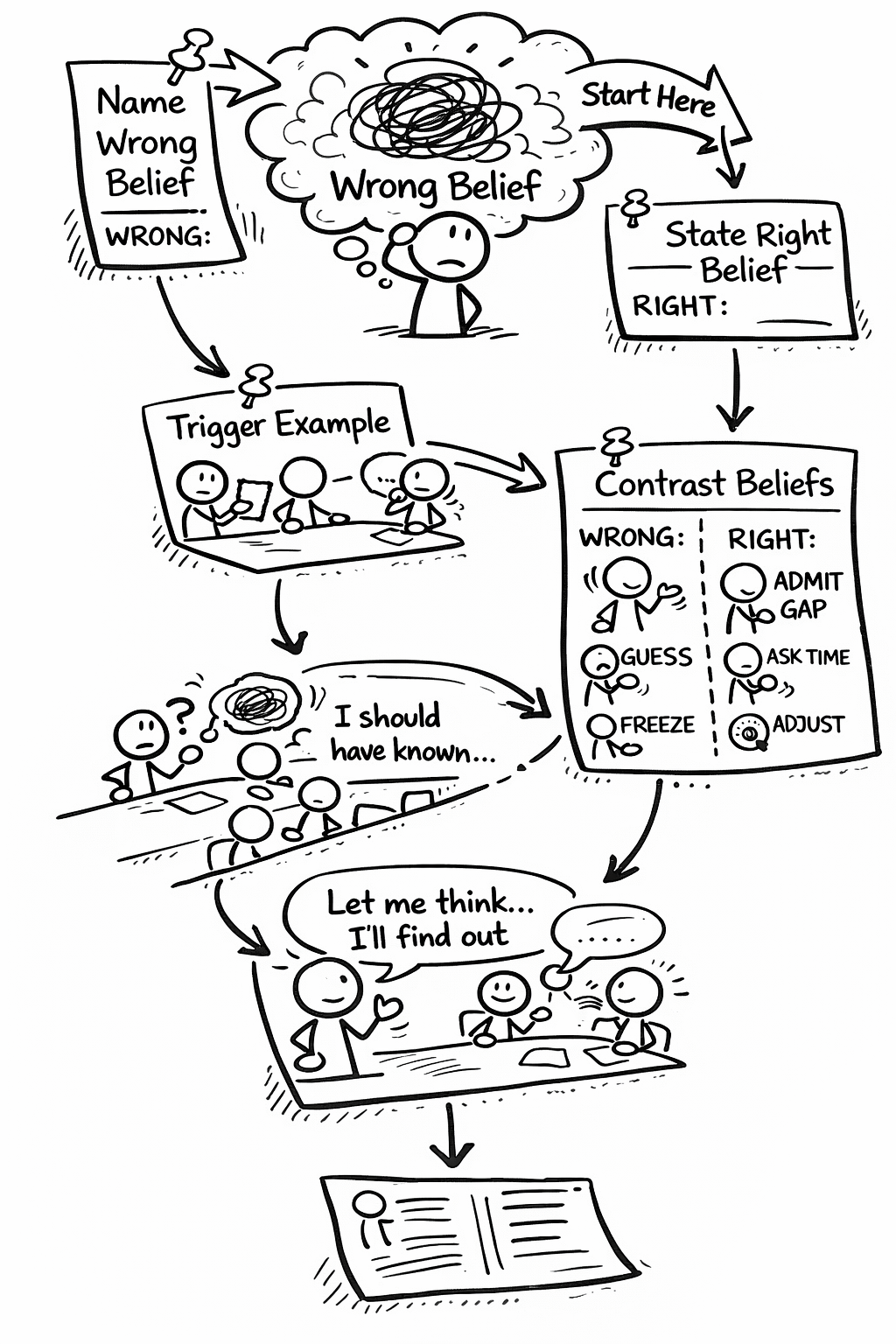
    Name The Wrong Belief

    Write the exact wrong sentence people think. Keep it short and blunt.

    📝 For Example…

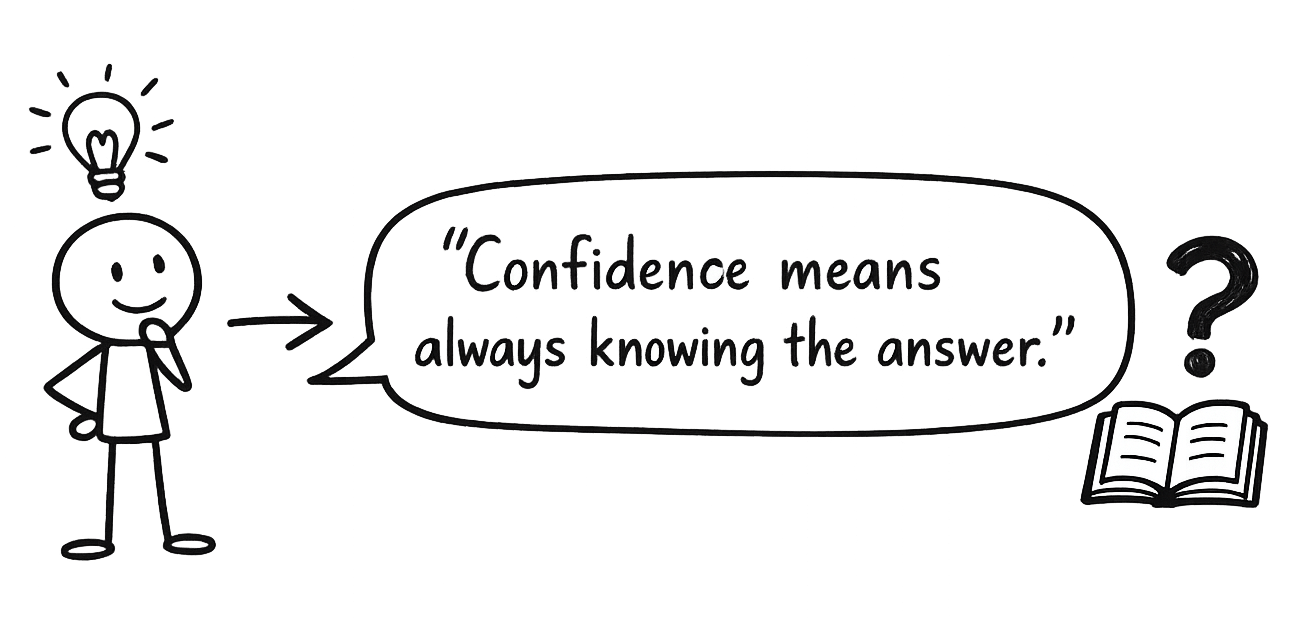
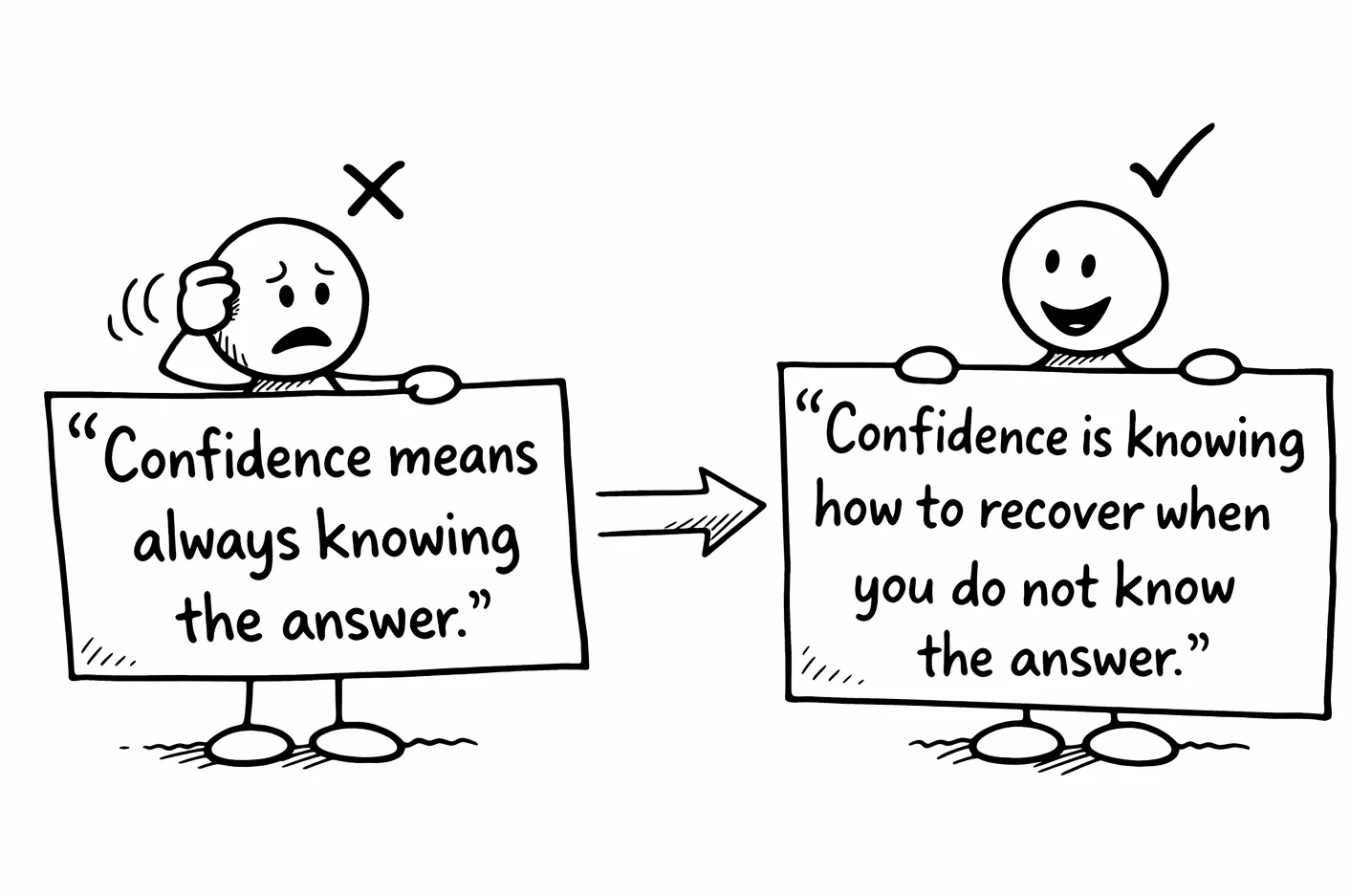
    The wrong belief is: “Confidence means always knowing the answer.”

    State The Right Belief

    Write the replacement sentence you want in their head.

    📝 For Example…

    For confidence, use: “Confidence is knowing how to recover when you do not know the answer.” Keep both beliefs visible side by side.

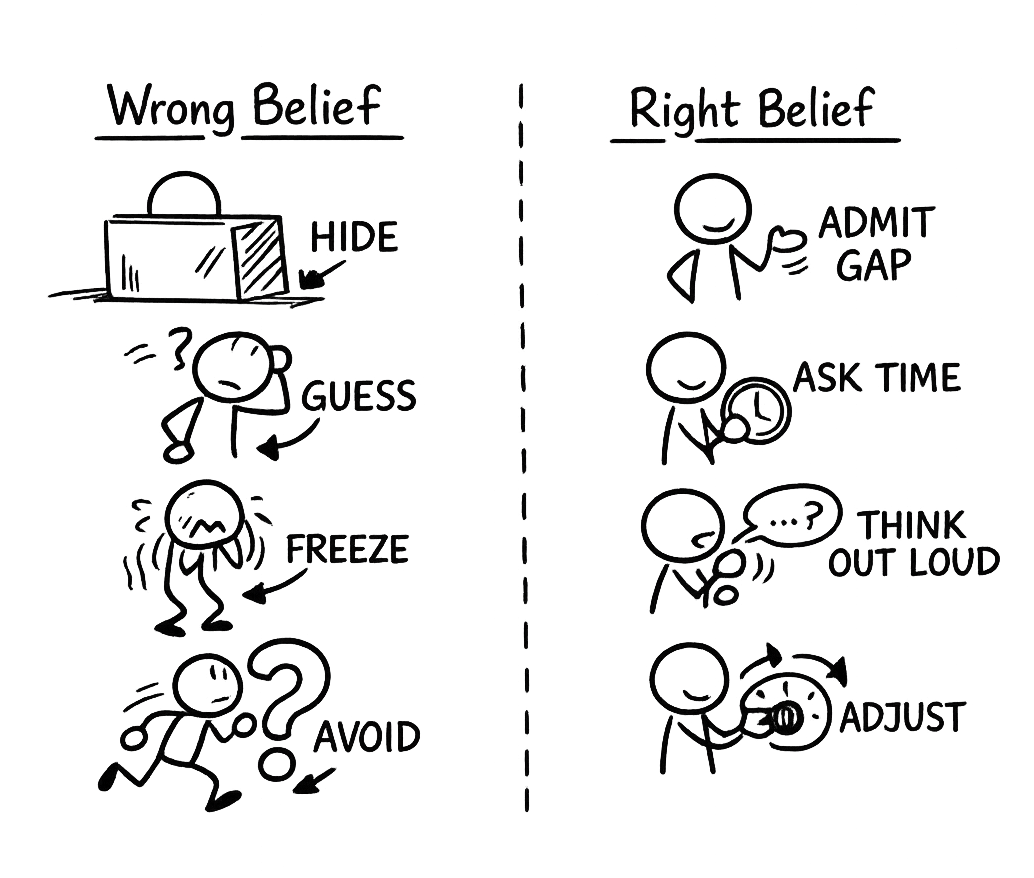
    Contrast Them Clearly

    List what each belief makes people do.

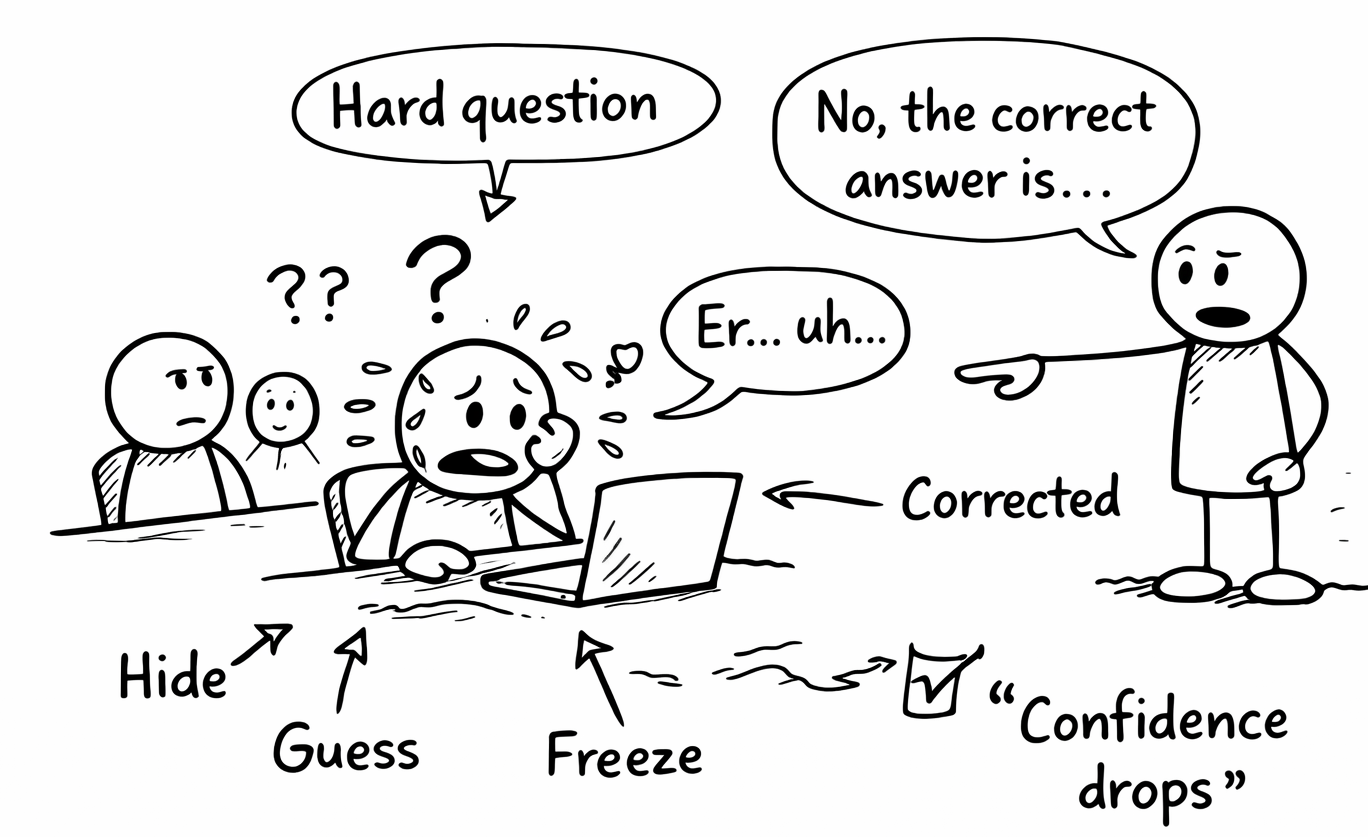
    • Wrong belief hide, guess, freeze, avoid hard questions

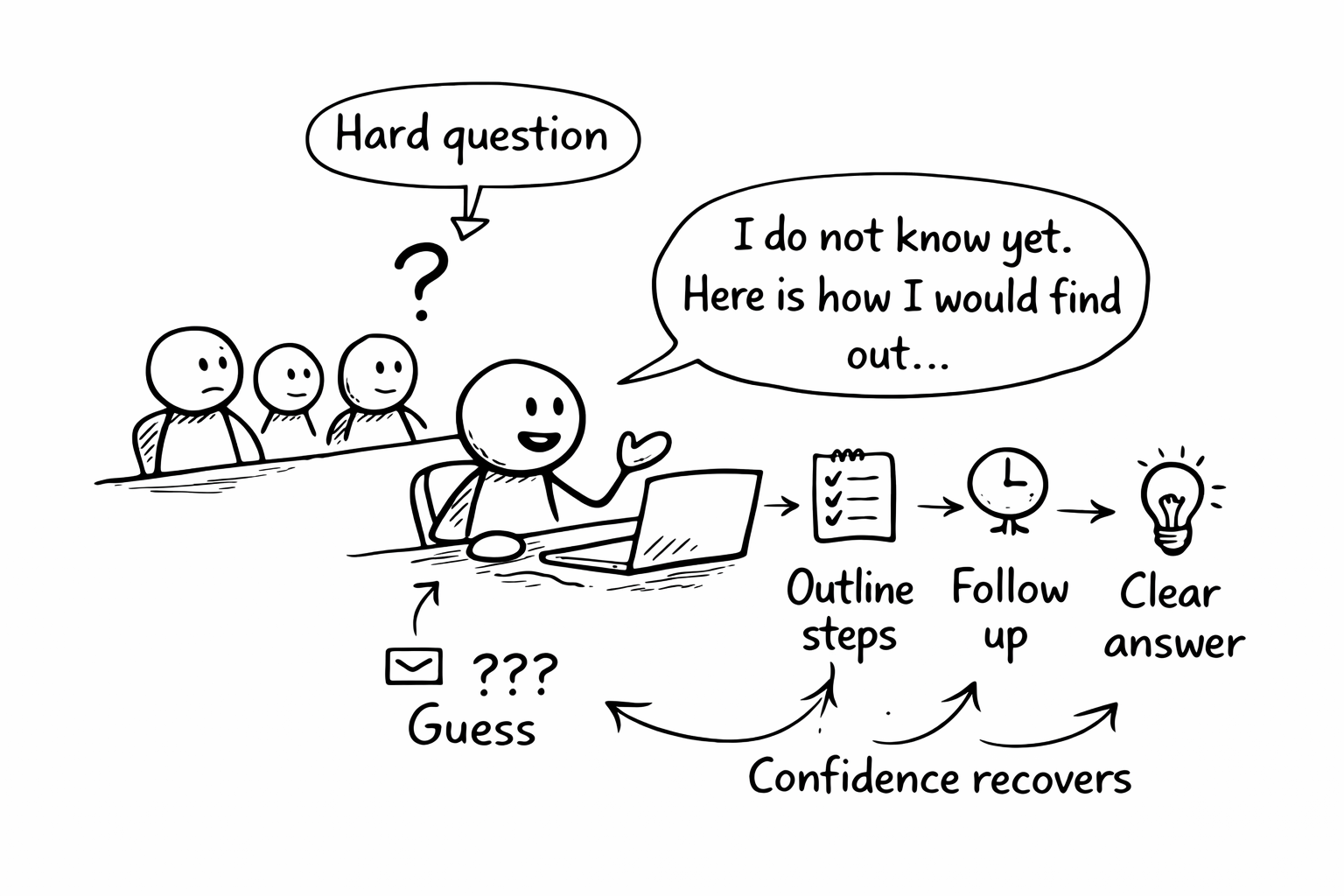
    • Right belief admit gaps, ask for time, think out loud, adjust

    Design A Trigger Example

    Write a short scene where the wrong belief shows up in real life.

    📝 For Example…

    In meeting, someone gets a tough question. They panic, guess an answer, and someone corrects them in front of everyone.

    Later their confidence sinks. They tell themselves, “I should have known that,” instead of, “It’s okay not to know everything.”

    Show The Recovery Move

    Rewrite the same story using the right belief.

    📝 For Example…

    Same question. They say “I do not know yet. Here is how I would find out.” They outline next steps, follow up later with a clear answer.
    Confidence comes from recovery, not instant knowledge.

    Backward Explanation Confidence Map

    🎯 Why It Matters

    When you design explanations from the mistake first, you talk to the real mind of the learner. This makes your ideas stick because they fix a pain the learner already feels.

    Next time you explain something, write the wrong belief in quotes before you write a single definition.

  • Discover the Secret Power of ‘What’s the Lesson?’

    Discover the Secret Power of ‘What’s the Lesson?’

    Hey,
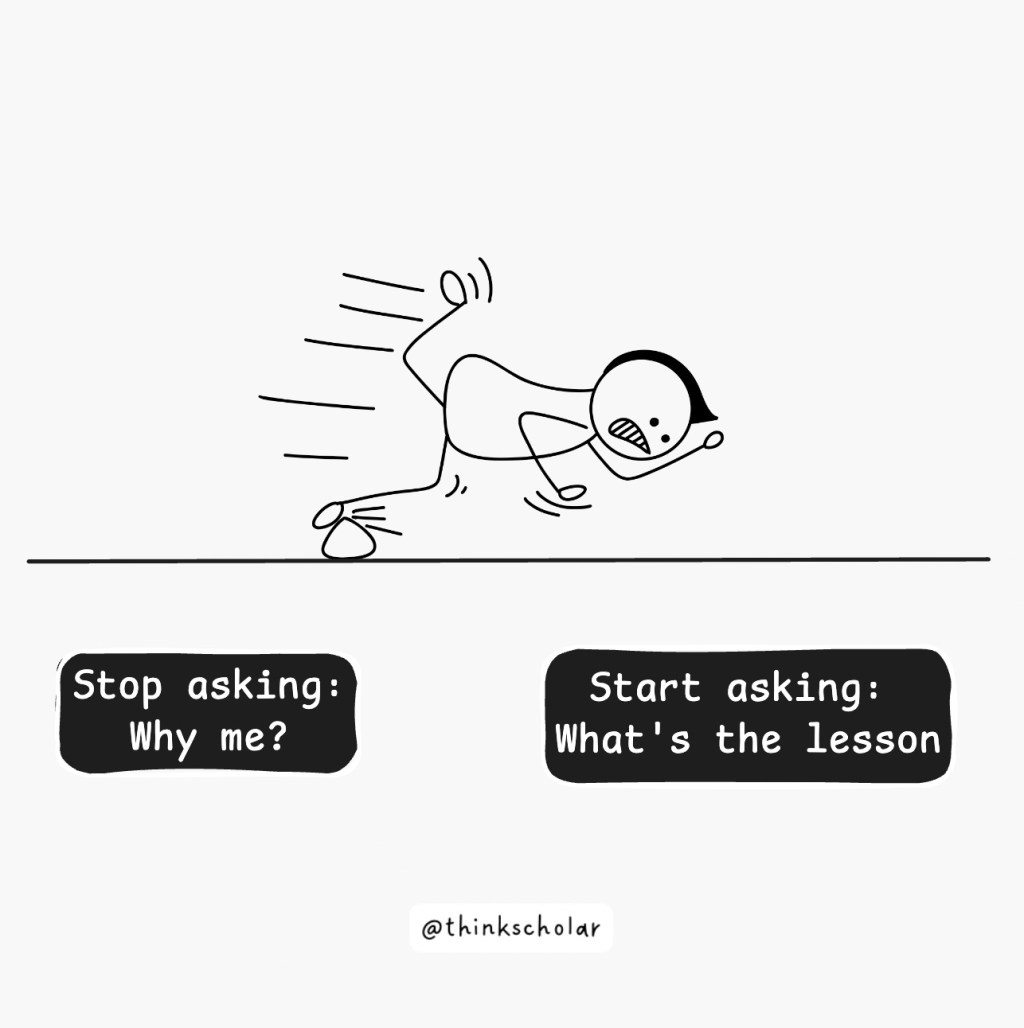
    Have you ever found yourself stuck in the middle of a tough situation, asking, “Why me?” Maybe it’s a job that didn’t work out, a relationship that fell apart, or just one of those days where nothing seems to go right. I’ve been there too. But here’s the thing: the “Why me?” mindset is like being trapped in quicksand. The more you dwell on it, the deeper you sink.

    Let me tell you a quick story.

    🎭 The Turning Point

    A friend of mine, Priya, was crushed when her startup failed. She poured her heart and soul into it, only to face rejection after rejection. Her initial reaction? The classic “Why me?”

    For weeks, she wallowed in self-pity. But one day, something clicked. She shifted her perspective and asked herself a new question: “What’s the lesson?” This one change was a game-changer. Instead of feeling defeated, she started to see her experience as a stepping stone. She figured out what went wrong, refined her business idea, and gave it another shot. Today, she runs a thriving online coaching platform.

    🚀 The Problem with “Why Me?”

    When you focus on “Why me?” you stay stuck in a loop of frustration and blame. It’s like staring at a locked door instead of looking for another way out. Asking “What’s the lesson?” puts you in the driver’s seat of your life. It transforms setbacks into stepping stones.

    🌟 Shift Happens: The Power of Asking “What’s the Lesson?”

    When you ask, “What’s the lesson?” you:

    • Take Back Control: You’re no longer a victim of circumstance.
    • Learn Faster: Every failure becomes a feedback loop.
    • Gain Confidence: Overcoming challenges builds resilience.

    🔑 4-Step Actionable Guide to Find the Lesson

    1. Pause and Reflect: Before reacting, take a deep breath.
    2. Ask the Right Questions: Replace “Why is this happening to me?” with “What can I learn from this?”
    3. Write it Down: Journaling can reveal patterns and lessons you might miss.
    4. Apply What You’ve Learned: Use the insight to make better decisions next time.

    📌 Key Takeaway:

    👉 Life isn’t happening to you; it’s happening for you.

    “Experience is not what happens to you. It’s what you do with what happens to you.” — Aldous Huxley

    🏆 Your Next Move:

    ✨ Start seeing every challenge as a chance to grow.
    🌟 Follow me on Threads for daily insights at https://threads.net/@thinkscholar and Instagram for behind-the-scenes inspiration at https://instagram.com/thinkscholar.

    🚀 Share this newsletter with someone who could use a little perspective shift today!

  • 90% Fake It, 10% Actually Learn

    90% Fake It, 10% Actually Learn

    Here’s the uncomfortable truth: “90% of people pretend to know more than they actually do.”

    It happens in meetings, classrooms, or casual conversations.

    Someone throws out a term:“blockchain,” “neuroplasticity,” “fiscal policy” and you nod along, pretending to get it.

    Why?

    To avoid looking “stupid.”

    But here’s the cost: You miss out on the chance to grow.

    The top 10%? They don’t fake it.

    They embrace their ignorance, ask questions, and grow smarter every day.

    How to Join the 10% (With Practical Examples)

    1. Say, “I Don’t Know” Without Fear

    Example: In a meeting, if someone mentions a term you don’t understand, ask:

    “Can you clarify what you mean by that?”

    Why it works: : It shows confidence and curiosity. People respect honesty more than pretense.

    2. Turn Ignorance Into Curiosity

    Example: If you hear a buzzword like “AI Ethics,” instead of glossing over it, write it down and Google it later.

    Pro Tip: Use tools like ChatGPT, YouTube, or free online courses to get up to speed.

    3. Ask Better Questions

    Shift from: “I don’t get it” → “What are the key points I should understand here?”

    Why it works: This reframes ignorance as a stepping stone to deeper knowledge.

    4. Create a Learning Habit

    Example:

    • Dedicate 10 minutes every day to learning something new.
    • Listen to a podcast (e.g., How I Built This).
    • Watch a YouTube explainer video.
    • Read one Wikipedia article.

    Why it works: Tiny efforts compound into big growth over time.

    5. Teach What You Learn

    Example: After understanding a topic, explain it to a friend or coworker in simple terms.

    Why it works: Teaching reinforces learning and highlights gaps in your understanding.

    The Wake-Up Call

    Ask yourself:

    • When was the last time I admitted, “I don’t know”?
    • Am I focused on looking smart or getting smarter?

    Remember: Pretending is a dead end. Curiosity opens every door.

    Real wisdom begins when you admit: “I don’t know.”

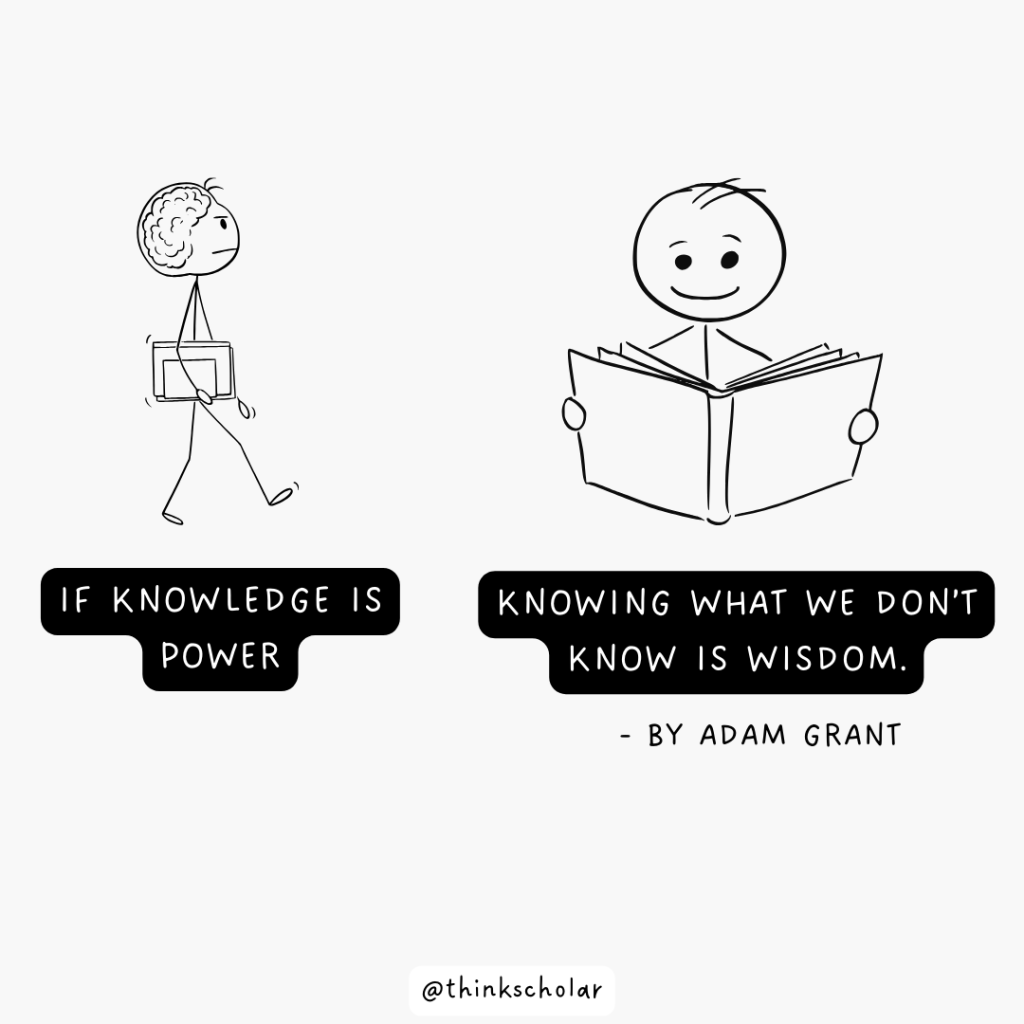
    “If knowledge is power, knowing what we don’t know is wisdom.” – Adam Grant

    Spread the word:

    👉 Follow for actionable wisdom on Threads

    👉 Behind-the-scenes on Instagram

    📩 Subscribe to grow smarter every week.

    🌟 Share this with someone who’s ready to learn.

  • Your Child’s Screen Is Not Just Entertaining Them. It Is Teaching Them.

    Your Child’s Screen Is Not Just Entertaining Them. It Is Teaching Them.

    Every app teaches a behaviour.

    A video app teaches a child to keep watching. A game teaches them to keep trying. An AI tool may teach them to question, create—or simply copy.

    The old question

    “How much screen time?”

    The better question

    “What is this screen teaching my child?”

    The same 30 minutes can create three very different habits

    📺 CONSUME

    The screen chooses. The child watches, scrolls and accepts.

    🎨 CREATE

    The child chooses. They make a story, drawing, video, question or tiny project.

    🧠 LEARN

    The child explains, tests, compares and improves what they understand.

    Thirty minutes of scrolling is not the same as thirty minutes of building.

    A simple rule for parents

    Before the screen opens, ask:

    “What will you make, understand or practise before you close it?”

    1. Choose a purpose.
    2. Use the screen or AI as a tool.
    3. Explain what you learned without the tool.

    That last step matters. AI can produce a polished answer without producing understanding. Here is a simple test: ask your child to explain the answer without AI.


    The goal is not less screen. It is better screen.

    Good screen time is not defined by an “educational” label. It is screen time that leaves a child with more curiosity, agency or skill than before.

    Smarter screen time in the age of AI—for parents raising curious kids.

  • Breaking Free from the Limits: The Journey to True Discovery

    Breaking Free from the Limits: The Journey to True Discovery

    We’re all blind. The more we live within our small bubbles, the less we see. Each of us believes we know the world, but in reality, we only see a narrow version of it.

    Consider the story of a small boy who lived on an island, surrounded by his community. They told him, “This island is the complete world. There’s nothing else out there.” But one day, driven by curiosity, the boy decided to leave. He set sail, despite the warnings of the people around him.
    “Stop! There’s nothing out there. This island is everything.”

    The boy sailed to distant lands and encountered new people. When he reached a great country, someone warned him:


    “Stop! This country is the complete world. There’s no need to go further.”
    But the boy refused to settle for what others called “complete.” He had seen glimpses of what lay beyond.

    With each new step, more voices tried to stop him:


    “The Earth is flat. You’ll fall off the edge!”


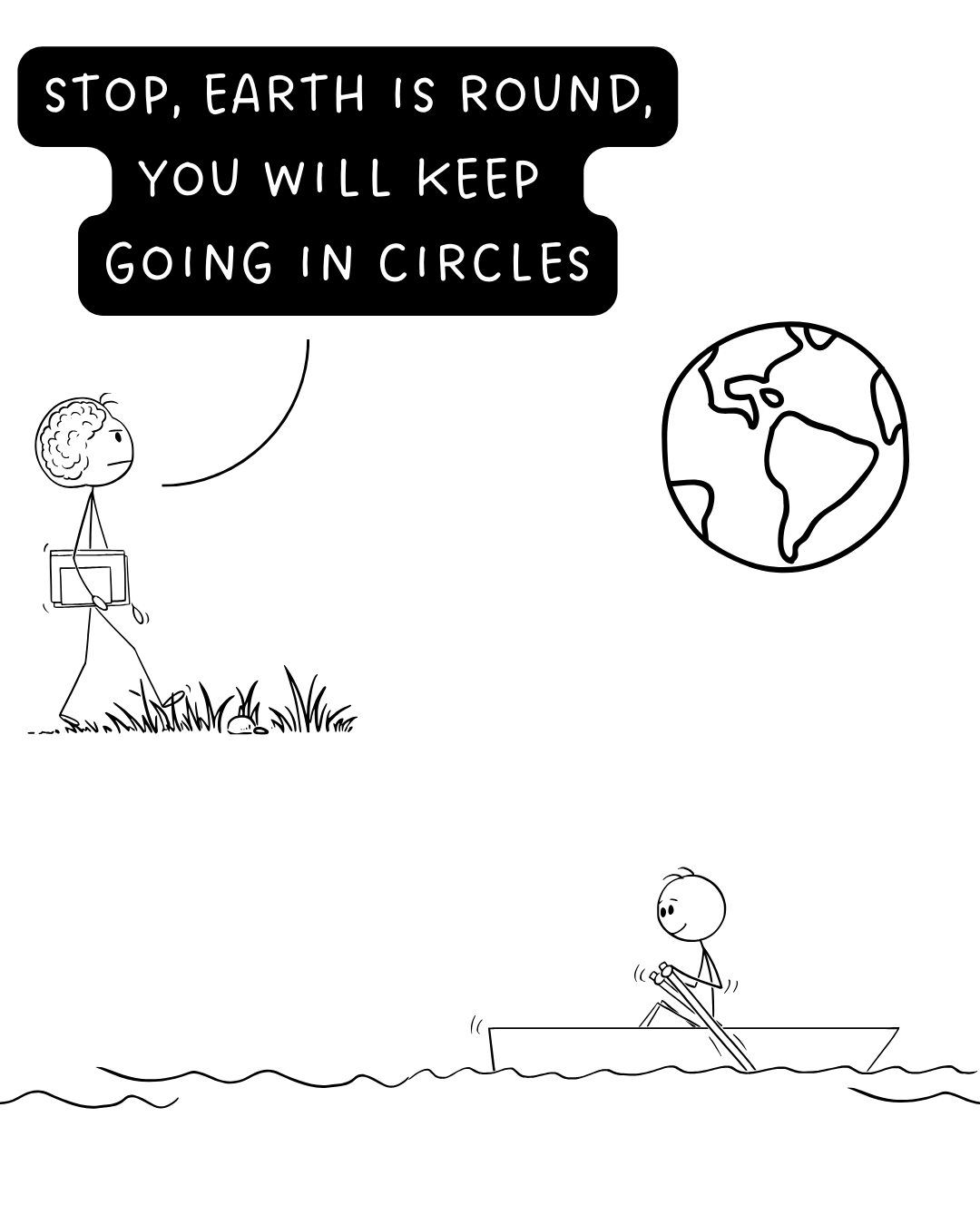
    “The Earth is round. You’ll just keep going in circles.”


    But every new journey brought more knowledge, and the boy realized that the fears of others were not his own. He began to understand—this was about more than just discovering new places.

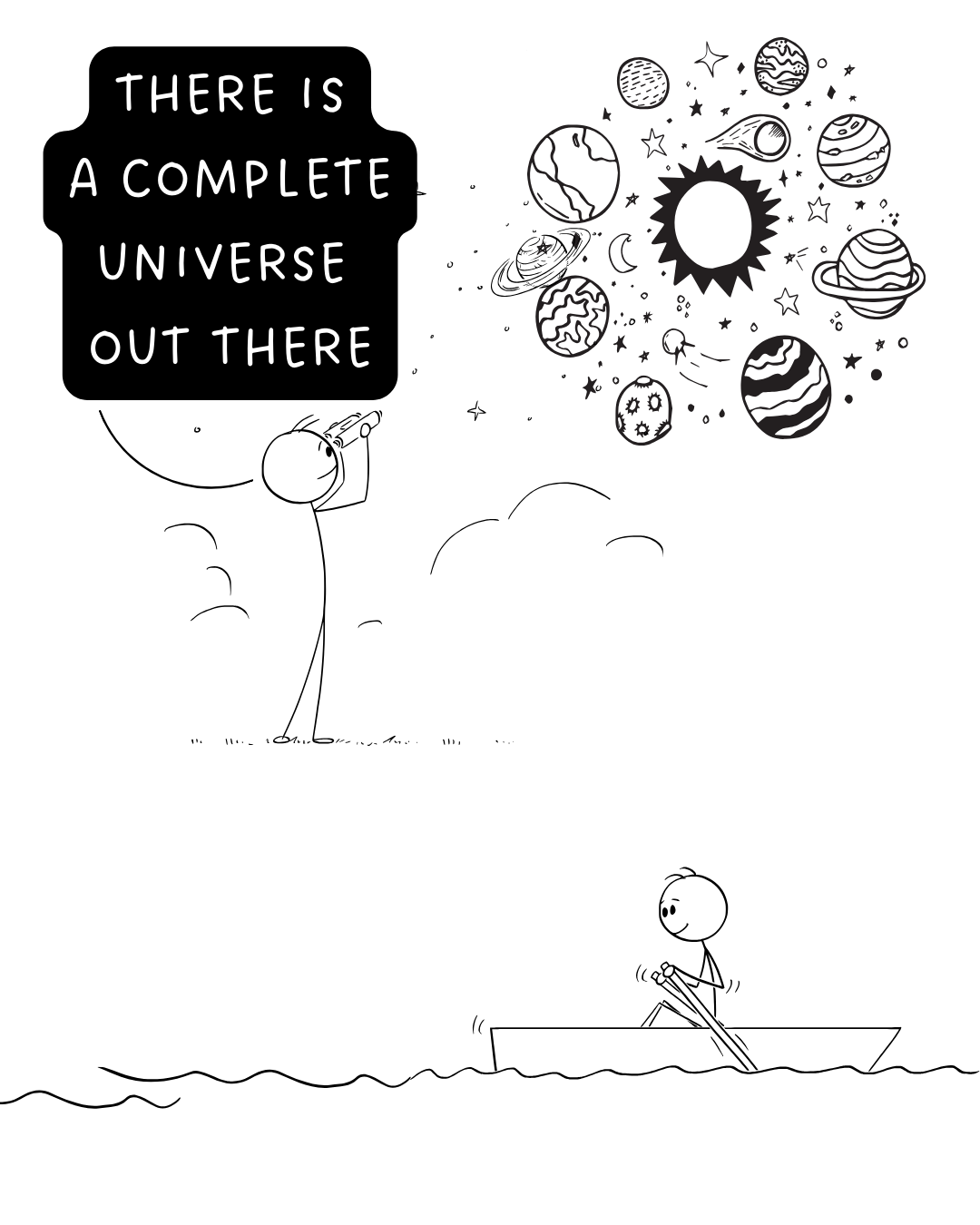
    As he continued, he came to a profound realization: There is an entire universe out there, filled with things we cannot yet comprehend.


    Leaving his boat behind, he sought new ways to explore.

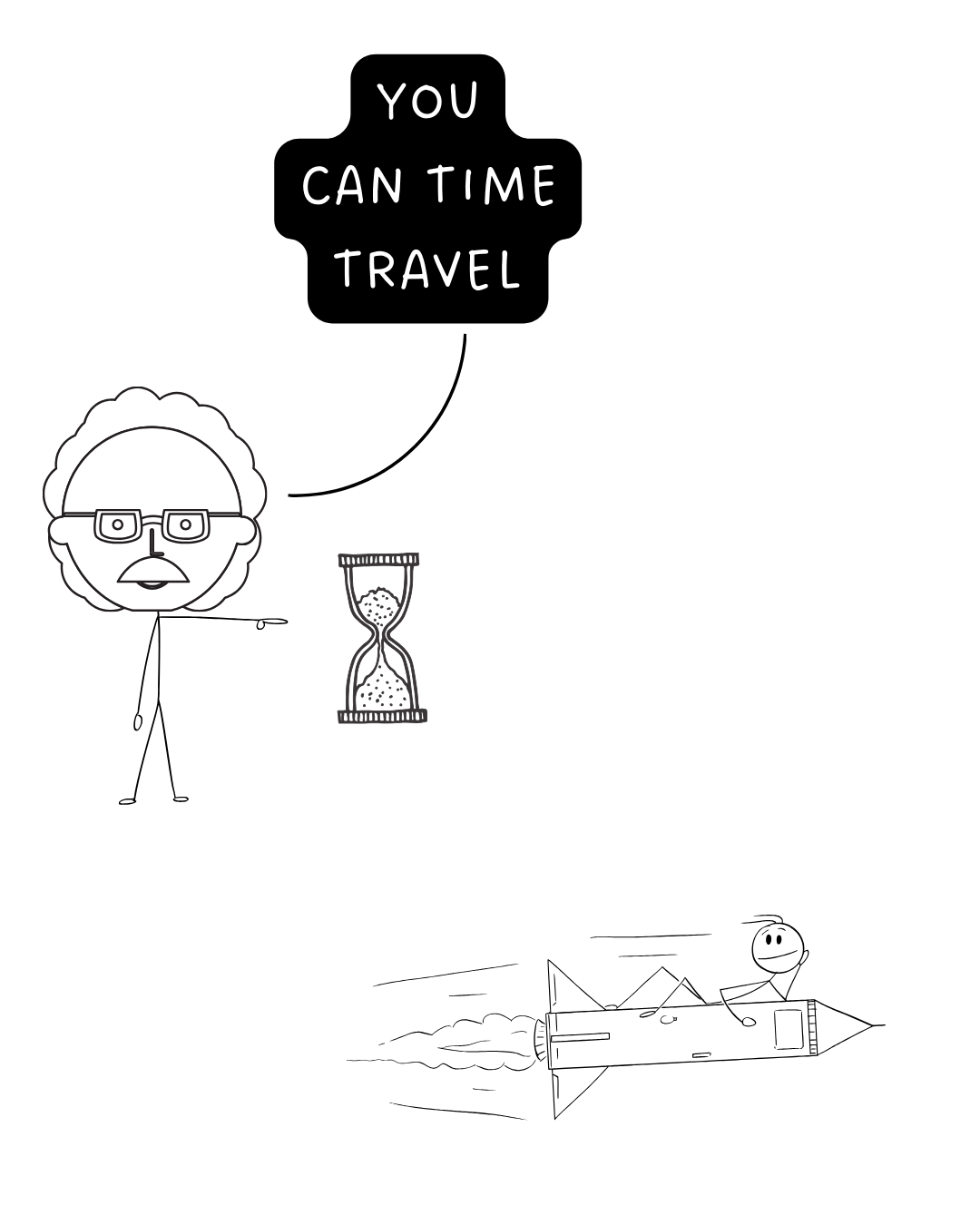
    Then, one day, he met Einstein. The wise man told him:
    “You’ve been traveling all wrong. There’s more to travel than just distance. Time itself is something you can explore. You can journey into the past and the future.”


    This opened the boy’s mind in ways he had never imagined. It wasn’t just the world around him that held secrets—time itself was a path he could walk.

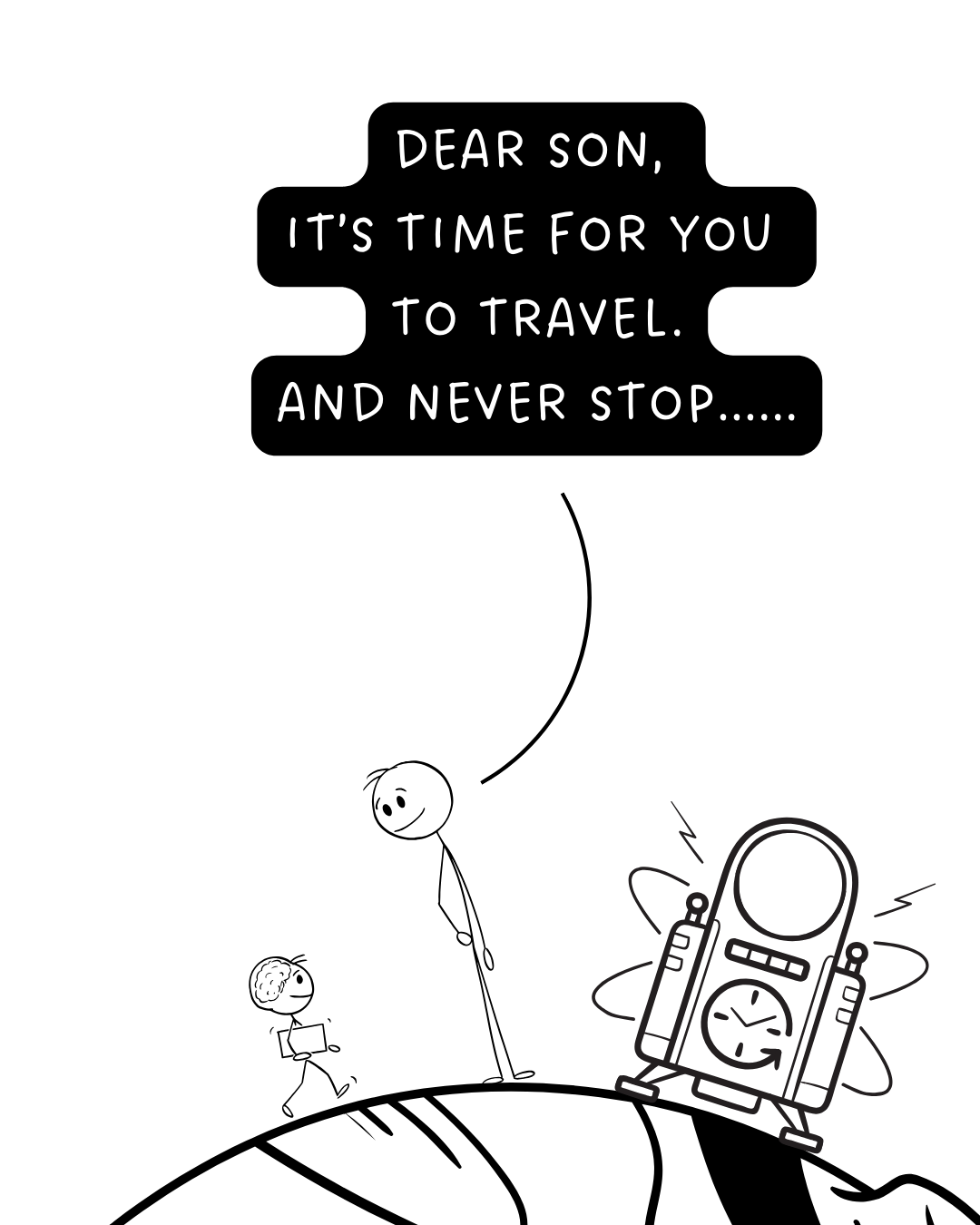
    After years of travel, the boy grew into a man and started a family. One day, he turned to his son and said:
    “Son, now it’s your time. Go out and explore the world. Learn its lessons and make them your own.”

    The Meaning of the Story:


    The boy’s journey represents each one of us. We live in a world where boundaries are constantly imposed upon us—by others, by fear, by comfort. We are told that what we know is all there is. But that’s a lie.
    This story reminds us that the world is not limited to the boundaries set by those around us. Our version of reality is just one among many, and the only way to expand it is to push beyond the comfortable and the familiar. True travel—true exploration—is not just about distance; it’s about breaking free from mental, emotional, and physical limitations.


  • I am stupid, I hope you are not like me

    I am stupid, I hope you are not like me

    I am stupid. I like making my life miserable.

    Here are 5 joys I already have, but I often forget, because I like feeling miserable:

    1️⃣ Getting 10 minutes to read my favorite book while I am travelling to work

    2️⃣ Drinking that warm cup of coffee in between meetings.

    3️⃣ Smile on my wife‘s face when I am back from work because she wants to tell me everything abt her day

    4️⃣ Ignoring sound of my daughter laughing loud

    5️⃣ Ignoring the happiness in my parents’ eyes when I spend time with them.

    You know what is the sad part?

    I keep chasing joy the next salary hike, or the next luxury vacation, only to make my everyday life miserable, in the process and ignoring what I already have.

    But this time it will be different I will remember my words for a week until I forget again:

    “Joy isn’t waiting for tomorrow, it’s right here, today. Joy is in simple things ”

    I hope you’re not like me. But if you are, maybe we can both remember together.


    If you liked my post, you will love my daily post on Threads, where I share daily 1 visual post about life, success and happiness: thinkscholar@threads

  • Passion + Curiosity: The Ultimate Formula for Innovation

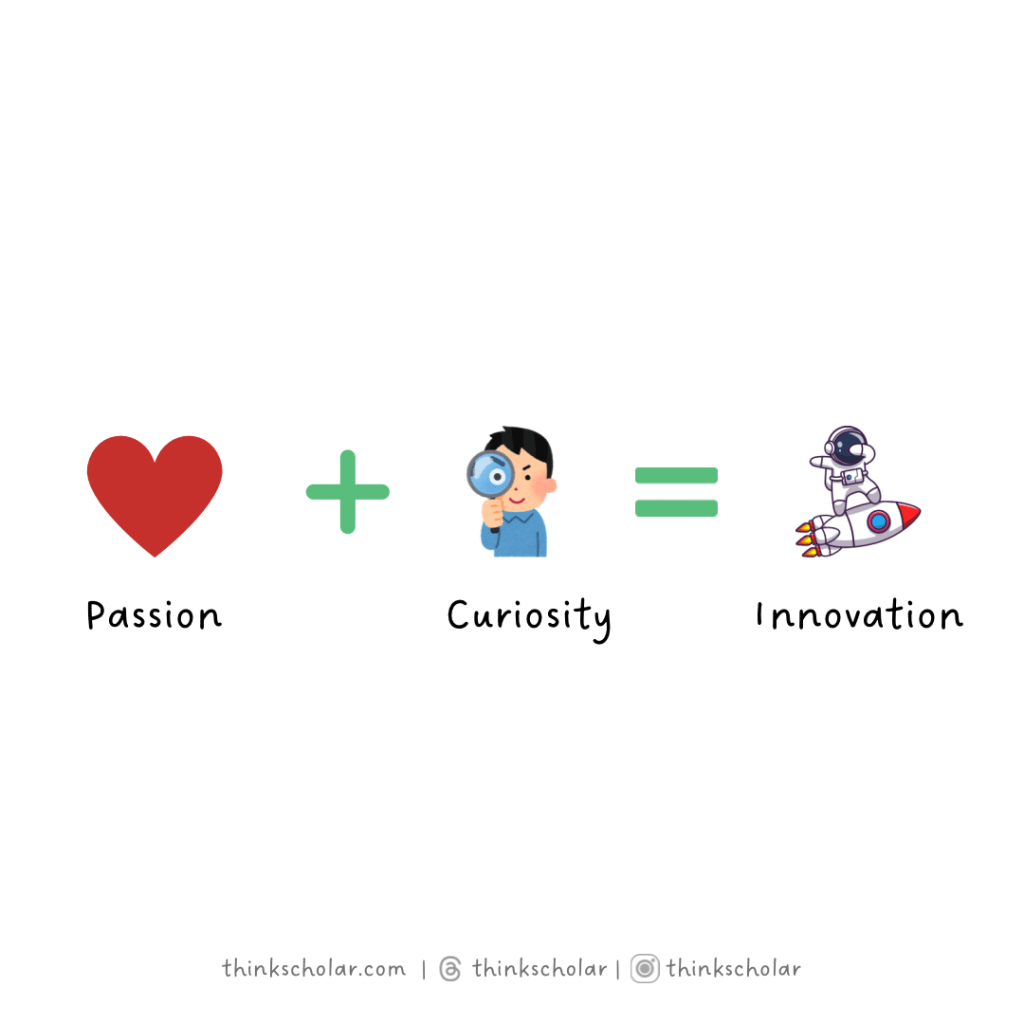
    Passion + Curiosity: The Ultimate Formula for Innovation

    Passion and Curiosity: The Fuel for Innovation!

    Easy 5-Step Guide to Achieve Innovation:

    • Identify your passion.
    • Cultivate curiosity.
    • Research and explore new ideas.
    • Experiment and take risks.
    • Reflect and refine your innovations.

    Remember

    Harness the power of passion and curiosity to spark groundbreaking innovations!

    Fun Fact:

    Did you know that many groundbreaking inventions, like the telephone and the light bulb, were born out of passionate curiosity?

  • Transform Your Learning into Action for Ultimate Success

    Transform Your Learning into Action for Ultimate Success

    Transform your knowledge into powerful actions and achieve your dreams!

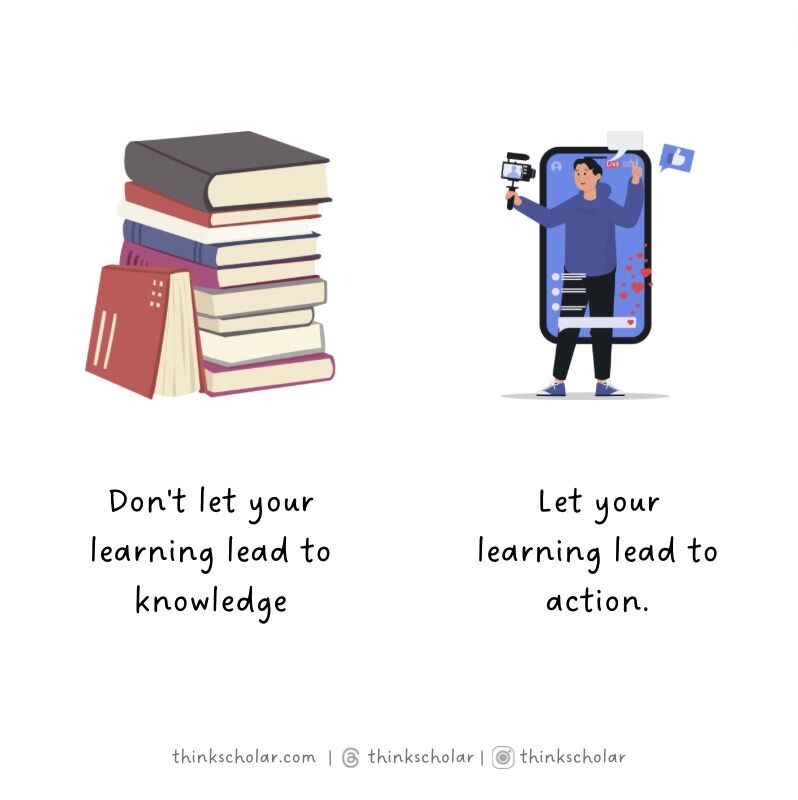
    “Don’t let your learning lead to knowledge, let your learning lead to action.”

    Easy 5 Step guide to Transform Learning into Action:

    1. Set clear, actionable goals.
    2. Apply knowledge to real-life scenarios.
    3. Track your progress regularly.
    4. Reflect and adjust your strategies.
    5. Celebrate your achievements.

    Fun Fact:

    Did you know that taking action on new knowledge within 24 hours significantly improves retention and success rates?

  • The Power of Asking for Help: Building Courage and Making Friends

    The Power of Asking for Help: Building Courage and Making Friends

    Introduction:

    When we’re trying to do something tricky, like solving a puzzle or learning a new game, it’s normal to feel stuck sometimes. But did you know that asking for help can actually help you succeed? Let’s explore why asking for help is such an important skill, even for kids like you!

    The Courage to Ask for Help:

    Being Brave: It takes courage to admit when we’re having trouble and need someone else’s help. But being brave and asking for help can actually help us get better at what we’re trying to do!

    Working Together: Asking for help isn’t just about solving problems; it’s also about working together with others. When we ask for help, we can learn new things and make friends too!

    Making Friends: Asking for help is a great way to meet new people and make friends. Whether it’s a teacher, a colleague, a friend, or a family member, there’s always someone who’s happy to lend a hand.

    Breaking the Stigma:

    Changing Minds: Some people think that asking for help means we’re not smart or capable. But that’s not true at all! Asking for help shows that we’re willing to learn and grow, which is really important.

    Learning and Growing: Everyone makes mistakes and needs help sometimes, even grown-ups! Asking for help is how we learn and grow, so it’s actually a really good thing to do.

    Embracing the Power of Asking for Help:

    Being Smart: Asking for help isn’t a sign of weakness; it’s a sign of being smart! When we ask for help, we can figure things out faster and do even better next time.

    Being Strong: Asking for help makes us stronger because it shows that we’re not afraid to try new things and learn from others. It’s like having a superpower!

    Conclusion:

    So, remember, asking for help is a superpower that we all have! It helps us solve problems, make friends, and grow stronger. So don’t be afraid to ask for help when you need it. Together, we can do amazing things!

    Remember: Asking for help is like using a special superpower. It helps us learn, grow, and succeed, and it’s something we can all do!

  • From Zero to Hero: The Unbelievable Journey of an Underdog’s Success!

    From Zero to Hero: The Unbelievable Journey of an Underdog’s Success!

    He was a failure, a big failure. He failed at every new idea he touched in the last 20 years.

    One day out of frustration, he shared his stories of a series of failures online, and he became popular overnight. Millions of people were able to relate to his story of everyday grind, sleepless nights and hope for success.

    Few investors even looked at his recent startup idea and gave him funding.

    End of Story…