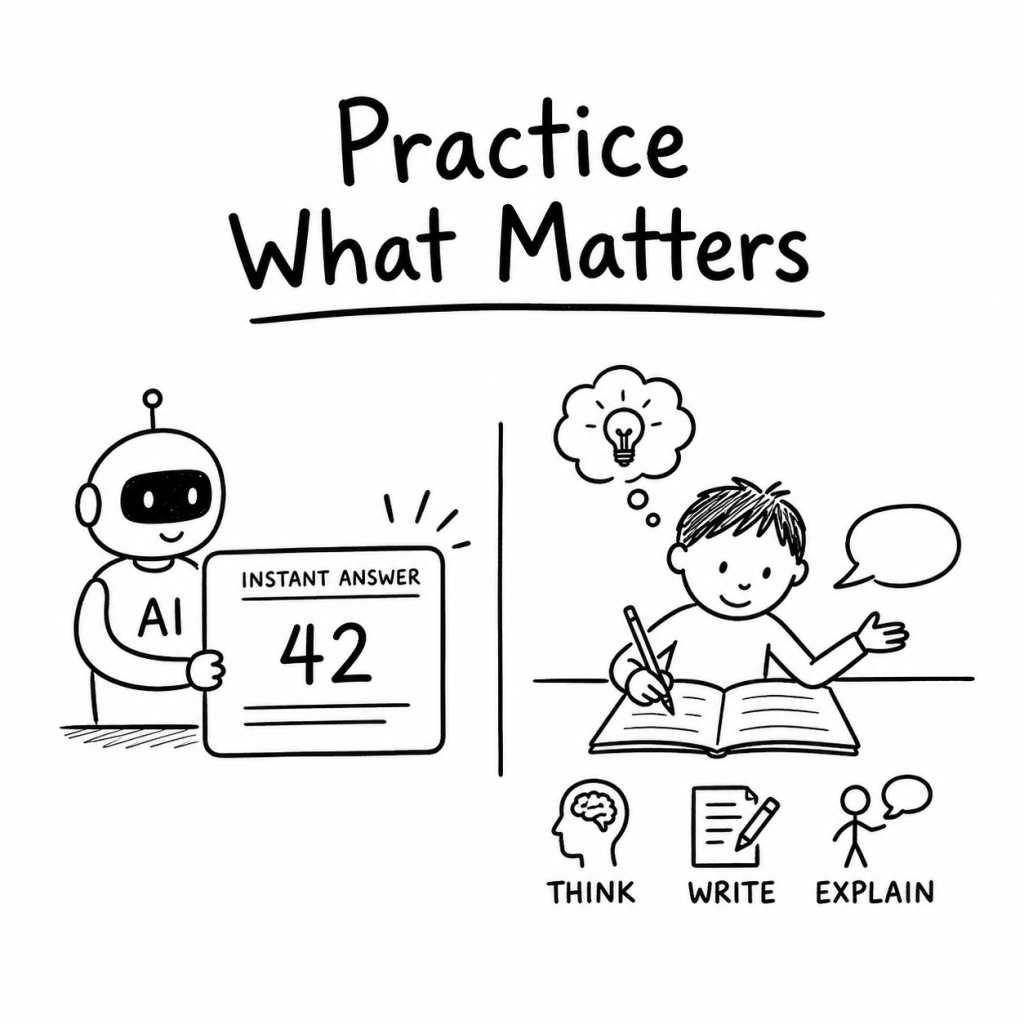
AI can shorten the path to an answer. It cannot decide which parts of the path a child still needs to walk.
A child can now ask for an explanation, a story, a plan, a solution or a piece of code and receive something polished in seconds.
The useful parenting question is not, “How do we stop children from using AI?”
It is, “Which parts of thinking should the child still practise before, during and after using it?”
Use AI to reduce unnecessary friction, not to remove every useful struggle.
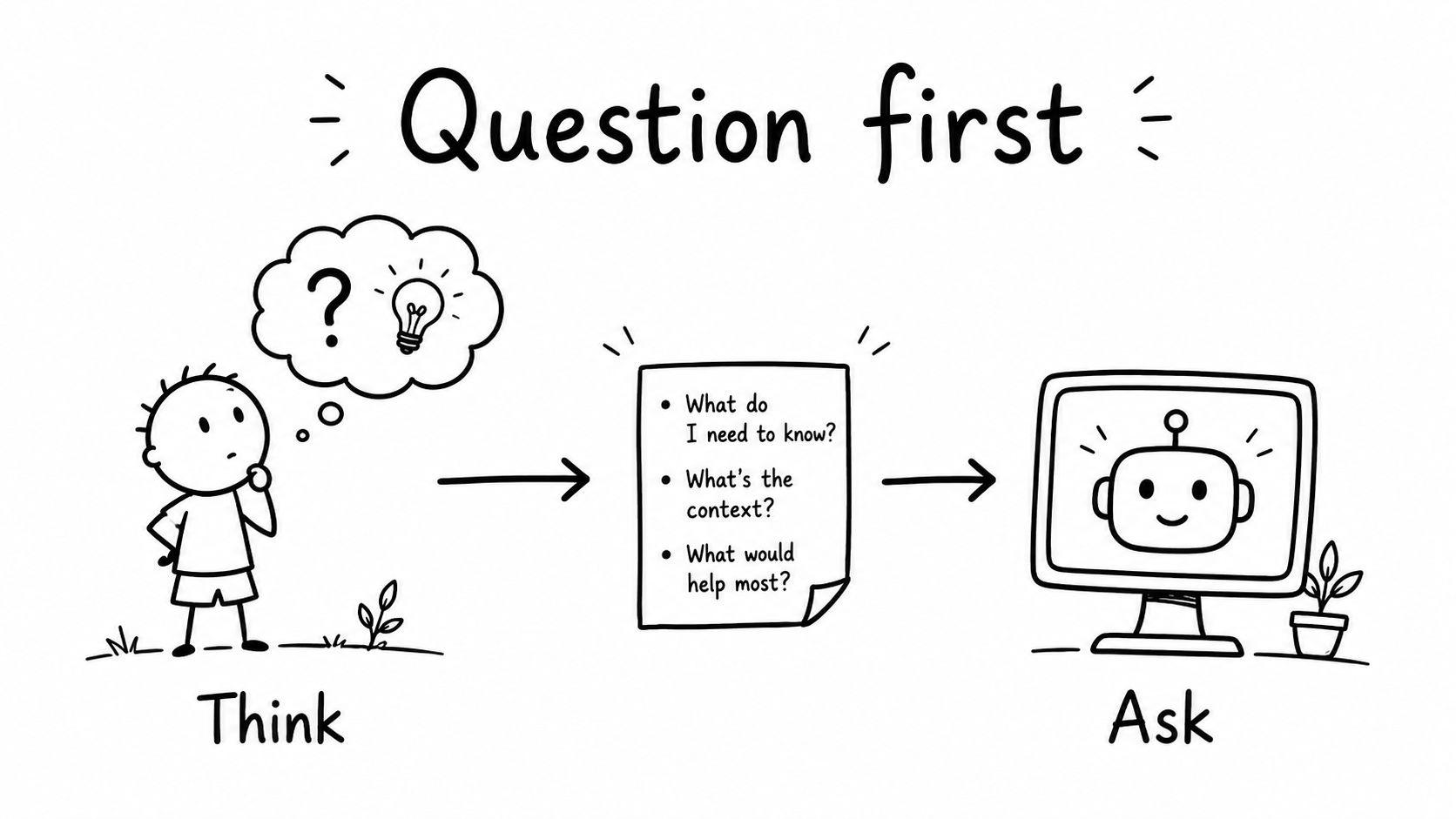
1. Practise forming the question
Before opening AI, ask the child to say what they are trying to understand, make or decide.
A vague request such as “Tell me about space” can become:
“Why do astronauts appear to float inside a spacecraft even though gravity still exists?”
Forming the question forces the child to notice what they know, what they do not know and which gap matters.
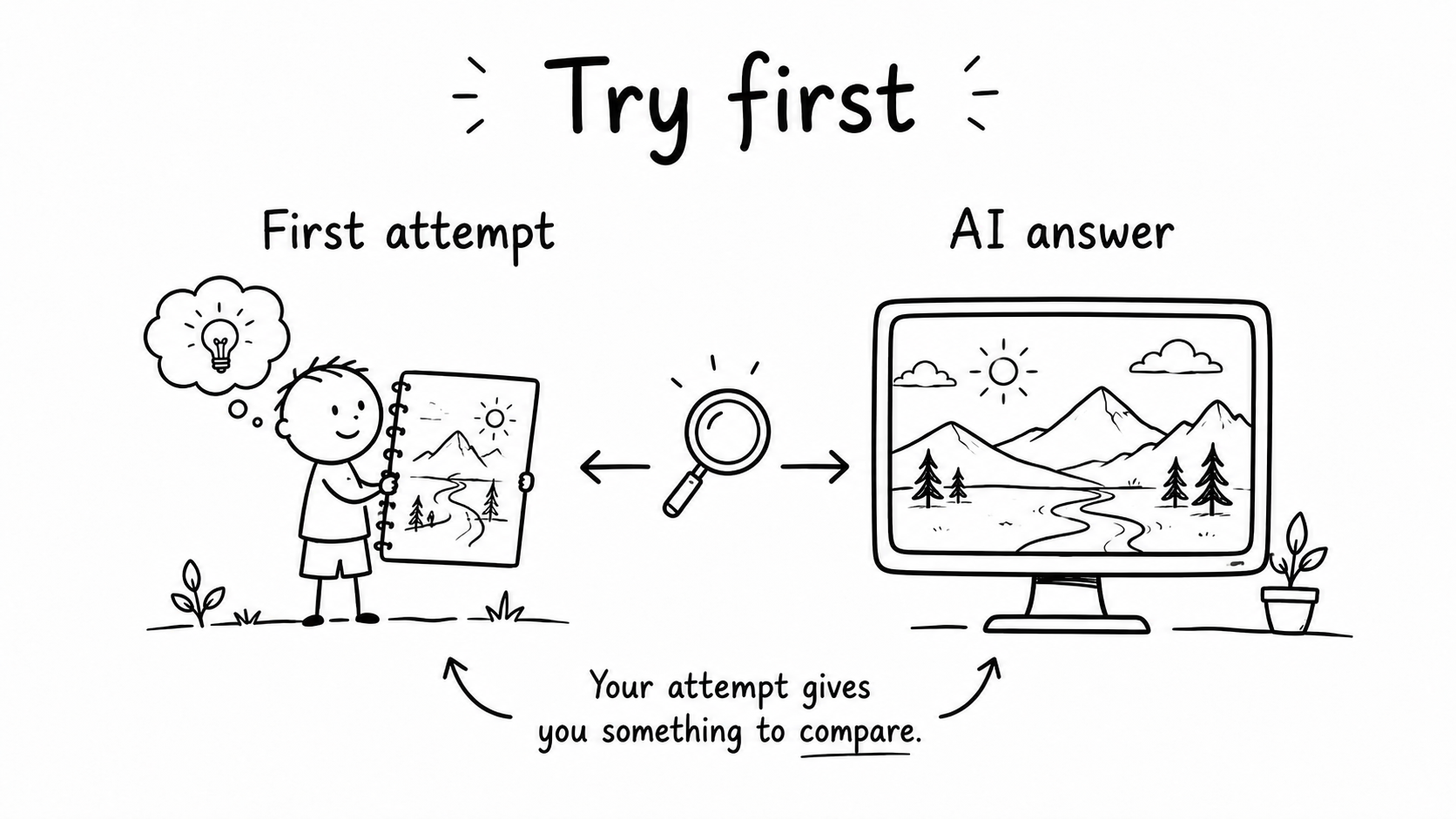
2. Practise a first attempt
Ask for a sketch, prediction, rough outline or possible answer before AI responds.
The first attempt does not need to be correct. Its purpose is to give the child something to compare with the generated answer.
Without a first attempt, AI often becomes the starting point and the finishing point. With one, it becomes feedback.
3. Practise judgment
A polished answer can still be incomplete, unsuitable or wrong.
Give the child three questions to use:
- What seems useful here?
- What seems uncertain or too neat?
- What should we check somewhere else?
Judgment grows when children make choices and explain them. It does not grow merely because an answer is available.
For important facts, use the family verification method in How to Teach Children Not to Trust Every AI Answer.
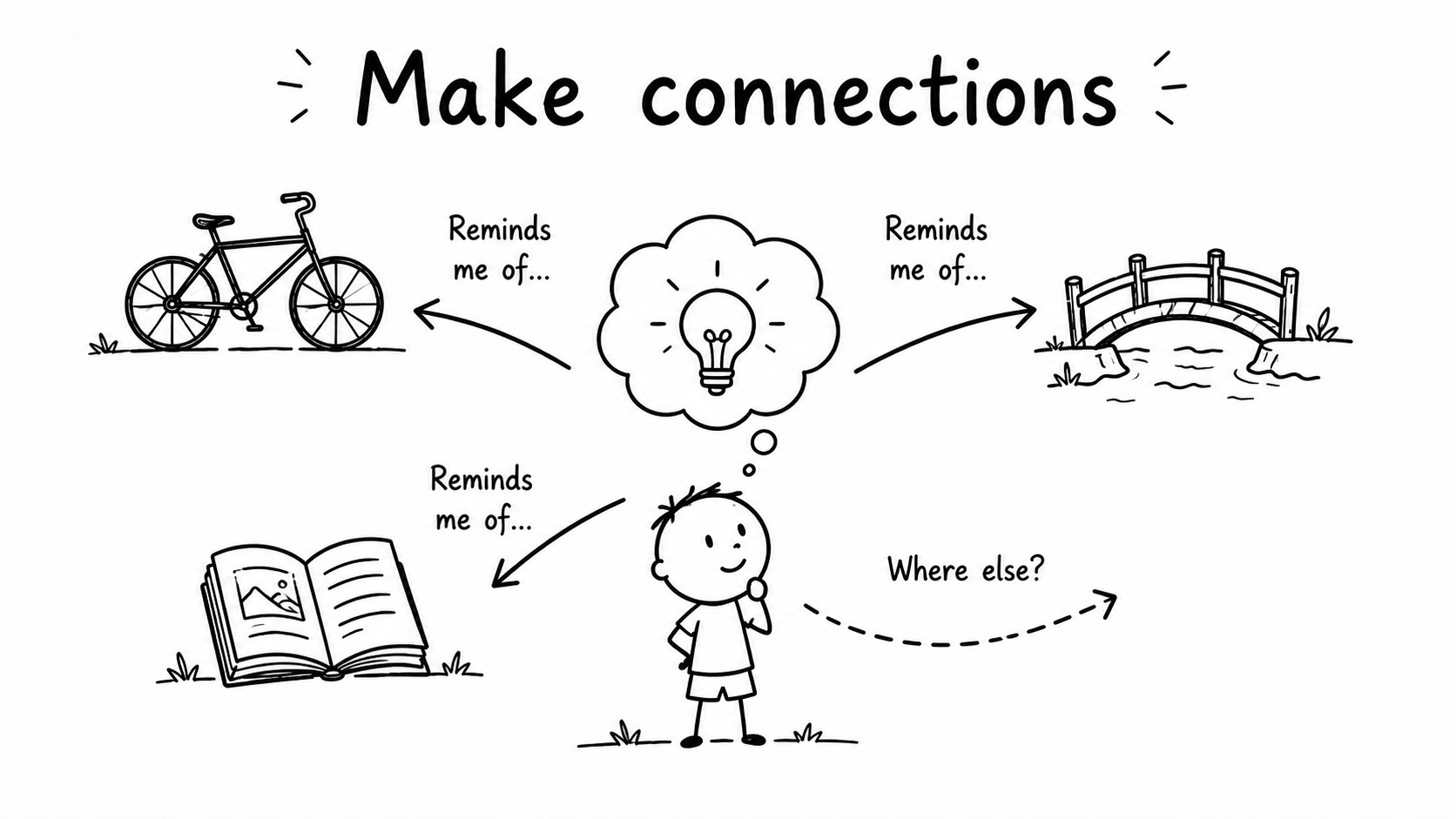
4. Practise making connections
Ask the child to connect the new idea to something they already know.
- “What does this remind you of?”
- “Where else might this idea work?”
- “How is this different from the example we used yesterday?”
Connections turn isolated information into a usable mental model. They also reveal misunderstandings. That is why a child’s mistake can be such a useful starting point for an explanation. See Why Children’s Mistakes Are a Better Starting Point for Explanation.
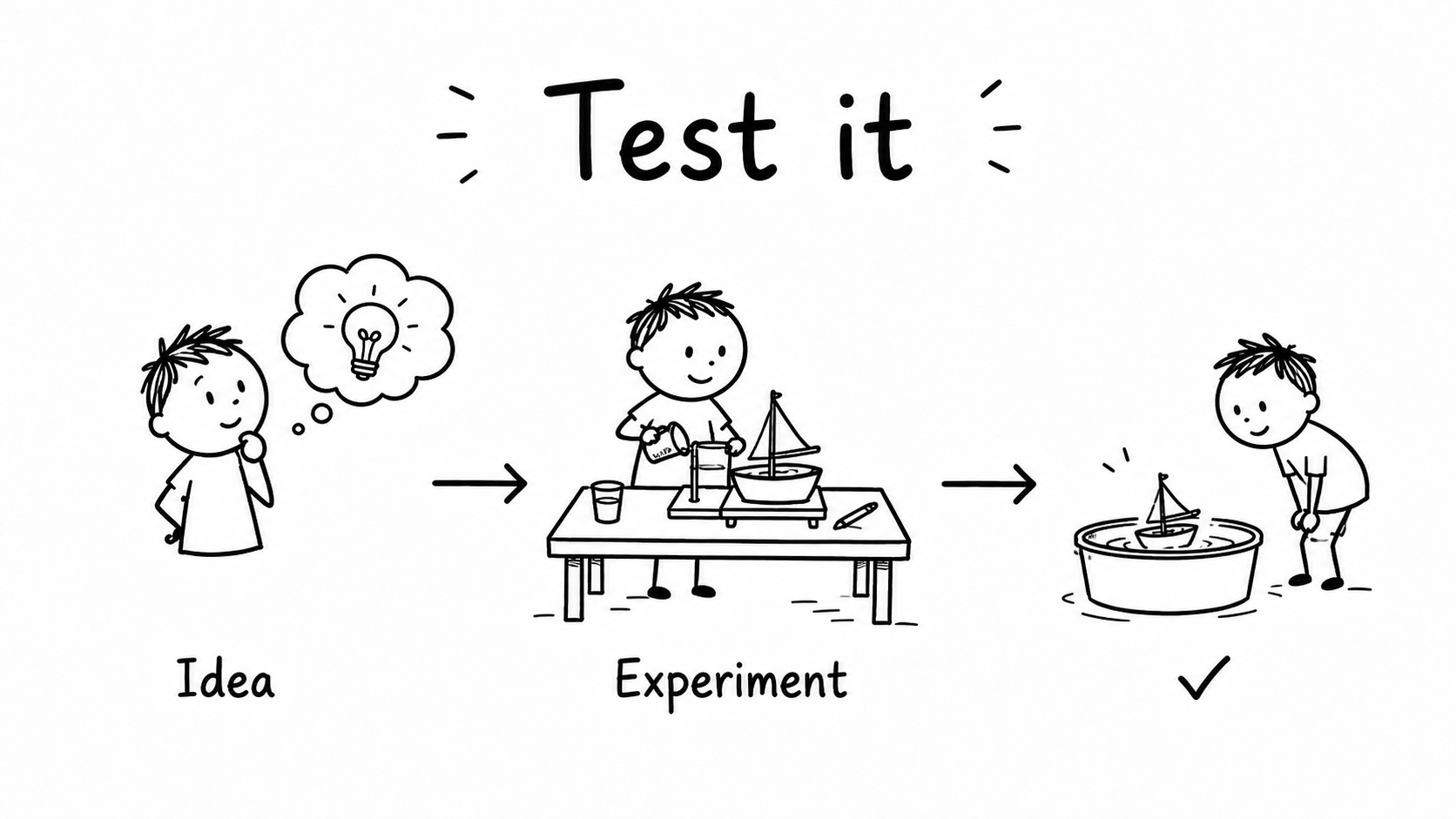
5. Practise experimentation
Do not stop at reading the answer. Use it to make or test something.
- Change one condition in a science example and predict the result.
- Build the smallest version of a project idea.
- Rewrite a story from another character’s view.
- Create a test that might break AI-generated code.
Experimentation keeps the child in contact with consequences. The idea has to work outside the smooth sentences on the screen.
A simple AI learning loop
- Question: Say what you want to understand.
- Attempt: Make a prediction or rough version.
- Ask: Use AI for explanation, feedback or alternatives.
- Judge: Decide what is useful and what needs checking.
- Apply: Explain, create or test something without copying.
The final step matters. A child should be able to do something with the answer and explain it without AI.
These habits also matter before children learn formal tools. Five thinking habits children need before coding offers another way to practise them.
Try this for one week
Choose one AI-assisted activity each day. It can be homework, a story, a question, a plan or a tiny project.
Before AI, ask for the child’s question and first attempt. After AI, ask:
“What did you keep, what did you change and what did you decide yourself?”
At the end of the week, notice which uses produced more curiosity, agency or skill and which uses only produced faster completion.
The aim is not to make children compete with AI at producing answers. It is to help them become better at asking, judging, connecting and creating.
Part of the ThinkBySketch parent guide.
Read Should Children Use AI? or choose a path in Start Here.


Leave a comment