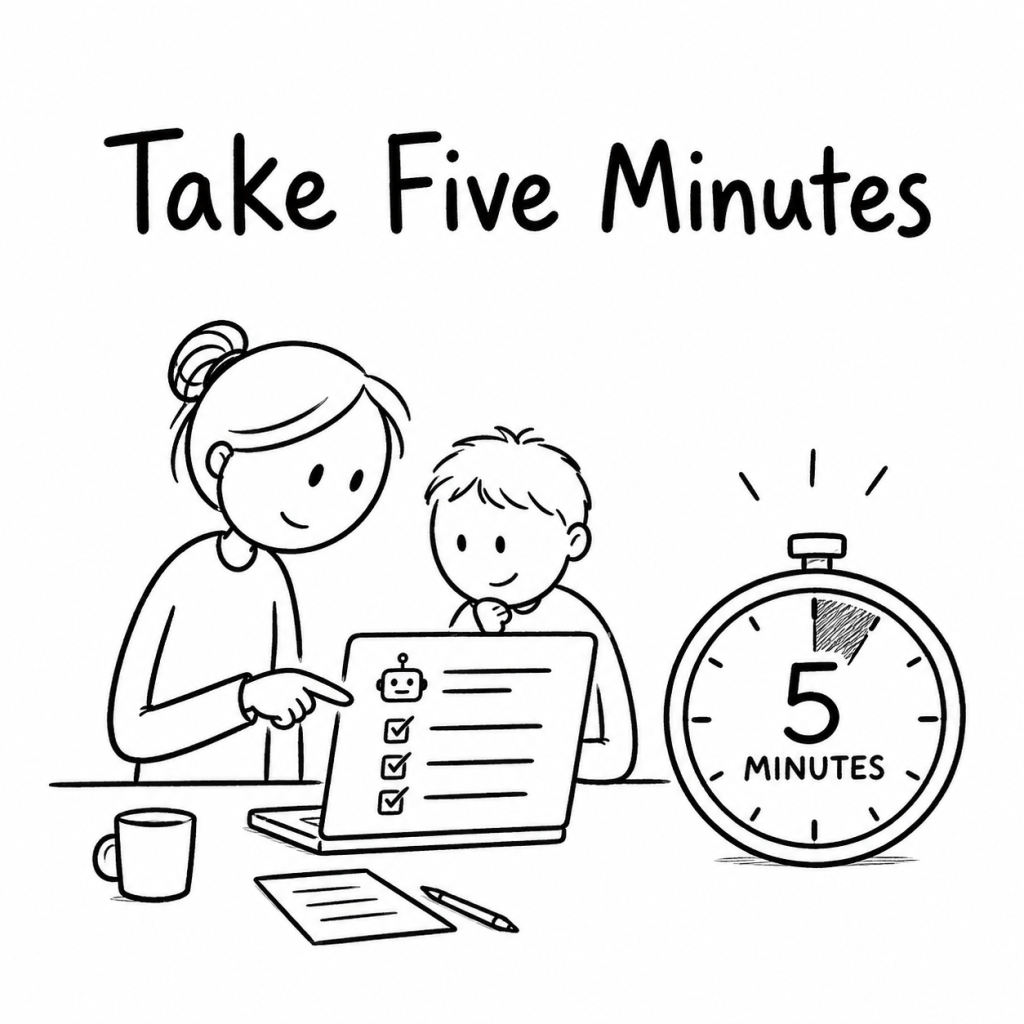
Never Trust, Always Test: Building a Skeptical Brain for AI

Why fluent answers are the most dangerous kind—and how to run every output through a brutal trust test.

The most dangerous AI answers aren’t the broken ones. They’re the fluent, confident, almost-right responses that slip past your defenses. As the number of answers you can get explodes, the real skill isn’t asking better questions—it’s cross‑examining whatever comes back. In this piece, we’ll build a simple loop for treating every AI output like a draft under interrogation, not a verdict you quietly sign.


AI will confidently give you ten different answers. Your job is to not believe any of them by default.

Never Trust, Always Test

Treat AI like a fast intern: helpful, confident, often wrong, always double‑checked.

The safest mental model for AI is this: smart but unreliable intern. It can draft, suggest, and speed you up. It should never make final decisions for you.

Sensemaking with AI means three things: trust slowly, test often, and tweak deliberately. You don’t ask “is this answer right”. You ask “how can I quickly find where this breaks”.

This framework gives you a simple way to:

  • Spot shaky answers fast

  • Stress‑test outputs without being an expert

  • Use AI to check its own work instead of blindly accepting it

You stay the decision‑maker. AI stays the tool.

Here are five checkpoints to run on every important AI answer.

Start With A Skeptic

First reaction: assume the answer is wrong. Then look for proof it’s right.

Your default stance should be polite skepticism. Not “this is trash”, but “this is a draft that needs proof”.

Do three quick checks:

  • Scan for nonsense: Dates, names, numbers that look off

  • Check the edges: The parts that feel too neat or too certain

  • Ask for sources: “List your sources and show exact quotes.”

Then push it:

  • “What might be wrong in your answer?”

  • “Where are you least confident and why?”

You’re telling your brain: do not outsource judgment. You’re telling the model: expose your weak spots so I know where to dig.

Pin Down The Question

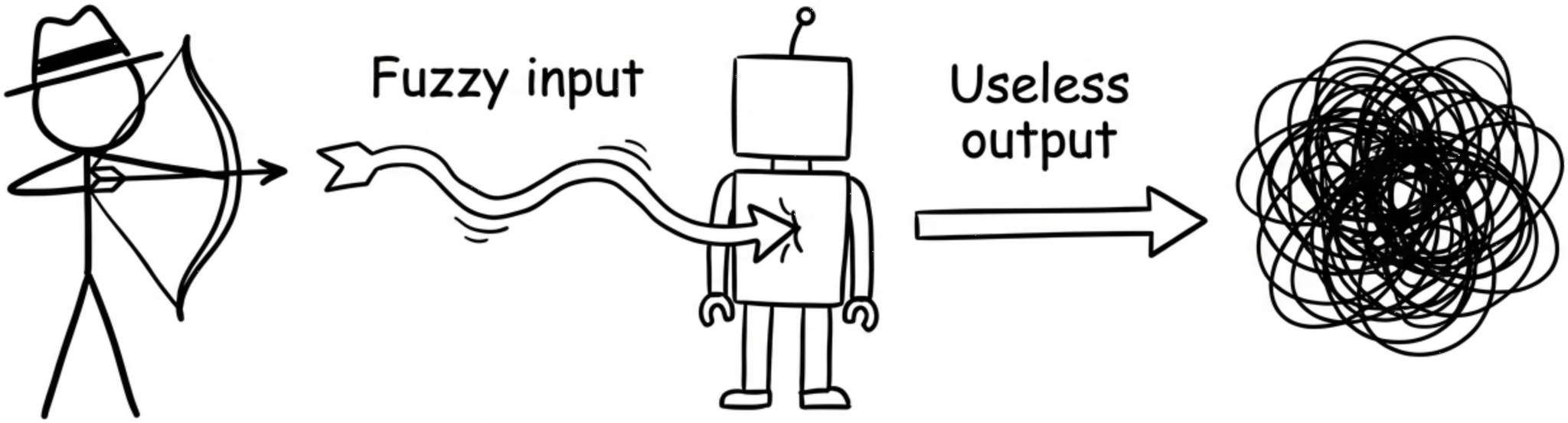
If the question is fuzzy, the answer will be confidently useless.

Most bad answers start with a blurry question. Before judging the output, fix the input.

Do this:

  • Ask AI: “Rewrite my question in 1 sentence. What are you assuming?”

  • Then: “Give me 2 alternative interpretations of my question.”

You’ll often find the model solved a different problem than the one in your head.

Once it’s clear, lock it in:

Here is the exact question to answer:
[Paste your clarified version]
Only answer this, nothing else.

Now you’re testing the answer against a precise target, not a vague vibe.

Force It To Disagree

Good answers survive attack. Ask the model to argue with itself on purpose.

A single answer is fragile. A self‑critique is stronger.

Use this pattern:

You are now my "red team".
Take your previous answer and:
- List at least 5 possible flaws
- Suggest 3 alternative answers or approaches
- Explain when each alternative would be better

Then compare:
- Where do the alternatives clash
- What changed in the reasoning
- Which parts show clear trade‑offs instead of fake certainty

This turns one shiny answer into a small debate. You’re not looking for “the truth”. You’re mapping the space of “reasonable options” so you can choose.

Cross‑Check With Constraints

Make it prove itself under rules: numbers, domain limits, and real‑world constraints.

AI sounds smart until you add hard constraints.

Ask it to restate the answer under specific limits:

Re‑check your answer under these constraints:
- Legal: [country / policy]
- Technical: [stack, limits, data]
- Practical: [budget, time, headcount]

Point out anything that now breaks.Then tighten the screws:
- “Show the math or logic step by step.”
- “Give me a concrete example with real numbers.”
- “What would a domain expert strongly disagree with here?”

If the answer collapses under constraints, good. You found the weak parts before they cost you.

Use AI As Its Own Lab

Don’t just read the answer. Run tiny experiments with the model itself.

You can use the same model to simulate tests of its own advice.

Patterns you can use:

  • “Apply your advice to this concrete case: [paste]. Show each step.”

  • “Now deliberately make this fail. What breaks first?”

  • “Give me a minimal version I can try in 30 minutes.”

For code or structured work:

Generate a small test case that would expose bugs in your own solution. Then fix what fails.

You move from theory to practice inside the chat. By the time you act in the real world, you’ve already seen the idea bend, not just shine.

TL;DR

  • Confident ≠ correct — treat every answer as a draft

  • Sharp question, sharp answer — fuzz in, fuzz out

  • Make it fight itself — good answers survive attack

  • Apply constraints — numbers and limits reveal cracks

  • Speed + judgment — you don’t have to choose

🎯 Why It Matters

If you can test AI answers fast, you get speed without handing over judgment.

Treat every AI answer as a draft under cross‑examination, not a verdict you just sign.

Get these sketches delivered to your inbox daily

For more visual inspiration, follow me here:

Our Apps

No results found.