A child brings you a drawing. It isn’t quite symmetrical, and one corner has been rubbed out so many times the paper is starting to give up. You could say “Beautiful!” and put the finished picture on the fridge.
That response is kind. But it misses a story you can’t see in the final picture: what the child tried, changed, noticed and decided. Sometimes the most interesting part of a child’s work is the version that didn’t make it onto the fridge.
The finished result hides the interesting decisions
A Lego tower tells you how tall the tower became. The abandoned supports tell you something about how your child solved a balance problem. A story’s final page can be delightful. Its crossed-out opening may show an even more useful question: “What did I want the reader to notice?”
This idea was sparked by Austin Kleon’s Show Your Work!, which explores sharing the process behind creative work. His book is aimed at creators, not specifically at parenting. My adaptation is simpler: make room at home for children to talk about how something took shape, without turning every activity into content.
A question about a change can beat another compliment
Praise can be lovely. But “You’re so talented” gives a child little information about the decisions they made. Try a question attached to something you can actually see.
- For a drawing: “I can see you moved the tree. What changed your mind?”
- For a model: “Which part kept falling over, and what did you try?”
- For a story: “How did you choose this ending?”
- For a maths solution: “Was there a different method you nearly used?”
These aren’t trick questions or invitations to justify every choice. The aim is to let the child notice and explain their own thinking.
Harvard Project Zero’s Making Learning Visible research explores how documentation helps learners and educators revisit experiences and reflect on what happened. At home, that can be as modest as keeping a rough sketch beside a later attempt.
But not every unfinished project needs an audience
There is a catch in the phrase show your work. Some children love demonstrating their process. Others are protective of it. A half-finished drawing may feel private; a failed experiment may still sting. We can invite reflection without demanding a performance.
And showing progress to parents isn’t the same as posting it online. A child doesn’t need a public profile, a stream of photos or engagement metrics to benefit from thinking aloud. Ask permission before keeping or sharing their work, especially when it contains personal details.
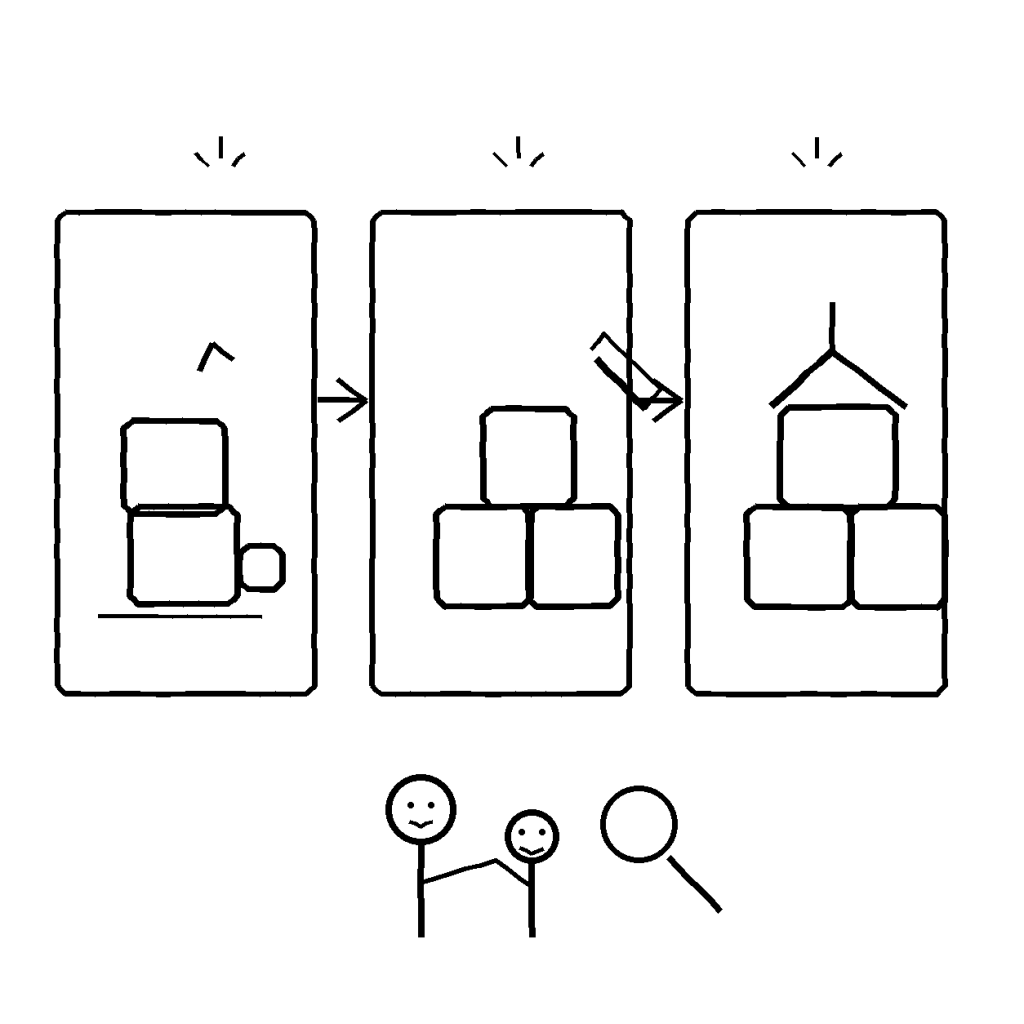
Try a three-frame progress story
For one craft, story, model or small experiment, invite your child to save three moments—only if they want to.
- First try: What was your original idea?
- One change: What did you adjust, and why?
- Where it is now: What do you like, or what would you try next?
The frames can be photos kept privately, three sketches on scrap paper, or simply a conversation at dinner. An unfinished project counts. There is no requirement to improve the outcome or compare it with another child’s work.
The best question isn’t “Did it turn out perfectly?”
Sometimes the child will still want the simple answer: “Yes, I love it.” Give it. Process talk should add to the pleasure of making things, not drain it away.
But once in a while, ask: “What changed between your first idea and this version?” You may learn more from that answer than from the finished masterpiece—and your child may notice something about their own thinking too.


Leave a Reply