
Understanding the Cognitive Switching Penalty in Task Management
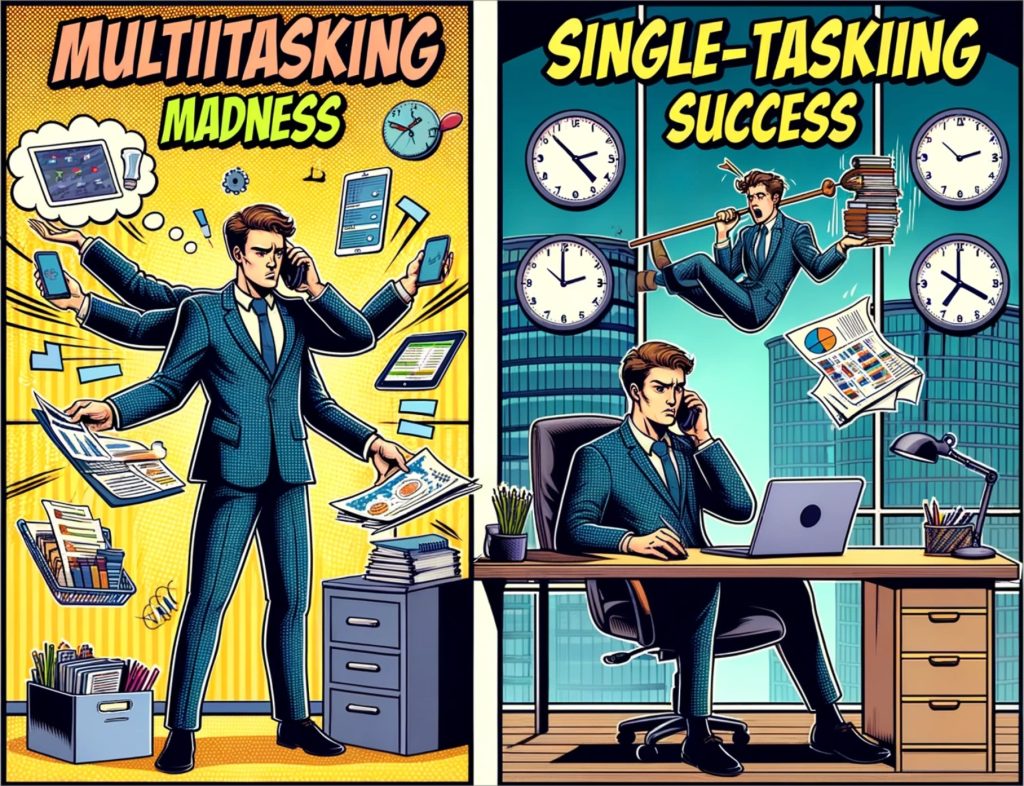
In today’s fast-paced world, multitasking is often celebrated. However, constantly shifting between tasks can lead to a reduction in efficiency, known as the cognitive switching penalty or task-switching cost. This article delves into the essence of this concept and offers practical solutions to master the art of task management.
What is Cognitive Switching Penalty?
The cognitive switching penalty refers to the delay or inefficiency experienced when transitioning from one activity to another. This concept originates from cognitive psychology and spotlights the cognitive load linked with managing multiple tasks or swiftly transitioning between them.
Why Does It Happen?
- Attention Residue: Shifting from Task A to Task B doesn’t always mean you leave Task A behind. Part of your focus, called “attention residue,” often lingers on Task A, diminishing your efficiency on Task B.
- Reconfiguration Time: Your brain requires moments to adapt to the new demands and rules of a different task, causing a delay.
- Interference: At times, the processes of one task can clash with another, especially if they’re similar but distinct.
Strategies to Combat Cognitive Switching Penalty:
- Time Blocking: Dedicate specific time chunks to individual tasks to minimize constant shifting and enhance deep concentration.
- Single-Tasking: Embrace the power of focusing on a singular task at a time, reducing the cognitive burden of continuous toggling.
- Prioritize: Determine and tackle high-importance tasks first. By curtailing the number of tasks juggled, the associated cognitive cost diminishes.
- Regular Breaks: Techniques like the Pomodoro method advocate for short, consistent breaks to refresh your mind.
- Minimize Distractions: Craft a workspace with fewer interruptions. This might mean silencing notifications or setting designated work intervals.
- Routine Creation: Building habits can lower the cognitive strain of initiating a task, making it second nature.
- Mindfulness Practices: Incorporating mindfulness can bolster concentration and declutter the mental space.
- Use Tools & Techniques: Implementing tools like task management software or methods like the Eisenhower Box can streamline tasks, reducing unnecessary transitions.
- Brain Training: Strengthening cognitive adaptability through exercises can potentially decrease the cost of task switching.
By acknowledging the cognitive costs of task switching and implementing these strategies, you can bolster your efficiency and productivity in the digital age.


 ThinkBySketch