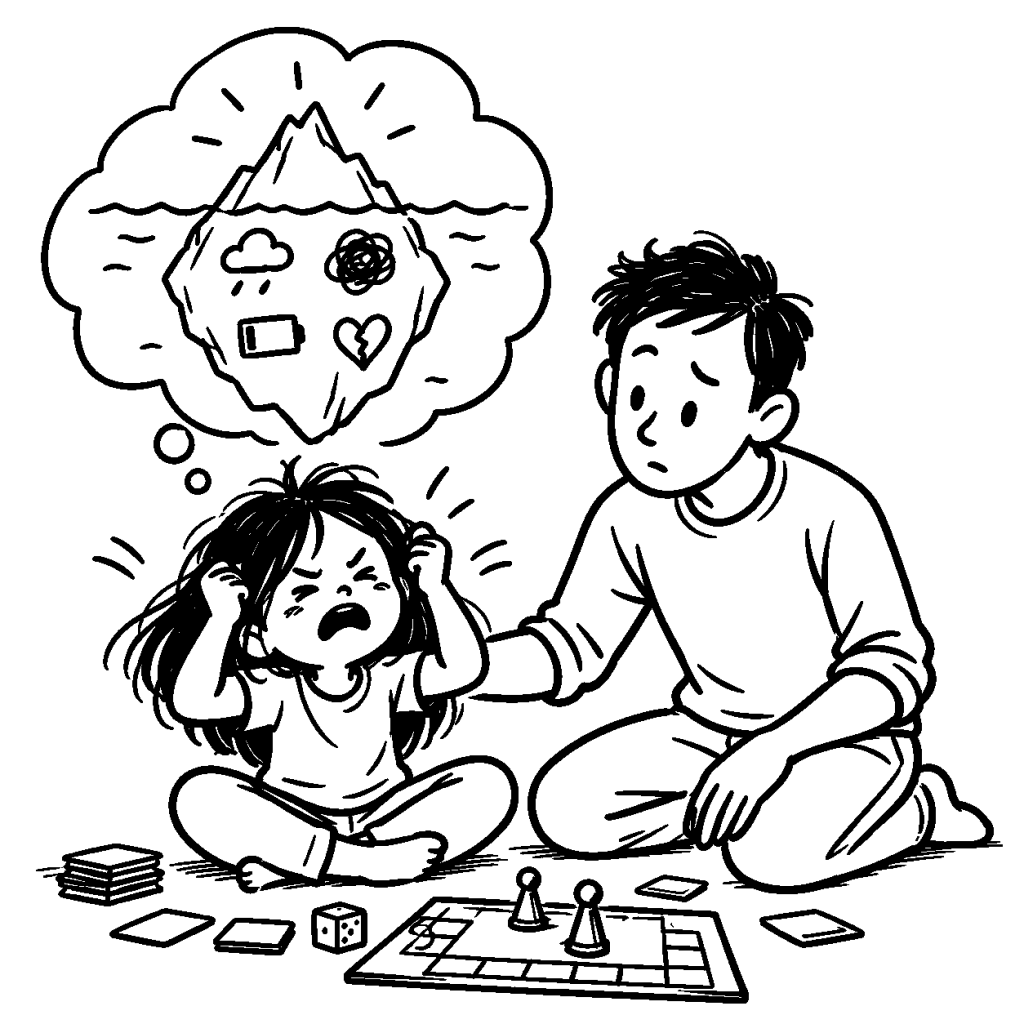
Imagine a child who bursts into tears because a board game ended, or slams a book shut after getting a maths answer wrong. From the outside, the reaction can look much bigger than the event.
The fastest response is often “It’s only a game” or “There’s no need to get so upset.” But the small event may be the last difficult thing in a long day. We can take the feeling seriously without accepting every behaviour that comes with it.
The visible reaction isn’t the whole story
A child may be disappointed about losing, embarrassed about a mistake, hungry, tired or worried about something unrelated. Those are possibilities to explore, not explanations we can assume from one outburst.
This matters because when we label a reaction as an overreaction, we may skip the more useful question: What felt difficult to my child? We don’t need to uncover a hidden trauma or turn every upset moment into a diagnosis. Sometimes a child is simply frustrated.
Feelings can be accepted while actions still have limits
The American Academy of Pediatrics’ HealthyChildren guidance on emotional development recommends naming and validating emotions while setting boundaries around harmful behaviour.
That distinction is easy to say and harder to practise. A child can be furious about losing a game. They still cannot throw pieces at someone. A parent can acknowledge both facts without contradicting themselves.
Try something simple: “You really wanted to win. It’s disappointing to lose. I’m not going to let you throw the game pieces.”
You aren’t agreeing that the world is unfair. You’re showing that the feeling has been heard and the boundary remains.
Use a Notice → Limit → Return approach
- Notice: Name what you can see without deciding why it happened: “You seem really upset.” Offer a little space if talking makes things worse.
- Limit: Stop unsafe or hurtful behaviour calmly: “You can be angry, but you cannot hit.” Help everyone get safe first.
- Return: Once things are calmer, ask one small question: “Was it losing that bothered you, or something else?” Then practise an alternative response together.
The order matters. A lecture about resilience delivered in the middle of a meltdown is unlikely to be the most useful lesson of the day. A later conversation gives everyone more room to listen.
But empathy isn’t an endless negotiation
Sometimes parents worry that acknowledging feelings means backing down. It doesn’t. Bedtime can remain bedtime. A screen session can still end. A child can be disappointed by a firm answer without the answer changing.
There is also no need to analyse every small frustration. Children need chances to work through manageable setbacks. Being available, calm and consistent may help more than asking twenty questions.
When reactions are frequent, severe, unsafe or significantly disrupt home or school life, it is reasonable to talk with a pediatrician or qualified child mental-health professional. This article isn’t a diagnostic checklist.
One question is more useful than “Why are you overreacting?”
The next time your child reacts strongly, try asking yourself: “What might they be feeling, and what boundary do I still need to hold?”
That question protects two things at once: your child’s chance to feel understood and your responsibility to keep behaviour safe. You don’t need a perfect script. You need curiosity and a clear limit.


Leave a Reply