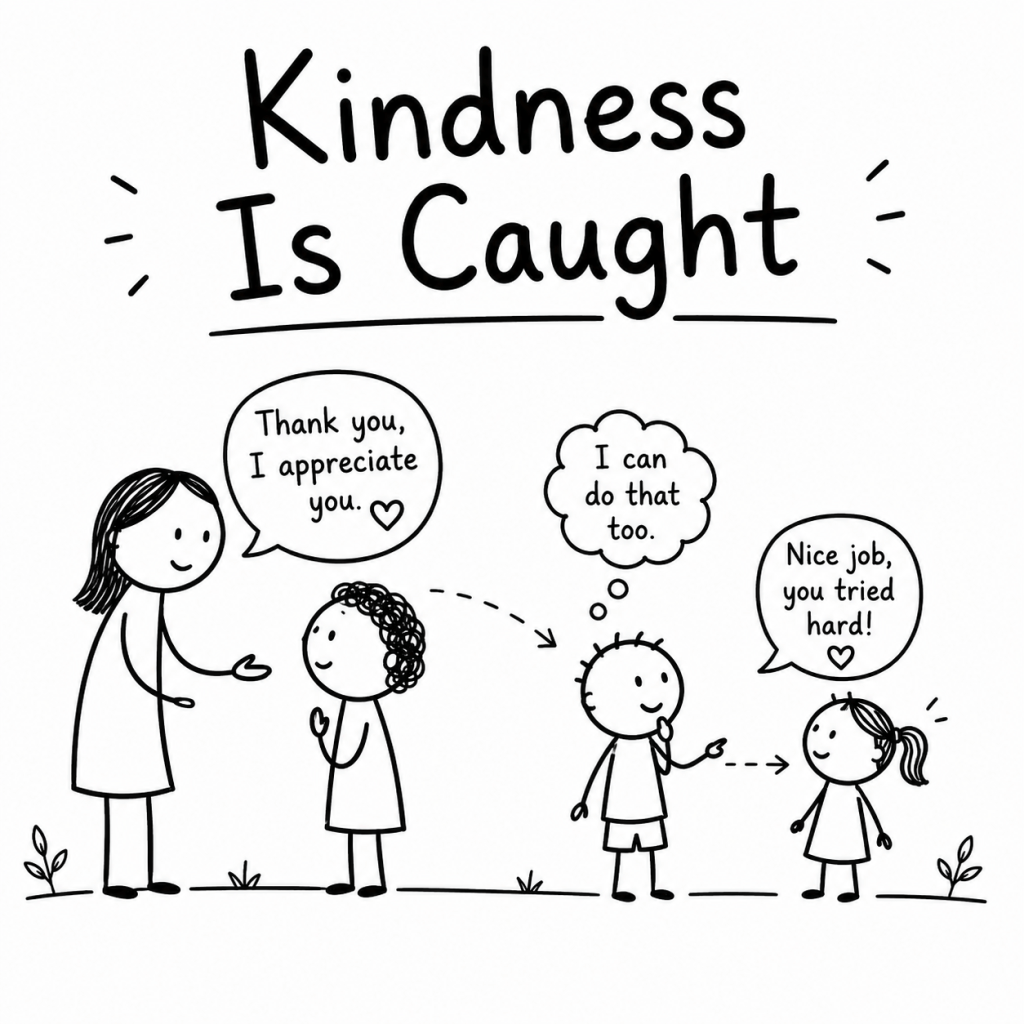
I was trying to teach my daughter kindness when my own voice became the lesson.
She was shouting at our house-help because her favourite dish had not been cooked. I stepped in and explained that disappointment does not give us permission to speak disrespectfully.
Then her grandmother added that my daughter had been asking for the dish for two days.
I became annoyed. I raised my voice and told my mother not to interfere while I was teaching kindness.
She went quietly to her room.
The contradiction was difficult to miss
I was asking a child to speak gently while speaking harshly to someone else.
The explanation may have been correct. The demonstration was not.
Children learn from both. They hear the rule we state and they watch the rule we live. When those two lessons conflict, behaviour often carries more weight than the lecture.
Kindness is not the absence of boundaries
A child can still be corrected. A parent can still stop rude behaviour. The question is whether we can protect the boundary without copying the behaviour we are trying to change.
Instead of only saying, “Do not speak like that,” we can model the alternative:
- “You can be disappointed, but you still need to speak respectfully.”
- “Tell us what you wanted without shouting.”
- “Let us try that sentence again.”
This separates the feeling from the behaviour. The feeling is allowed. The disrespect is not.
Repair can become part of the lesson
Parents will not model every value perfectly. That is not a reason to hide the mistake. It is an opportunity to show what responsible repair looks like.
A simple repair might sound like this:
“I asked you to speak kindly, but I raised my voice too. That was not the example I wanted to give. I am going to try again.”
That does not weaken a parent’s authority. It shows that the rule applies to everyone.
A small family experiment
For one day, notice the moments when someone in the family is correcting another person.
Afterward, ask:
- Was the message respectful?
- Did the tone match the value being taught?
- Could the same boundary be expressed more clearly and calmly?
Children do not only learn kindness from what we tell them.
They learn it from what kindness looks like when we are tired, interrupted or annoyed.
 ThinkBySketch
Leave a comment