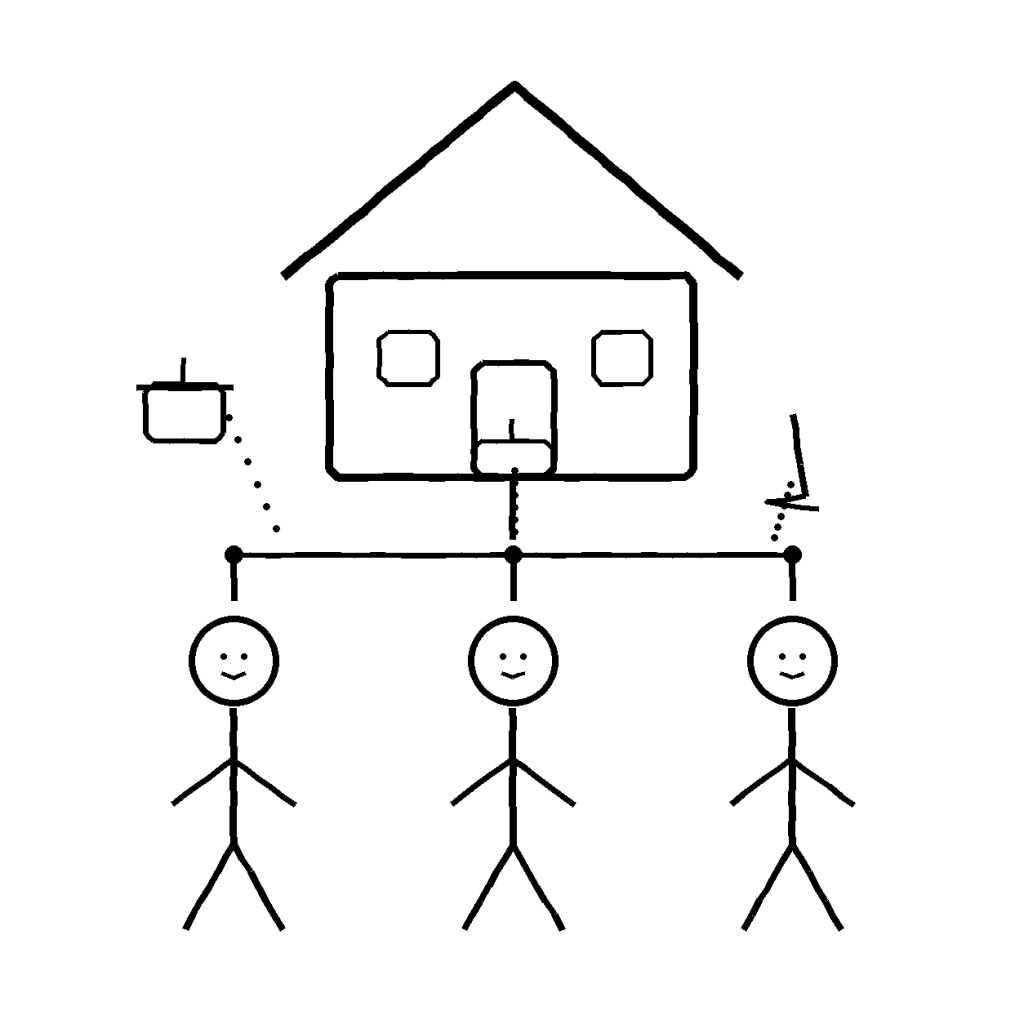
A parent can give a wonderful speech about equality at work, then arrive home and assume somebody else will handle dinner, homework and the laundry. The speech may be sincere. The division of work is teaching another lesson.
An old satirical draft of mine imagined precisely that contradiction: someone loudly supporting women’s empowerment at the office while backing away from a promise to help with maths at home. It was satire, not an account of an incident with my family. What interests me now is what children might learn from the gap between our principles and our routines.
Children see who does the work nobody announces
We tend to talk about equality in the language of big ideas. Children can observe it in smaller details: who cooks, who clears the plates, who remembers the school project, who helps when someone is unwell, and whose free time keeps getting interrupted.
UNICEF’s guidance on equity in household tasks points out that children can learn gender expectations through how work is assigned at home. It recommends age-appropriate contributions for all children, adults leading by example, and protecting time for play and learning.
That doesn’t mean every family needs a mathematically equal schedule. Work hours, health, skills and family arrangements differ. The more useful question is whether responsibilities are discussed fairly—or quietly assumed to belong to one person.
A helpful household isn’t the same as a fair one
One parent might do more cooking while another handles schoolwork or errands. Grandparents may contribute. Some families rely on paid domestic workers. Fairness isn’t proved by counting plates washed.
But it is worth noticing whether we thank people for unseen work, whether we treat paid helpers respectfully, and whether one person’s time is assumed to be endlessly available. A child sees those choices too.
And if an adult says, “That’s not my job,” it is worth asking how the job was assigned in the first place.
Try a ten-minute family responsibility map
Here’s a small experiment, not an inspection of who is doing the most.
- Notice: Together, name six things that help the household run—cooking, tidying, groceries, caregiving, planning, laundry or helping with schoolwork.
- Map: Ask who usually does each one. Include adults and caregivers fairly; don’t make the child’s contribution the centre of the discussion.
- Ask: “Is there one job we could share, appreciate more, or plan differently?”
- Choose: Let each child pick one safe, age-appropriate contribution, without cutting into essential homework, rest or play.
A younger child might set the table or sort their own materials. An older child might help plan a meal or tidy a shared space. The adult task is to model cooperation—not assign children the burden of fixing family inequality.
The real lesson isn’t in the chart
A family responsibility map can expose surprising differences between what we say and what we actually do. It might also show arrangements that work well for everyone. Either result is useful, because it starts a conversation without assuming every home needs to operate the same way.
The midpoint of my original satire was a contradiction: advocating something admirable while avoiding the mundane work that would support it. There is a gentler, more useful version of that insight for parents.
Next time we talk about fairness, let’s ask who cleared the table before the conversation started. Children are already watching what the answer looks like.
Related: Children Copy What We Practise, Not Only What We Say.


Leave a Reply