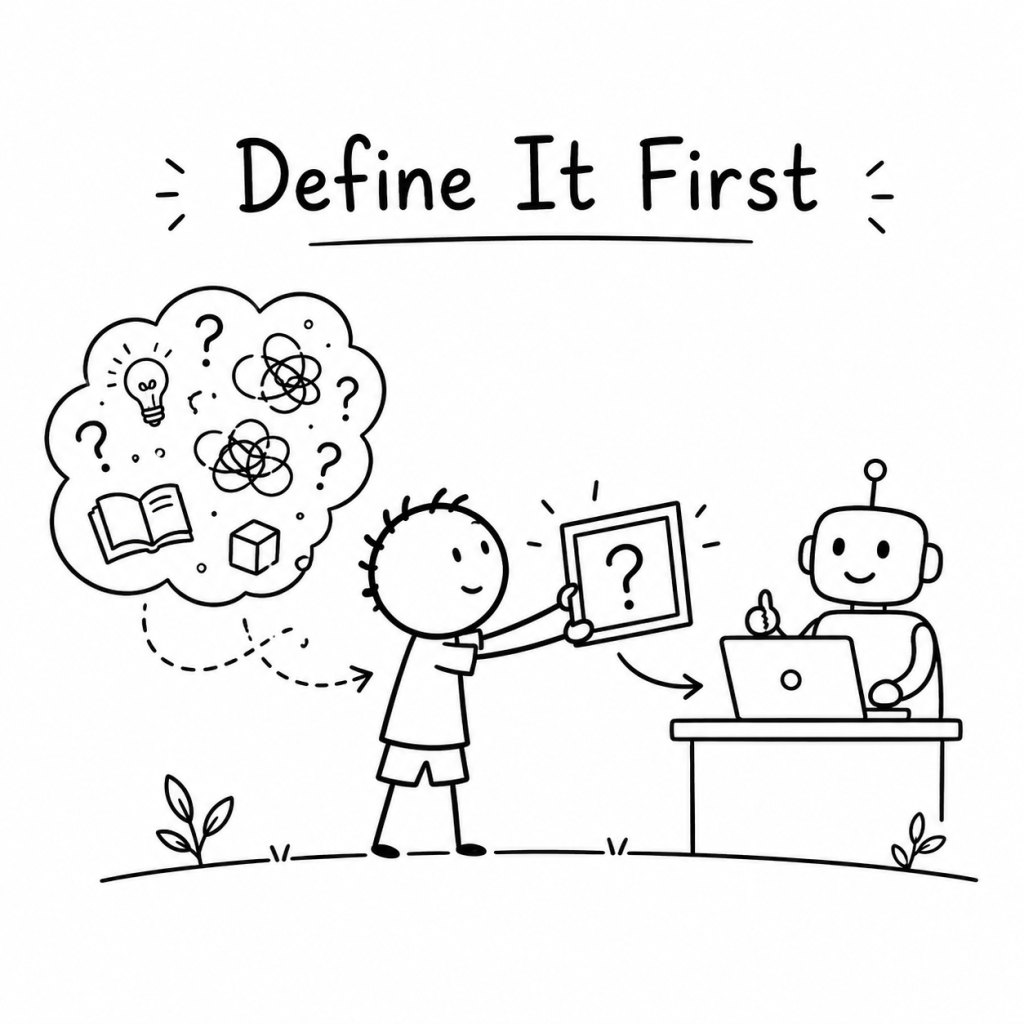
The AI did not necessarily fail.
It may have followed an incomplete request.
“Make this get the most clicks” says nothing about honesty.
“Plan the most productive day” says nothing about meals, rest or unexpected work.
When children use AI, this limitation can become a useful lesson in defining problems clearly.
A result is not a complete requirement
Children often begin with the output they want:
- Write a story.
- Make a study plan.
- Design a game.
- Explain photosynthesis.
The AI still has to guess many important details. Who is the audience? What should remain the child’s work? Which facts matter? What would make the result unacceptable?
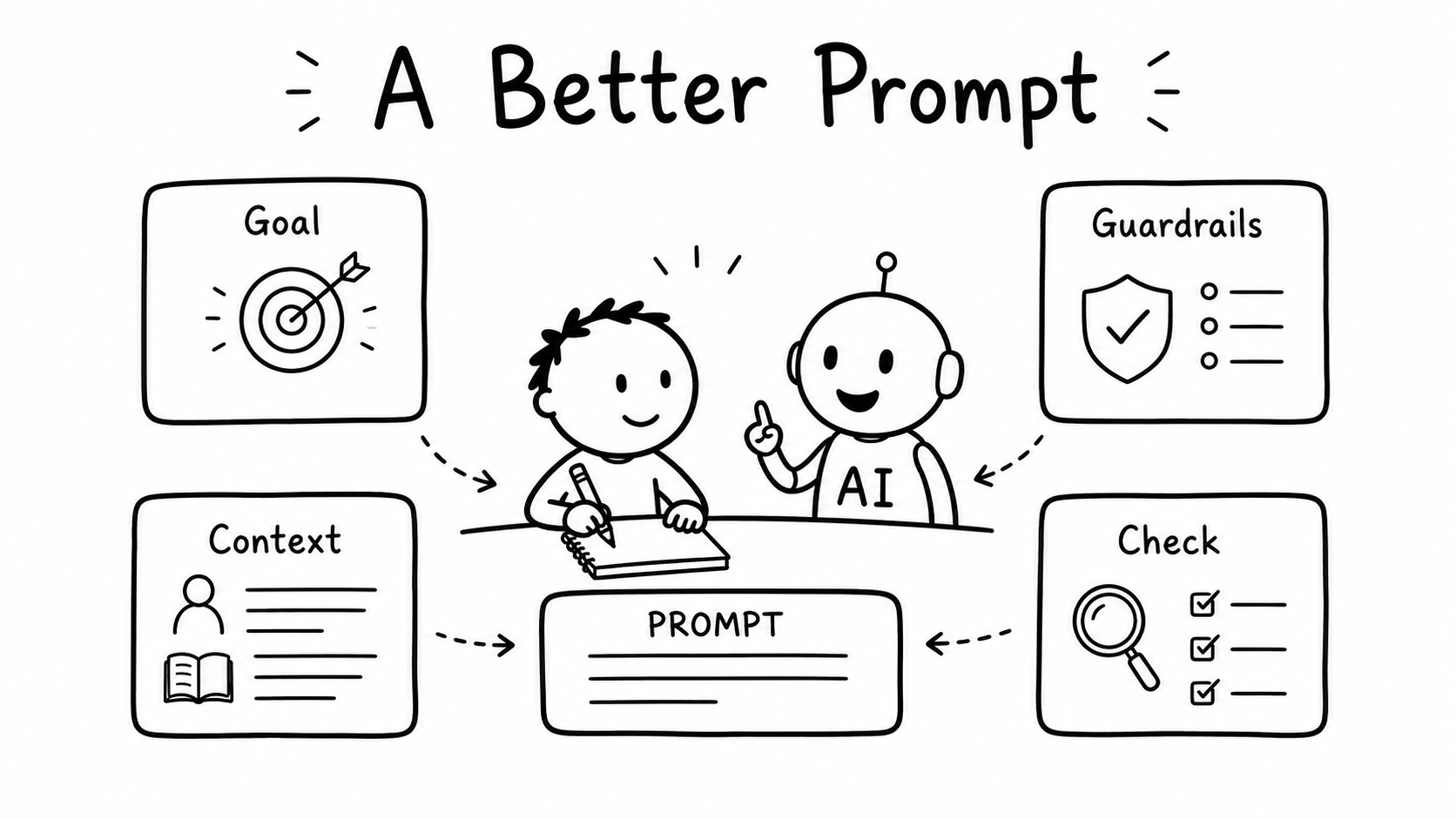
A better prompt turns hidden expectations into visible requirements.

Use Goal, Guardrails, Context and Check
1. Goal
What should the AI help accomplish?
“Help me understand why the seasons change.”
2. Guardrails
What should it not do or sacrifice?
“Do not write my homework answer. Ask me questions and correct factual errors.”
3. Context
What does the AI need to know about the learner and task?
“I understand that Earth moves around the Sun, but I do not understand why distance is not the main cause.”
4. Check
How will the child decide whether the result is useful?
“At the end, give me one new example so I can explain the idea without your help.”
Ask the AI to reveal its assumptions
Even a detailed request leaves gaps.
Before generating the final result, ask the AI to list the assumptions it is making or the questions it still needs answered.
This helps children notice that a confident output may depend on guesses.
Use examples to define quality
Words such as “fun,” “simple” and “creative” can mean different things to different people.
A child can provide a small example and explain what works about it:
- “Use short paragraphs like this.”
- “Ask one question at a time.”
- “Include a visual analogy but no fictional facts.”
- “Make the activity possible with paper and household objects.”
The example does not need to become a template. It makes the child’s quality criteria more concrete.
Test the output against the requirements
A polished answer can distract from whether it followed the request.
Ask the child to check each requirement:
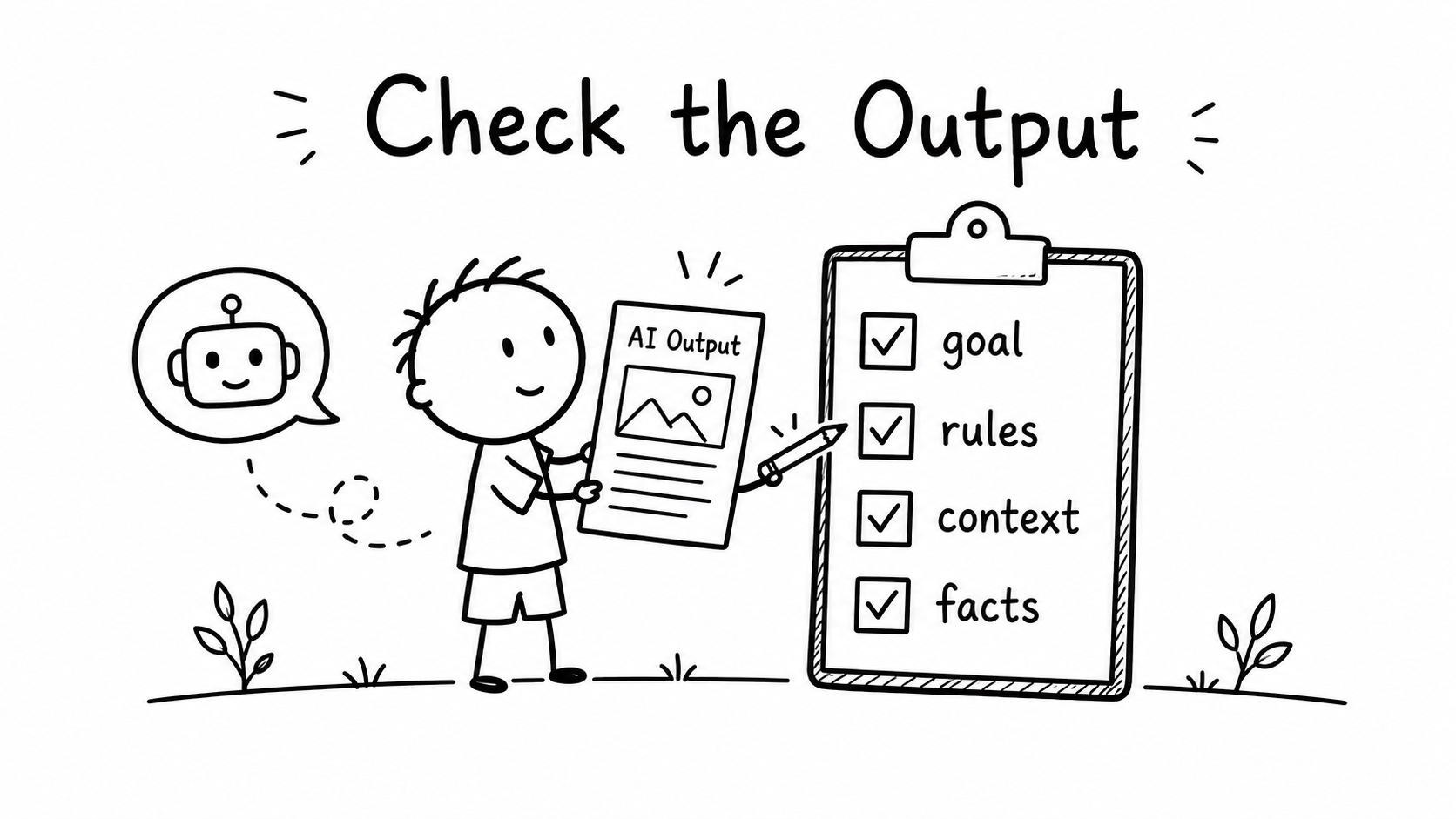
- Did it achieve the goal?
- Did it respect the guardrails?
- Did it use the context correctly?
- Can we verify the important facts?
- What still belongs to the child to decide or create?
A two-prompt experiment
Give an AI a vague, harmless request:
“Plan a fun science activity.”
Review the assumptions in the result.
Then rewrite the request using Goal, Guardrails, Context and Check.
Compare the two outputs and ask which added detail created the most useful change.
Prompting is not a magic phrase-writing skill.
It is practice in turning an intention into requirements another system can interpret, then taking responsibility for checking the result.
 ThinkBySketch
Leave a comment