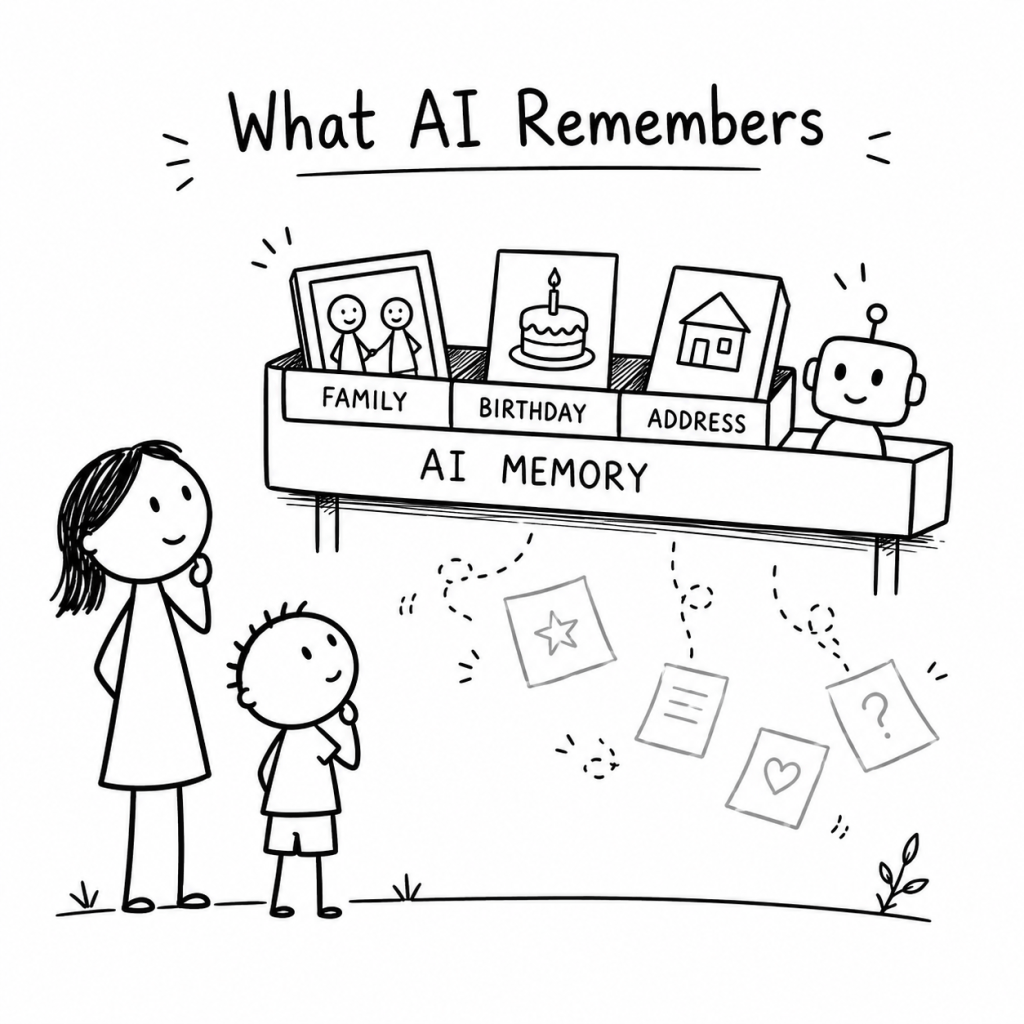
An AI can refer to something a child said earlier and appear to remember them.
That can feel surprisingly human.
But AI memory is better understood as information being included, selected or retrieved for a response. It is not the same experience as a person remembering a shared moment.
That distinction matters because it changes what children should expect and what families should choose to share.
The current conversation acts like a working page
When an AI answers, it uses information available in its current input. That may include the latest message and some amount of earlier conversation.
Imagine a desk with a limited working surface. The system can use the notes currently placed on that desk. As a conversation grows, older details may no longer remain fully available, or they may be shortened into a summary.
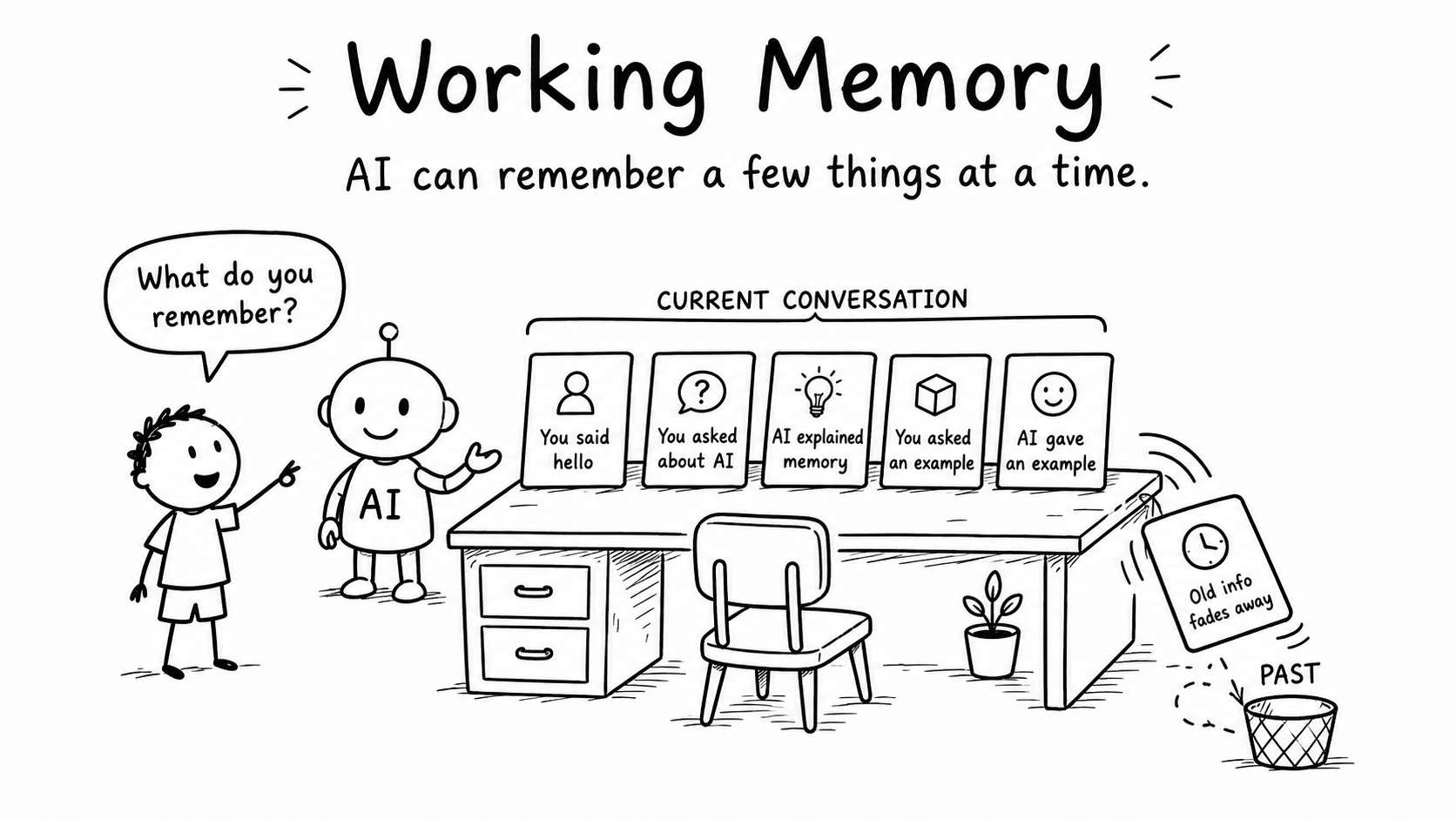
This helps explain why an AI may remember a detail in one moment and miss it later.
Some systems may store selected details separately
Depending on the product and its settings, selected information may be saved outside the immediate conversation and brought back when it appears relevant.
That stored information may include preferences or facts the user has shared. The exact behaviour varies between systems and settings.
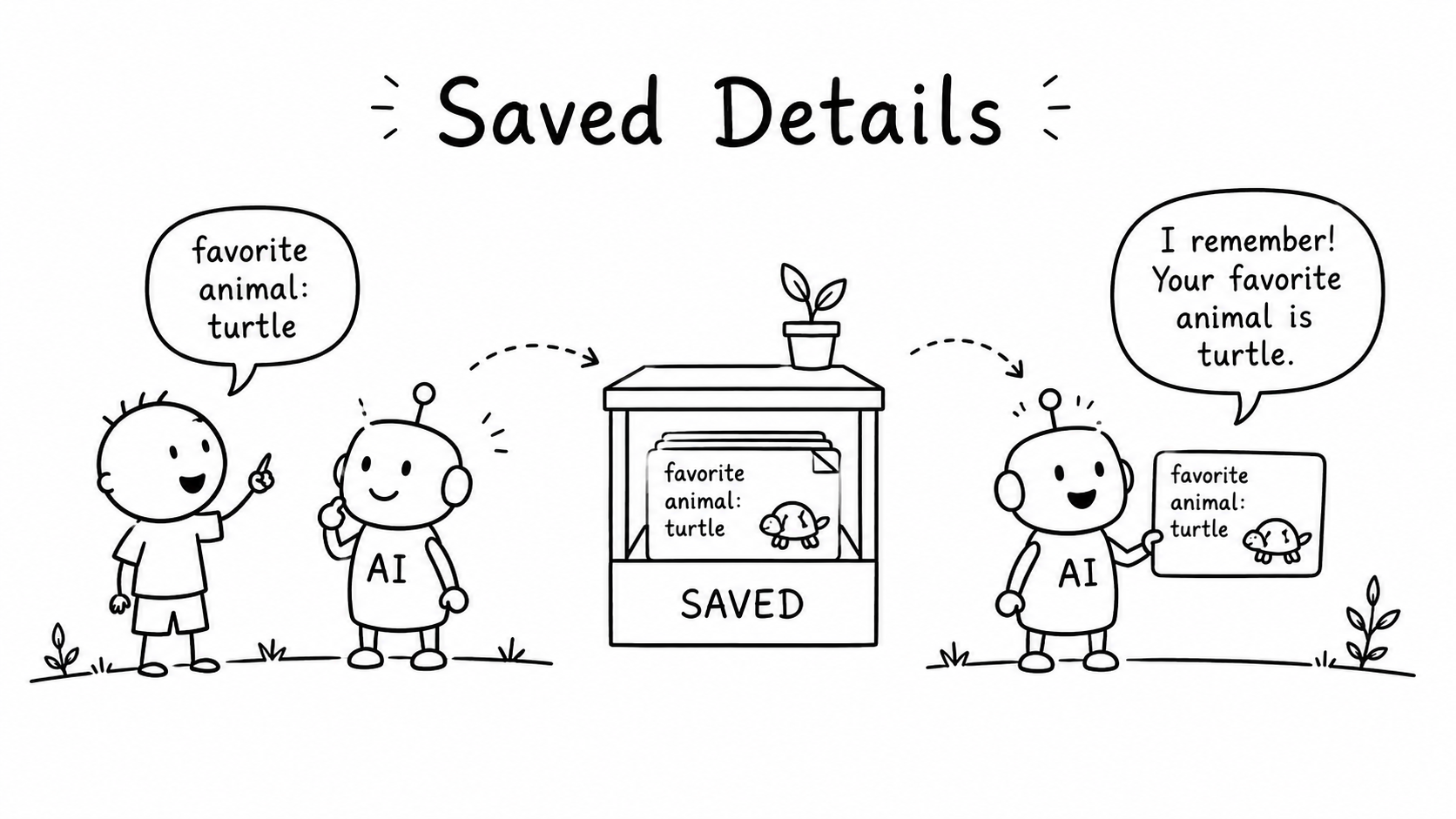
Families should not assume that closing a chat always means every detail has disappeared, or that every earlier detail will always be remembered accurately.
Remembering a fact is not understanding a person
An AI may repeat a child’s favourite subject, preferred writing style or earlier concern.
That can make the interaction feel personal. It does not prove that the system understands the child’s life, relationships or emotional meaning in the way another person might.
A useful family rule is:
Personalised is not the same as personally known.
Teach children to classify information before sharing
Before entering information into an AI tool, place it into one of three groups:
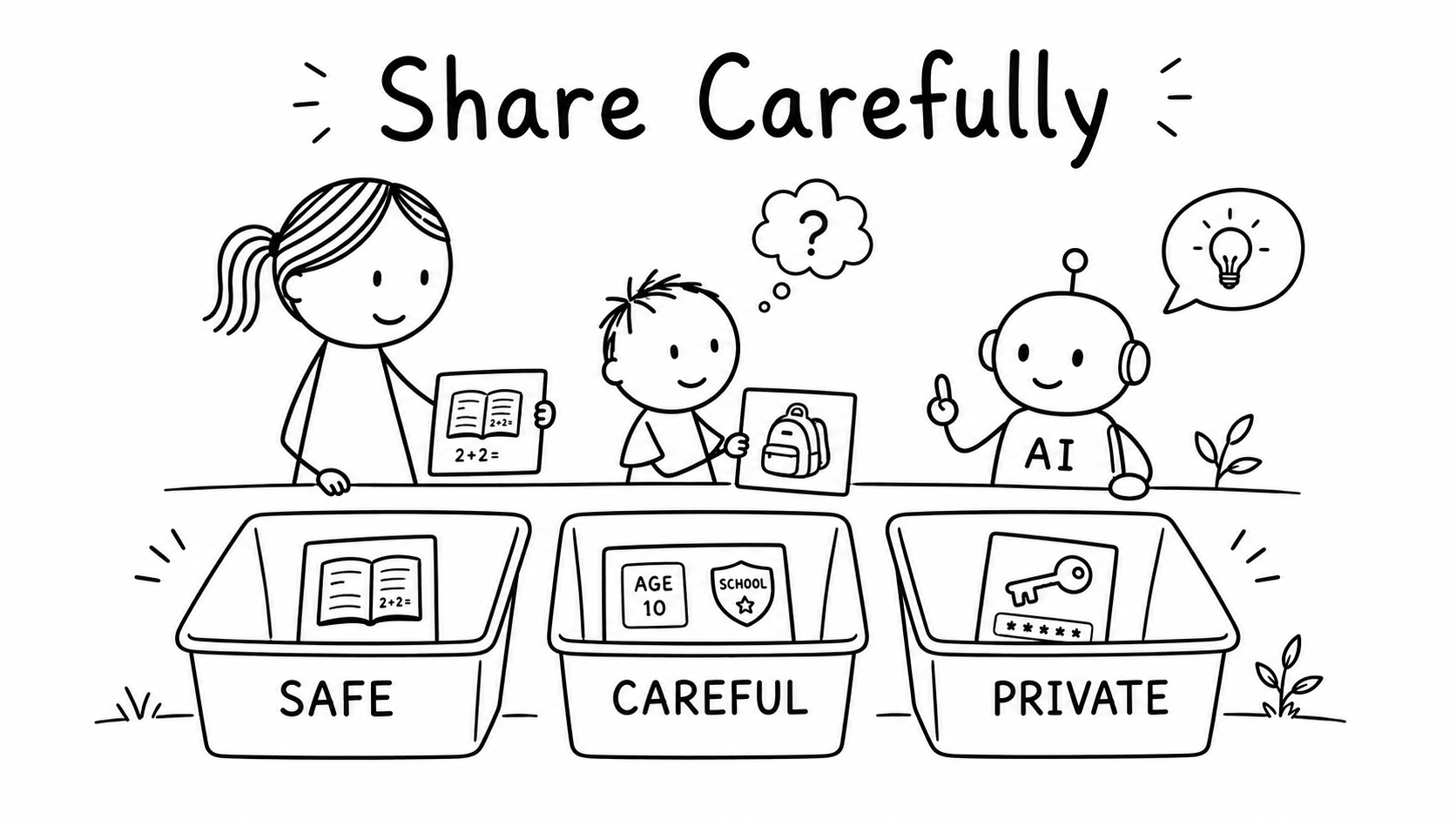
- Safe for the task: The maths question, fictional character or general topic.
- Needs care: Age, school context, personal preferences or a real conflict.
- Keep private: Passwords, precise location, contact details, financial information, private images or another person’s confidential information.
The categories may change depending on the child’s age, the tool and the family’s rules. The important habit is pausing before disclosure.
Check and manage the available controls
AI products may provide controls for chat history, saved memory, data use or deletion. These controls are product-specific and can change.
Parents should review the current settings of the tool their child uses rather than relying on a general assumption about “AI.”
Ask together:
- What does this tool say it saves?
- Can saved information be viewed or removed?
- Is the account designed for the child’s age?
- Would we be comfortable if this detail remained associated with the account?
A simple memory demonstration
Use index cards to model an AI conversation.
- Write each message on a card.
- Allow only five cards on the “working desk.”
- As new cards arrive, remove or summarise older ones.
- Keep one separate “saved detail” card that can be returned later.
Ask the child what information was lost, compressed or retrieved and how that could affect the answer.
AI memory can make a tool more convenient.
Children should also understand that convenience is not a reason to share everything, and apparent familiarity is not the same as a human relationship.
 ThinkBySketch
Leave a comment