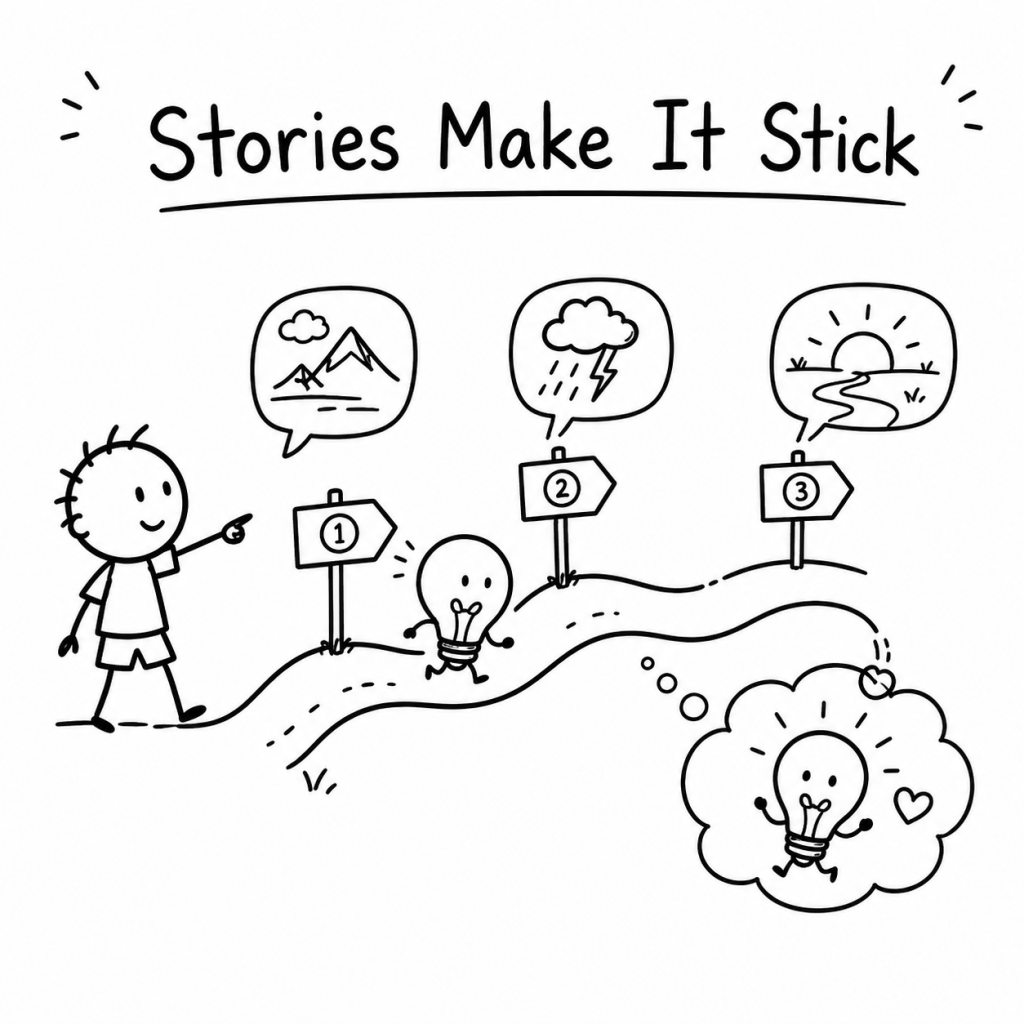
A child may understand an idea and still struggle to explain it.
The facts are present, but the listener cannot see how they connect.
Story structure can help.
This does not mean turning every school answer into a dramatic tale. It means giving information a sequence that another person can follow.
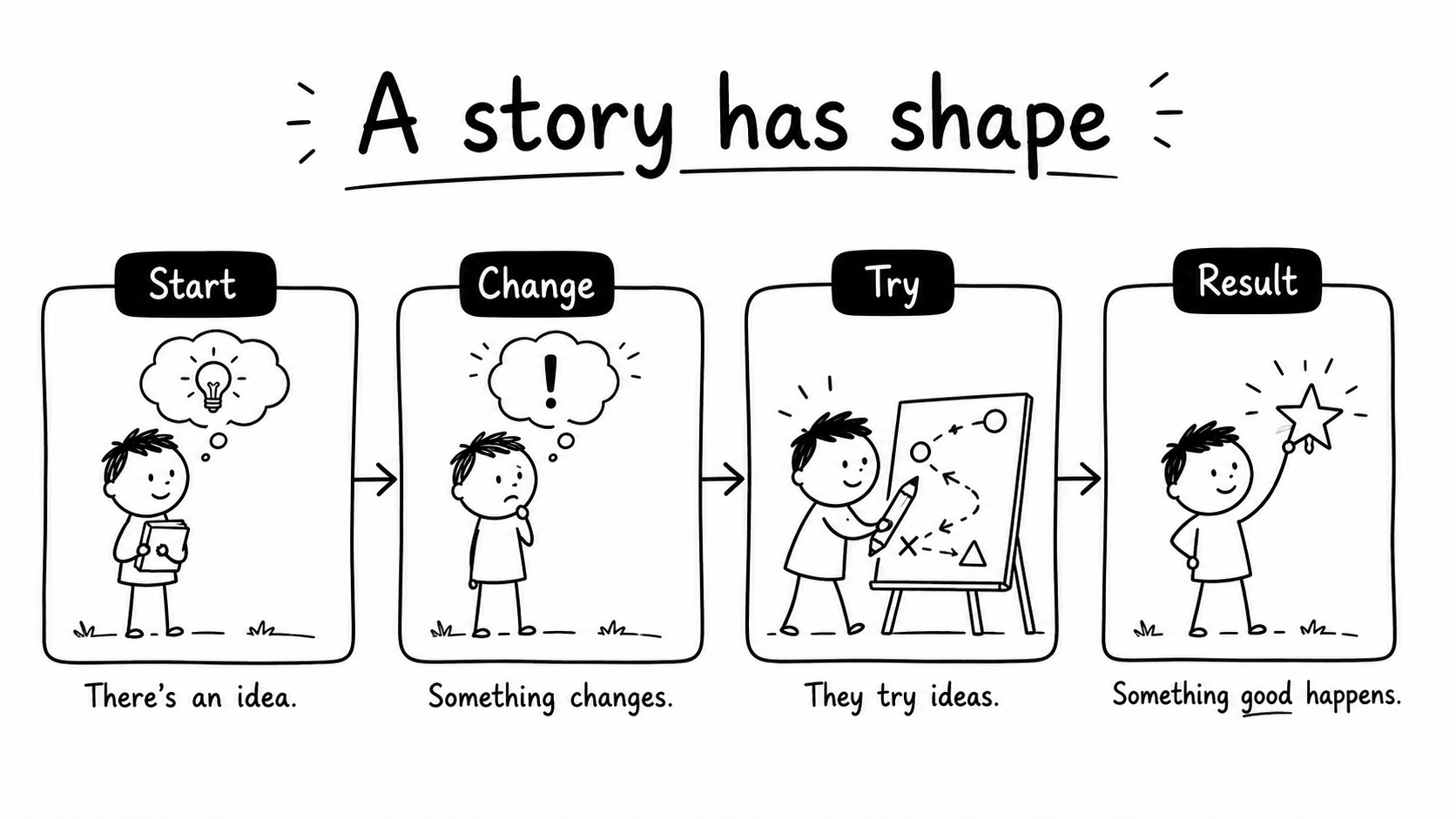
A story answers four useful questions
Even a simple explanation becomes clearer when it answers:
- What was happening?
- What changed or created a problem?
- What did someone try?
- What happened as a result?
These questions can organise a science observation, a history event, a design process or a personal experience.
They help the child move from a pile of details to a connected explanation.
Use tension without inventing drama
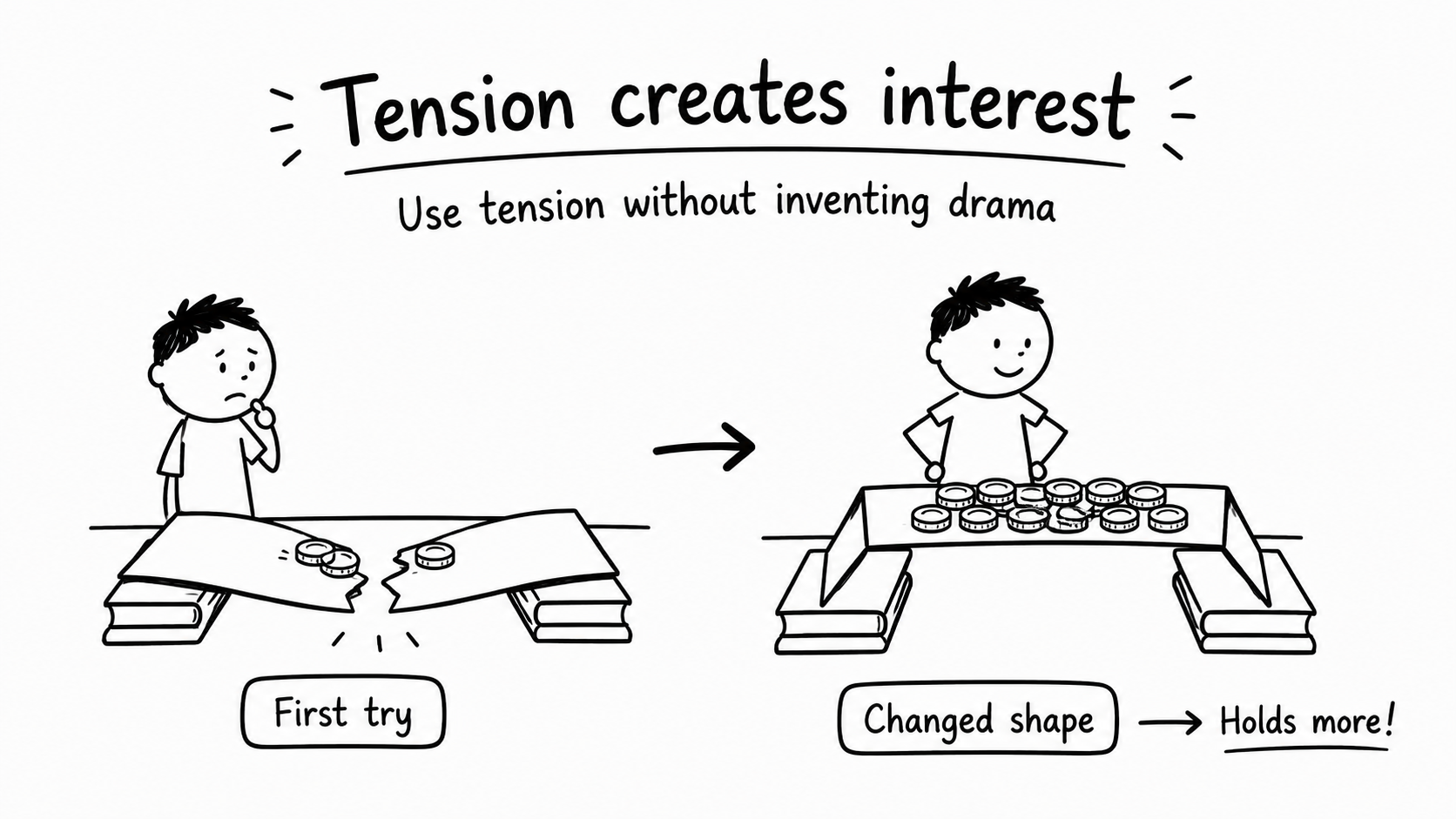
A useful story contains a question, difficulty or change. It does not need danger or exaggeration.
For example:
“We wanted the paper bridge to hold ten coins, but it collapsed after three. We changed the shape of the paper and tested it again.”
The tension comes from the failed design. The payoff comes from the next attempt and what it taught.
A story can reveal the thinking process
When children present only the final result, the most valuable part may remain invisible.
Ask them to include:
- The first idea
- What did not work
- What they noticed
- What they changed
- What they would try next
This makes the explanation more honest and often more useful to another learner.
Sketch the story before writing it
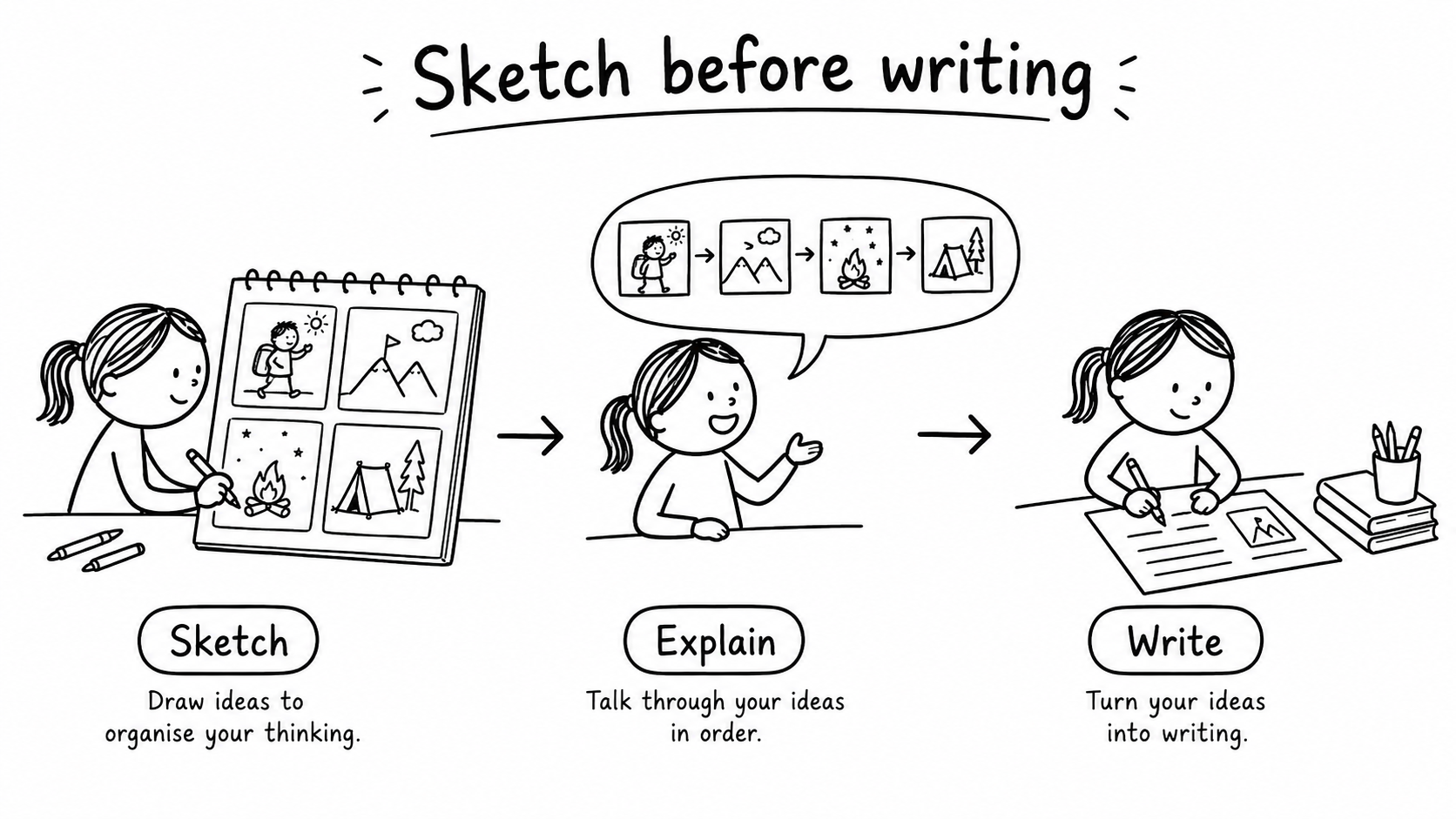
Some children find it easier to see a sequence before turning it into sentences.
Divide a page into four boxes:
- Beginning
- Change or problem
- Attempt
- Result or new question
Ask the child to draw one simple image in each box. Stick figures and arrows are enough.
Then let them explain the boxes aloud before writing. The spoken version often reveals missing steps or confusing jumps.
Do not let the story replace accuracy
A smooth narrative can feel convincing even when important facts are missing.
After shaping the story, check:
- Did we change any fact to make the story cleaner?
- Did we leave out a result that does not fit?
- Can we separate what happened from what we think it means?
- What evidence supports the conclusion?
Storytelling should help people follow the truth. It should not make an unsupported claim feel true.
A six-sentence experiment
Ask a child to explain something they made or learned using only six sentences:
- We wanted to…
- At first, we thought…
- Then we noticed…
- So we tried…
- The result was…
- Now we wonder…
The final sentence matters. A good learning story does not always end with certainty.
Sometimes it ends by making the next question visible.
 ThinkBySketch
Leave a comment