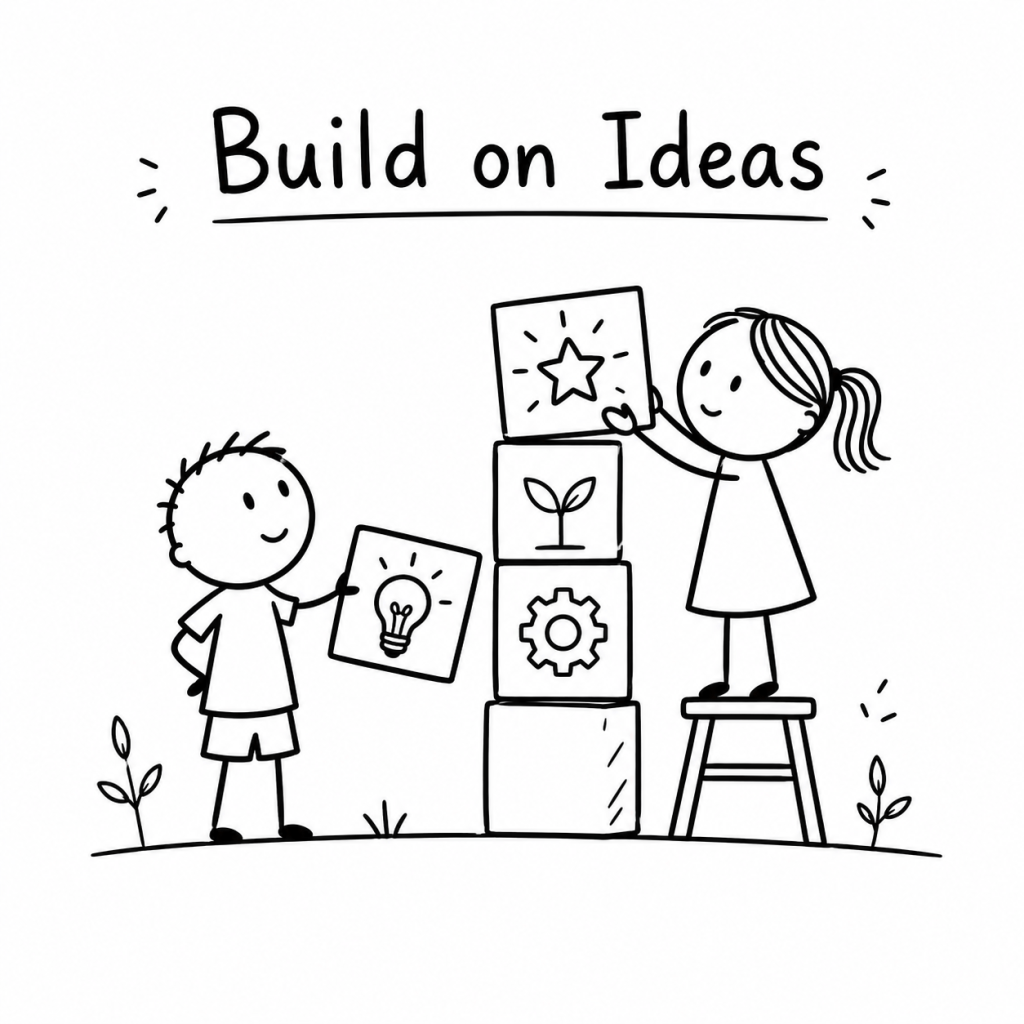
Putting children in a group does not automatically teach collaboration.
One child may take control. Another may quietly agree. The task may be divided into pieces that never truly connect.
The project gets finished, but the children may not have practised building an idea together.
Collaboration is a thinking skill. It needs visible moves that children can recognise and practise.
A shared idea should change
When collaboration is working, the final idea is not simply one person’s first suggestion with everyone else’s names attached.
It changes because someone adds a detail, challenges an assumption, finds a problem or connects it to something unexpected.
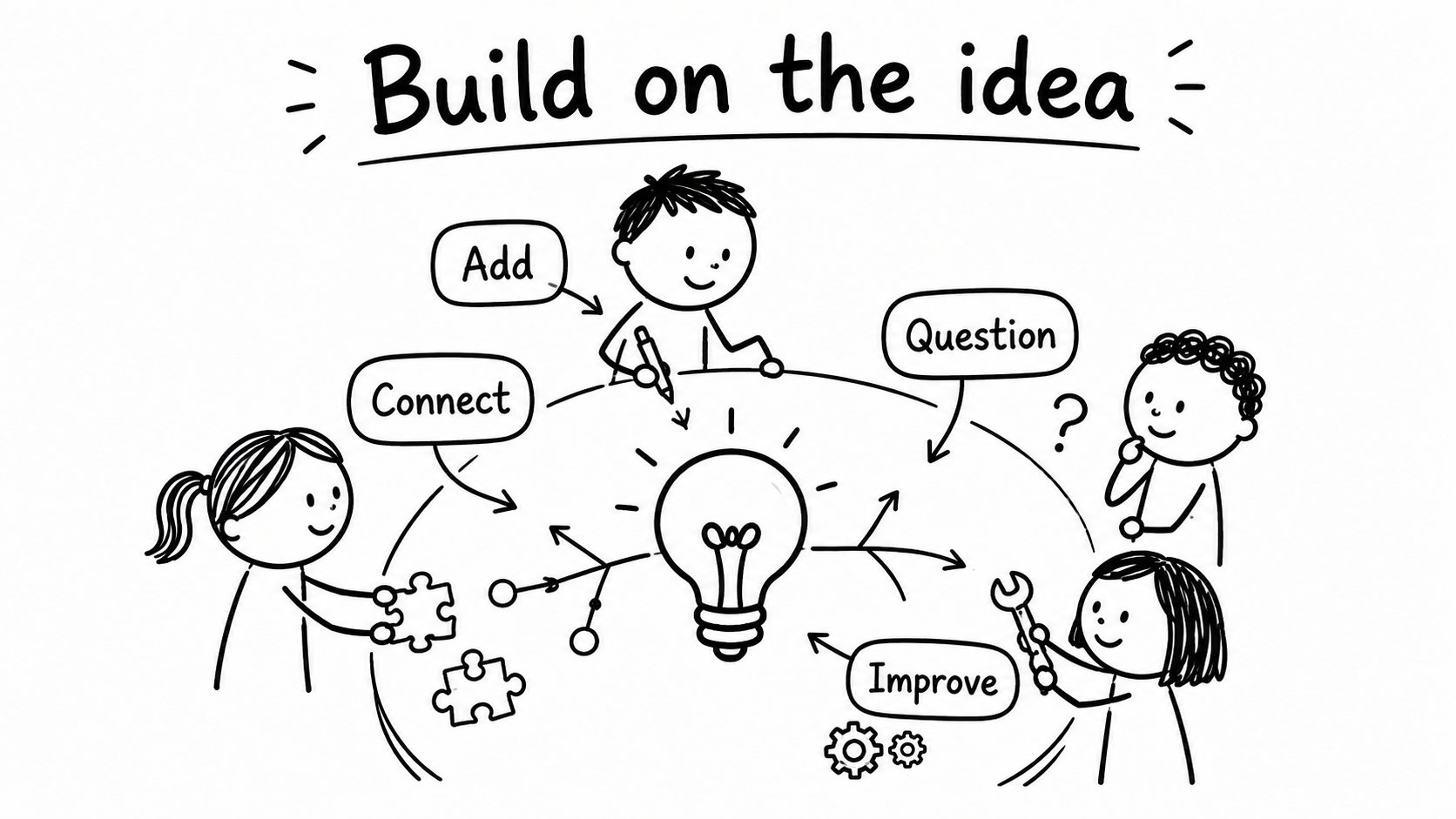
Children can learn four useful moves:
- Add: “We could also…”
- Connect: “That reminds me of…”
- Question: “What happens if…?”
- Improve: “This part may work better if…”
These sentences make collaboration concrete. They show that listening is not passive. It provides material for the next contribution.
Teach disagreement without dismissal
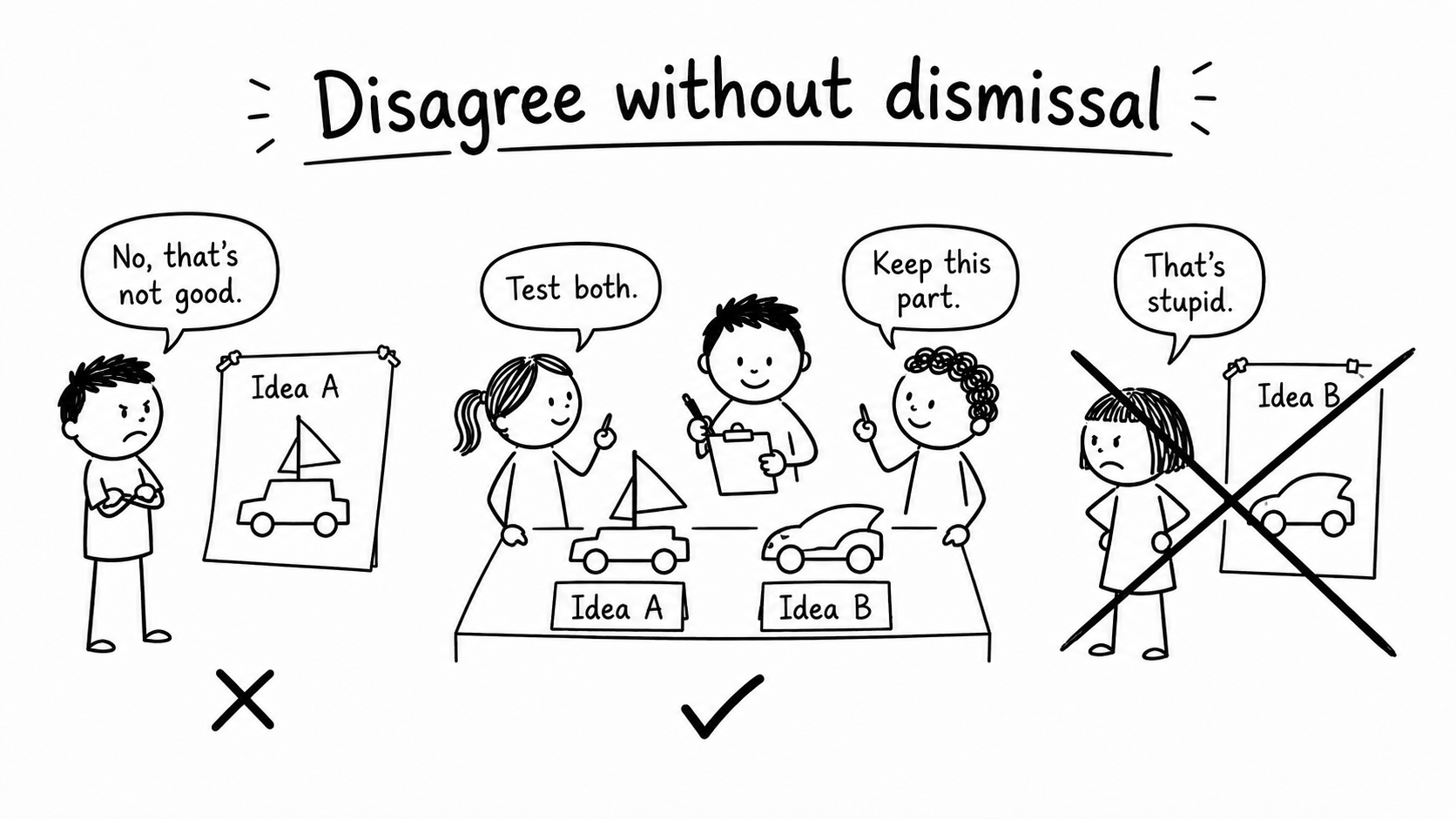
Children sometimes protect harmony by agreeing with everything. Others protect their idea by rejecting alternatives immediately.
A useful middle path is to separate the person from the proposal.
- “I like the goal, but I see a problem with this step.”
- “Can we test both versions?”
- “What evidence would help us choose?”
- “Which part of each idea should we keep?”
The aim is not to avoid disagreement. It is to make disagreement useful to the work.
Do not divide the task too early
Dividing work can be efficient. It can also prevent shared thinking if it happens before the group understands the problem.
Before assigning parts, ask every child to contribute to:
- What are we trying to make or solve?
- What constraints do we have?
- What are three possible approaches?
- How will we decide whether the result works?
Once the shared direction is clearer, roles can support the project rather than fragment it.

Make contribution visible
A simple visual can help children see how an idea evolved.
Write the first idea in the centre of a page. Draw branches for additions, questions, problems and changes. Add each child’s initials beside their contribution.
The map shows that contribution is not limited to producing the final answer. A useful question or discovered flaw can move the group forward too.
Try the paper-tower experiment
Give two or more children a few sheets of paper and a small amount of tape. Ask them to build the tallest free-standing tower they can.
Add one rule: before changing the design, a child must first explain the current idea they are responding to.
Afterward, ask:
- Which contribution changed the design most?
- Which question helped the group?
- When did disagreement improve the result?
- What would you do differently in a second attempt?
Collaboration is not about making individual ideas disappear.
It is about learning how an idea can become more useful after other minds have touched it.
 ThinkBySketch
Leave a comment