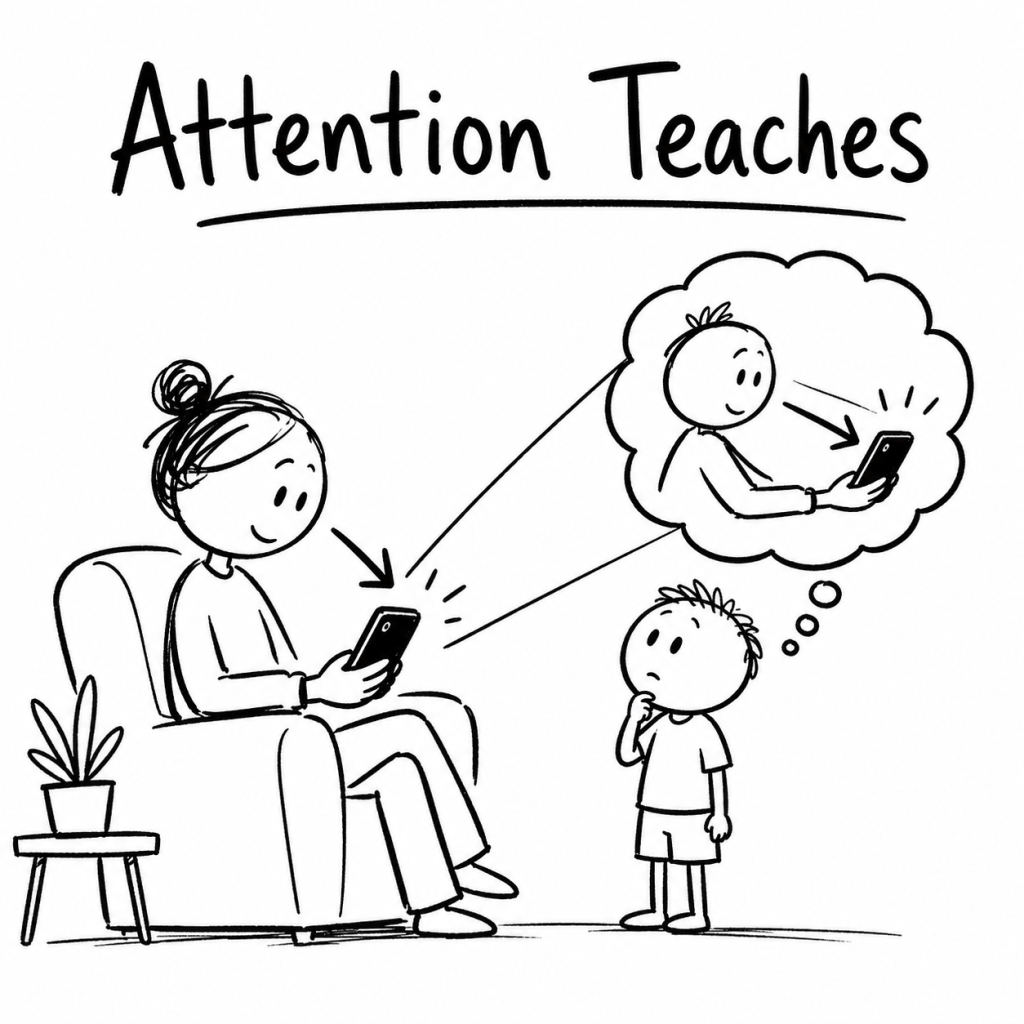
A child can be sitting beside us while our attention is somewhere else.
I noticed this during a cab ride to my daughter’s school.
On the road, I saw a boy holding tightly to his father’s shirt while they travelled on a scooter. The scene reminded me of riding behind my own father.
We used to talk about friends, sports and animal shapes in the clouds. Perhaps he wanted to make sure I stayed awake. Perhaps he simply enjoyed talking with me.
I asked my four-year-old daughter whether she liked travelling with me.
Her answer was direct. She said I was often clinging to my phone and emails while travelling with her, then clinging to my laptop while working.
Children observe attention before they understand intention
As parents, we may be working because we care about our family. A young child cannot see the future we are trying to protect. They can see the screen in our hand.
Both things can be true:
- The work may be necessary.
- The interruption may still affect the moment.
This is not a demand for perfect presence. It is a reminder that children build their understanding of relationships from repeated small signals.
Where do our eyes go when they start a story? Do we pause before replying? Do we remember what they said yesterday? These details tell a child whether a conversation has room to grow.
Attention creates material for thinking
A shared ride can become more than transport.
It can become a place to notice patterns, ask questions and connect unrelated ideas:
- What shapes can we find in the clouds?
- Why do some trees lose their leaves?
- Which route do you think is shorter?
- What was the most confusing part of your day?
These conversations do not need a lesson plan. Their value comes from giving a child space to observe and explain.
A boundary works better when it is visible
“Use the phone less” is too vague for many families. A small visible boundary is easier to practise.
For example:
- Keep the first ten minutes of a journey device-free.
- Finish one necessary message, then put the phone away.
- Tell the child why an urgent interruption cannot wait.
- Return to the conversation after the interruption.
The aim is not to pretend work never exists. It is to help the child understand when attention is available and when it will return.
Try one curiosity ride
During the next short journey, choose one question and let the child lead:
“What did you notice today that I might have missed?”
Do not correct the answer quickly. Ask what made them notice it.
Children may not understand every reason we work.
They understand the experience of having our attention.
 ThinkBySketch
Leave a comment