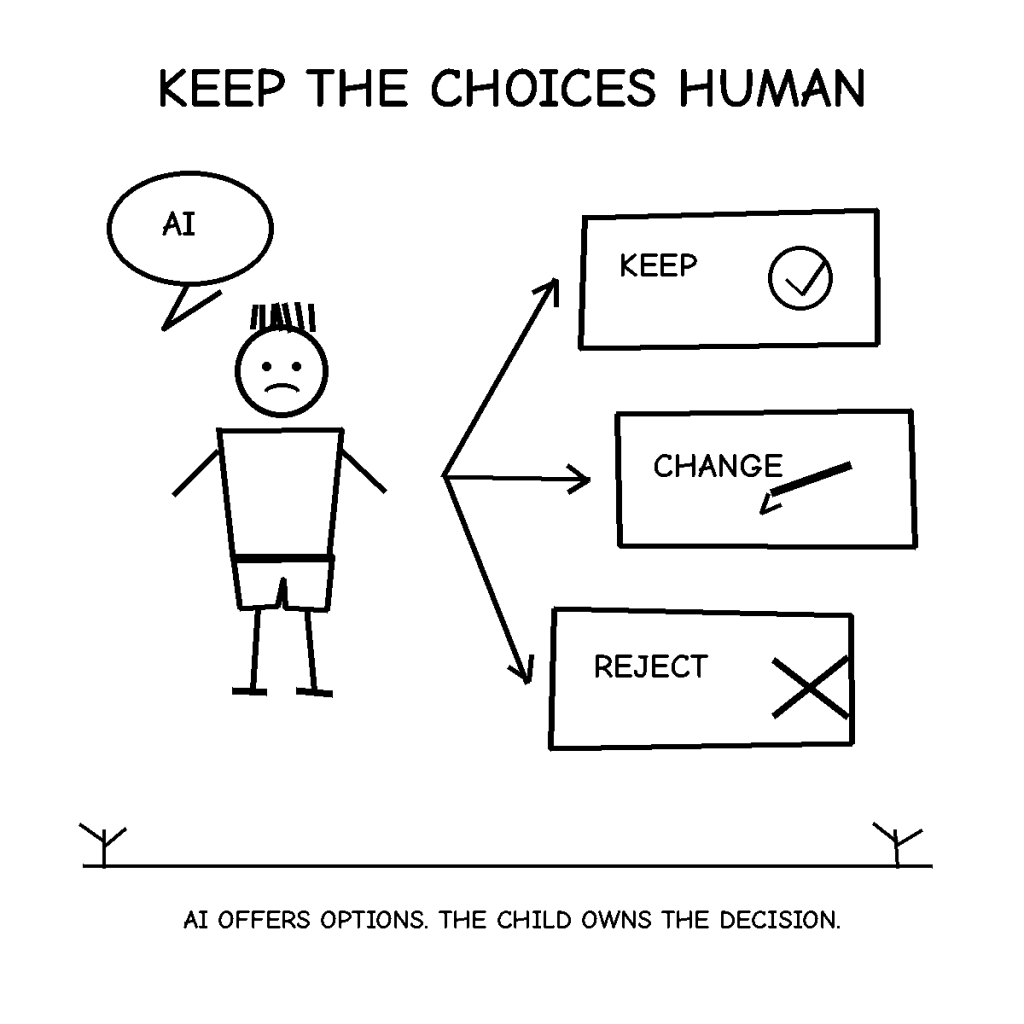
AI can turn three rough sentences into three polished paragraphs in seconds.
The result may be cleaner.
But one question matters more to me than who typed the words:
Who made the important choices?
Who chose the idea? Who picked the example? Who decided what sounded right? Who rejected a suggestion? Who changed the ending?
As AI becomes part of everyday writing, those decisions may be a better way to think about authorship than a simple Human wrote it / AI wrote it split.
Typing the words is not the same as owning them
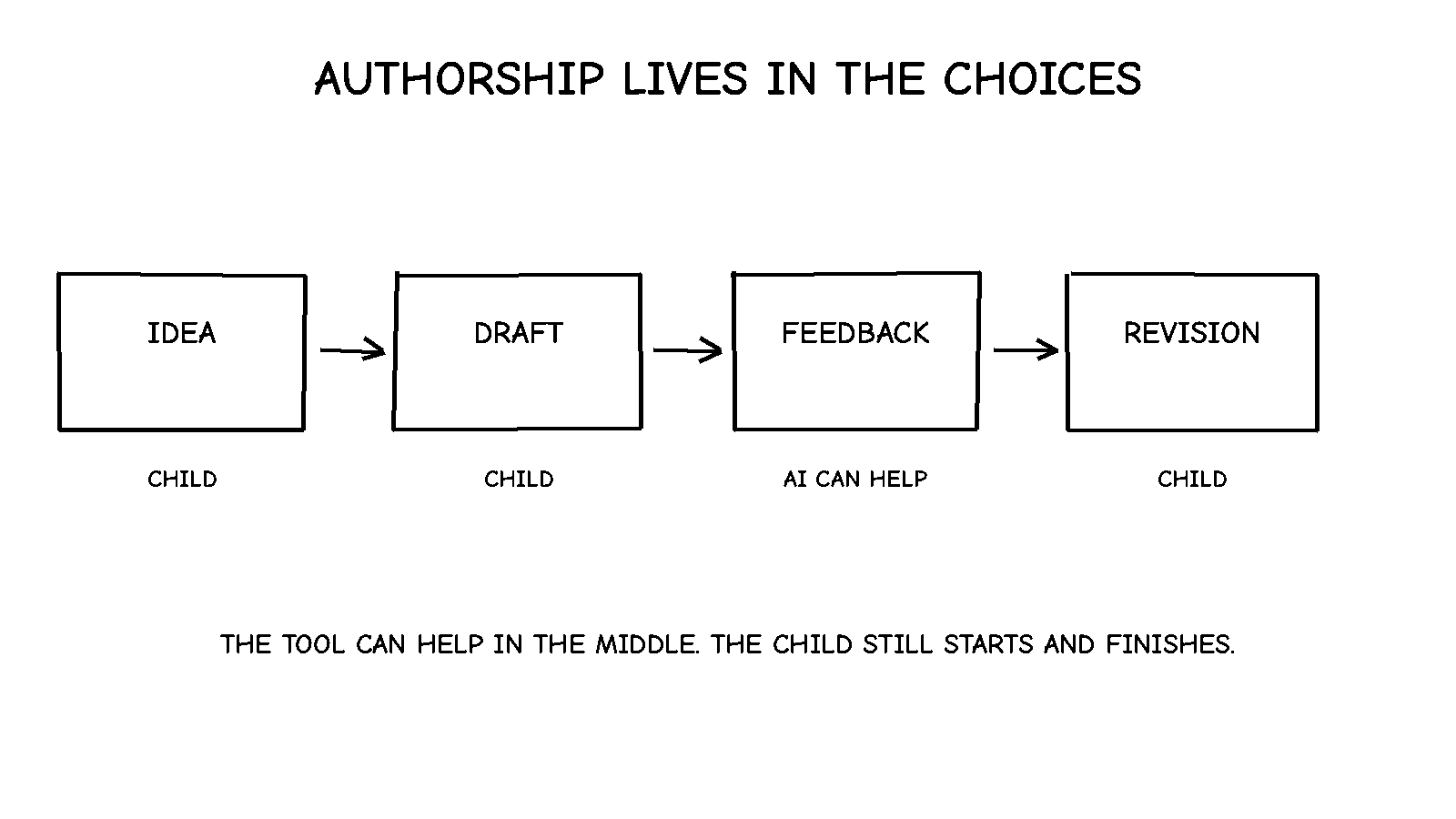
A writing process can now look like this:
Idea → rough draft → AI feedback → human decision → revision.
Or it can look like this:
Prompt → AI rewrite → submit.
Both use AI. They are not the same learning activity.
AI becomes more useful when it expands options instead of making decisions
Suppose I ask AI for five possible openings to a piece.
Comparing those openings requires judgment. Choosing one requires preference. Changing it requires intent. Rejecting all five can reveal something too.
That gives me a useful rule:
AI can increase the number of options without owning the final choice.
That is very different from asking for a finished introduction and accepting it because it sounds polished.

Polish can quietly remove voice
AI is very good at making writing smoother.
Sometimes too smooth.
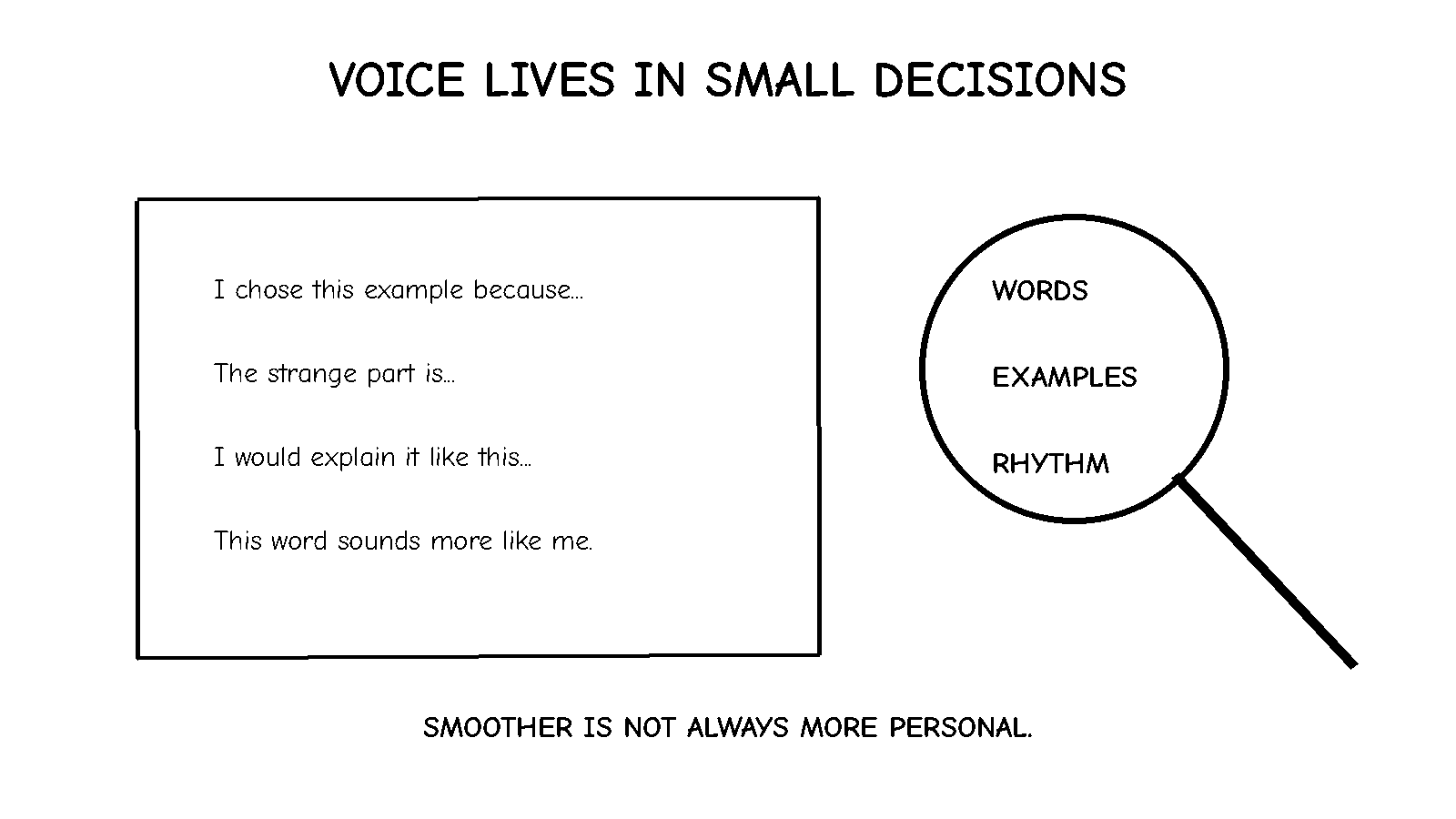
A sentence can become more grammatical while losing the odd detail, rhythm or word choice that made it belong to a particular person.
Voice often lives in small decisions:
- Which detail do I notice?
- Which word would I actually use?
- What do I find funny or important?
- Where do I pause?
- What example do I choose?
- What do I leave out?
If AI replaces those decisions automatically, the text may improve while the writer practises less.
Feedback keeps more thinking with the writer than replacement
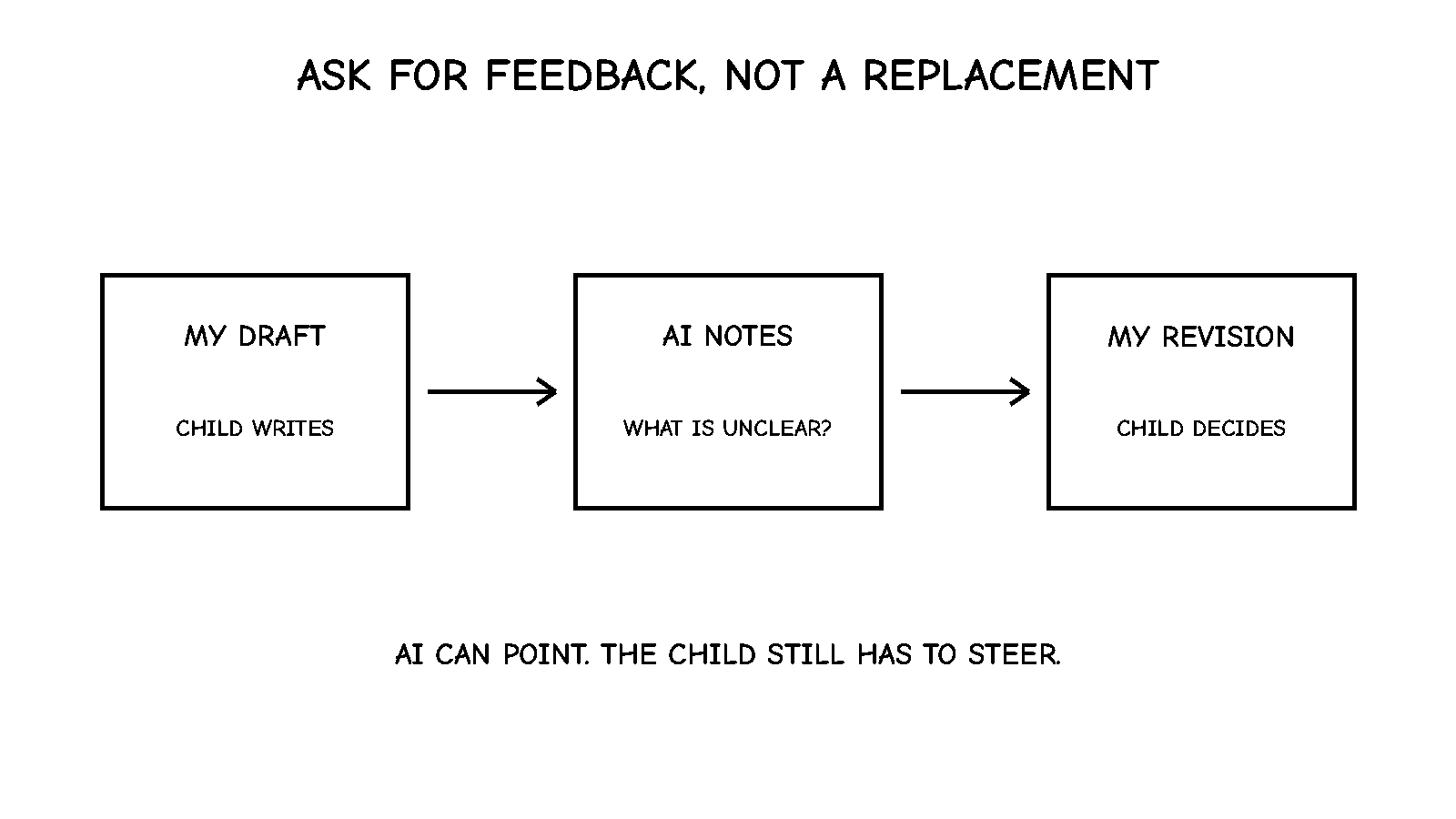
A small change in the prompt can move the work back to the person writing.
- Instead of “Rewrite this paragraph”, try “Point out two places that are unclear. Do not rewrite them.”
- Instead of “Make this introduction better”, try “Give me three reasons this opening may lose the reader.”
- Instead of “Improve my vocabulary”, try “Highlight three words I repeat too often. I will choose replacements.”
The difference looks small.
The thinking moves.
My draft → AI feedback → My decision → My revision keeps a very different loop alive from My draft → AI rewrite → Done.
I use a three-question ownership check
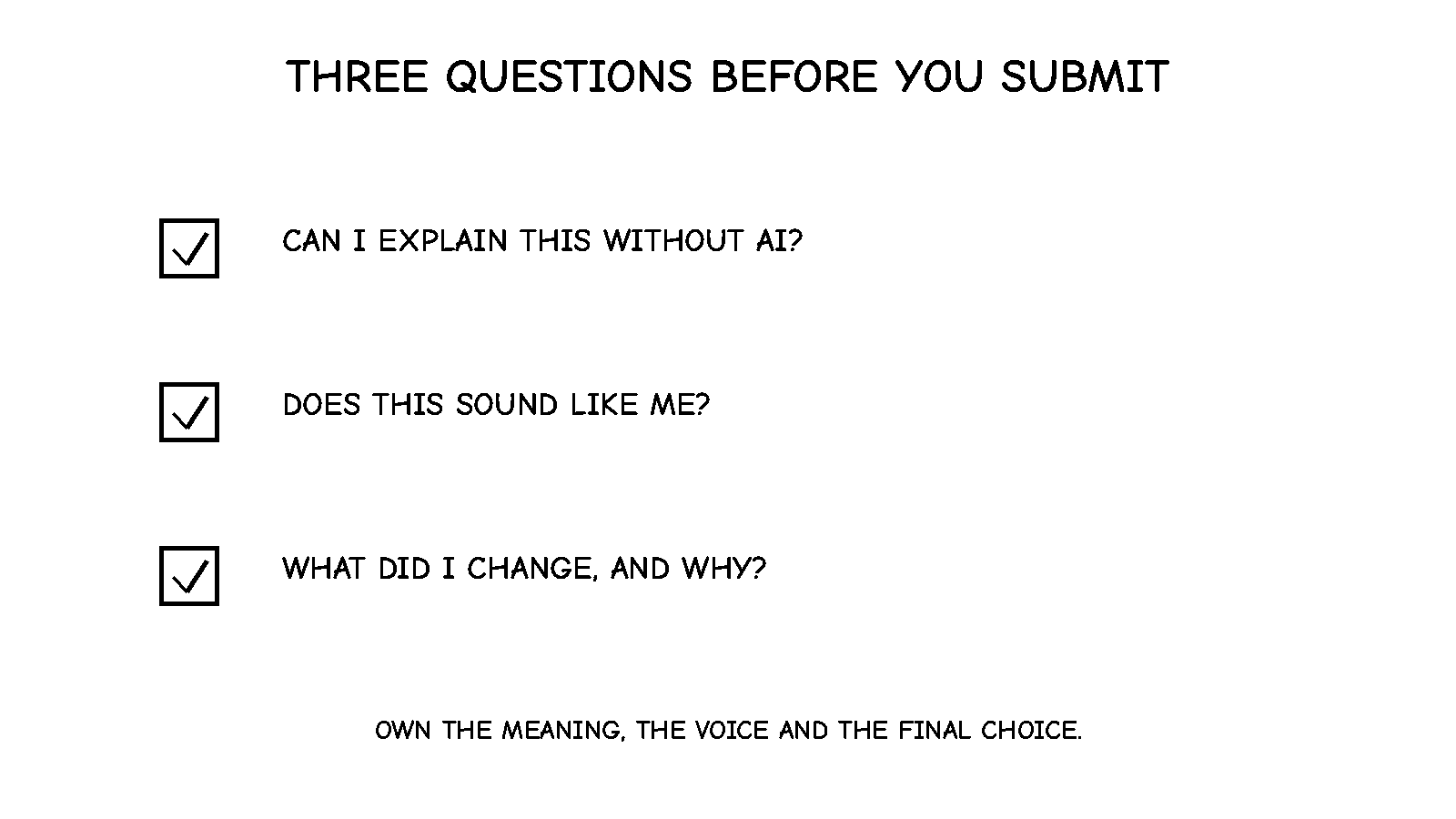
- Can I explain this without AI? Not recite it. Explain what it means and why it is there.
- Does this sound like me? The wording can be formal, but I should understand and accept the words under my name.
- What did I change and why? If I can explain why I accepted or rejected a suggestion, judgment is still happening.
The goal is not AI-free writing
I do not think useful writing has to be untouched by AI.
I care more about keeping the important decisions with the writer.
Let AI suggest possibilities. Let it identify repetition. Let it ask questions. Let it challenge an argument.
Then return the work to the person.
Because writing is not only the production of good sentences.
It is deciding what you mean.
 ThinkBySketch
Leave a comment