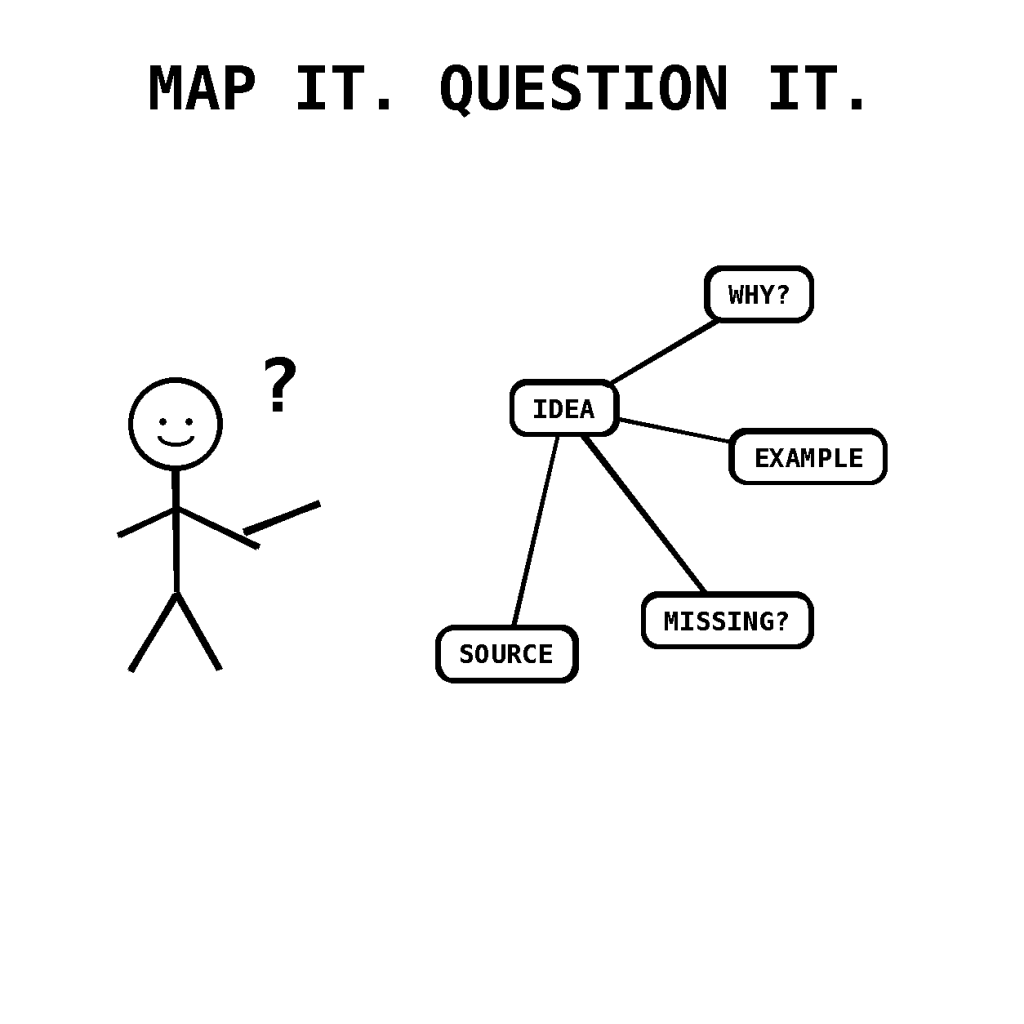
A beautiful mind map can create the feeling that a topic is understood before any real explanation has happened.
That tension interests me because I am a visual thinker and I naturally like tools that turn information into diagrams.
I like mind maps because they reveal relationships that a linear page can hide.
But I do not think a generated map should be treated as proof of understanding.
The useful question is not “Can AI make a mind map?”
It is:
What should I do with the map after AI makes it?
A map is a model, not an answer
When a video contains many ideas, a visual map can make the structure easier to see.
Concepts branch. Examples sit under larger ideas. Connections become visible.
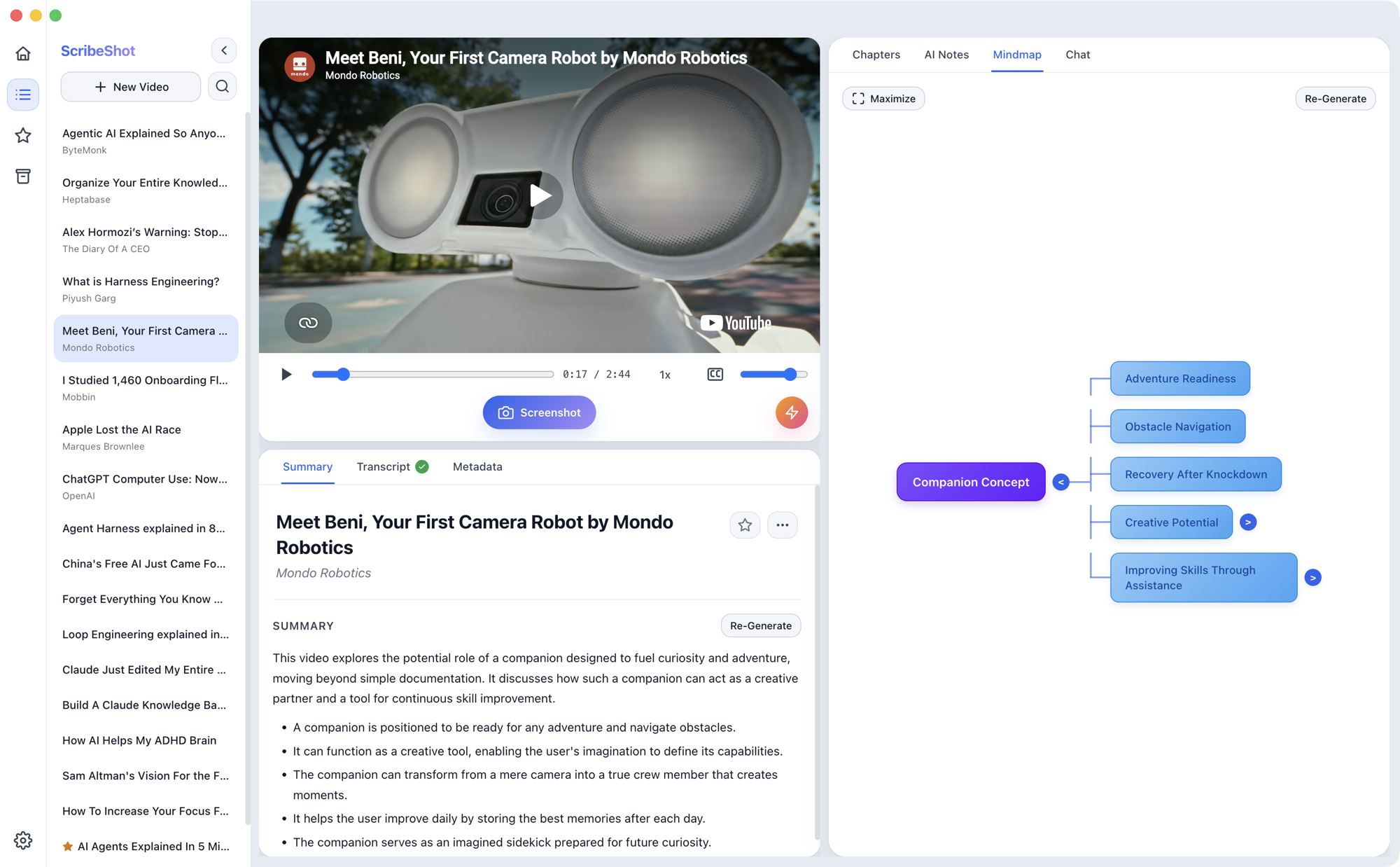
That can be useful because it gives me something concrete to inspect.
But the map is still one representation of the source.
It can emphasise the wrong idea, miss a connection or organise the topic differently from the way I would.
That is not necessarily a flaw.
It creates something to compare against.
The useful moment begins when I disagree with the map
Instead of treating a generated map as “the notes”, I can ask:
- Which branch feels most important?
- Which connection would I draw differently?
- What is missing?
- Which part can I explain without looking?
Now the map becomes an object to reason about rather than a finished artifact to accept.
Full-screen mode changes the activity
ScribeShot can also show the mind map full screen.
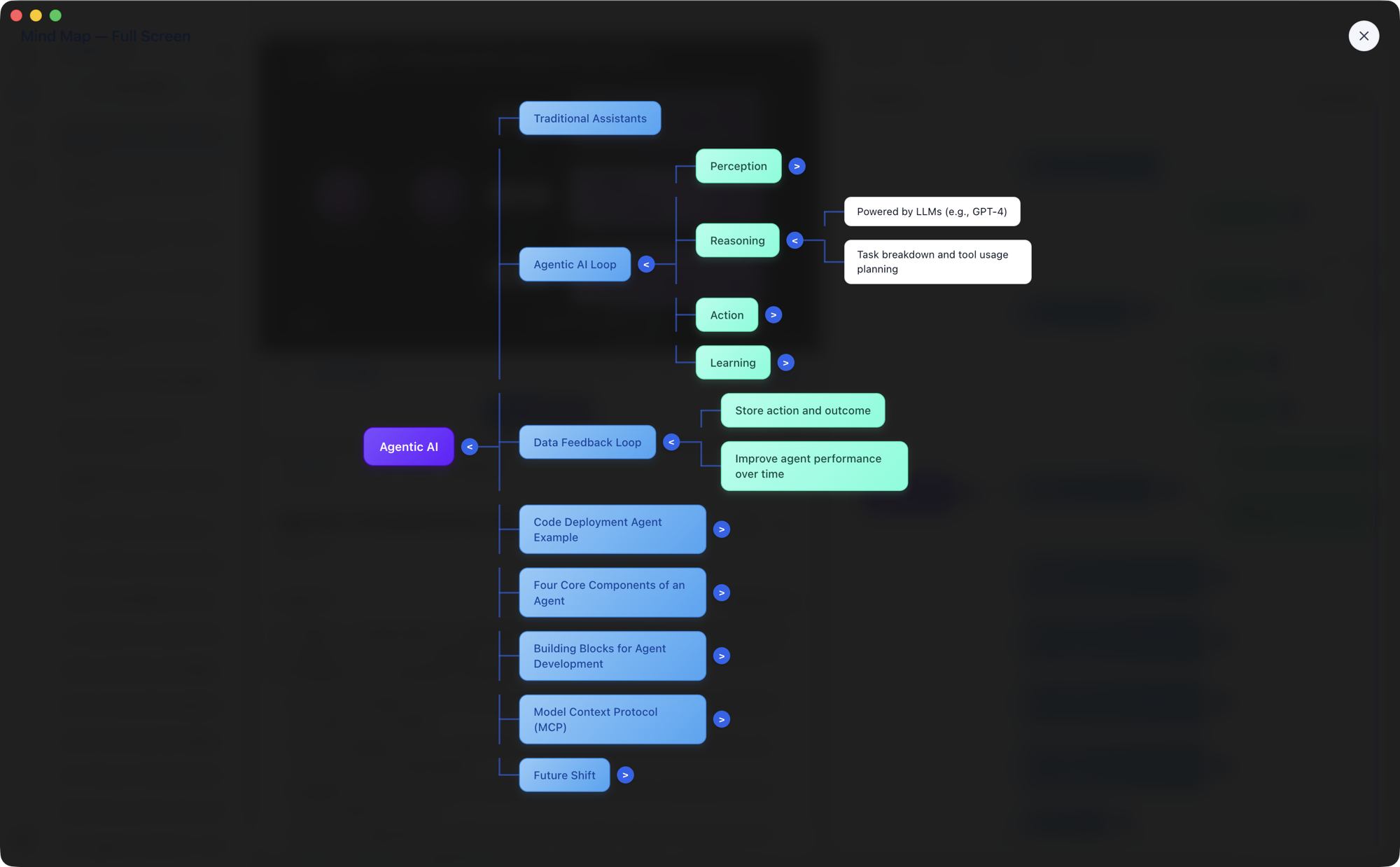
This is where I think the feature can become more than a summary.
Put the video away for a moment. Look only at the map. Try to retell the idea by moving from branch to branch.
If a branch cannot be explained, that is useful information.
The next step is not necessarily to ask AI for another summary.
It may be to return to the exact part of the source that the map exposed as weak.
I like a Predict → Critique → Recall loop
Predict the structure first
Before generating anything, sketch three or four ideas that probably connect.
Then compare the rough sketch with the generated map.
Critique the generated map
What would you move, rename, delete or add?
The goal is not to improve the software output. The goal is to reveal your own mental model.
Recall from the structure
Hide the detailed notes. Pick one branch and explain it in your own words.
Then return to the source and check what was missed.
Visual clarity can hide weak understanding
A tidy diagram feels complete.
That is exactly why I want to be careful with it.
The map should not finish the thinking.
It should give me something visible to think against.
 ThinkBySketch